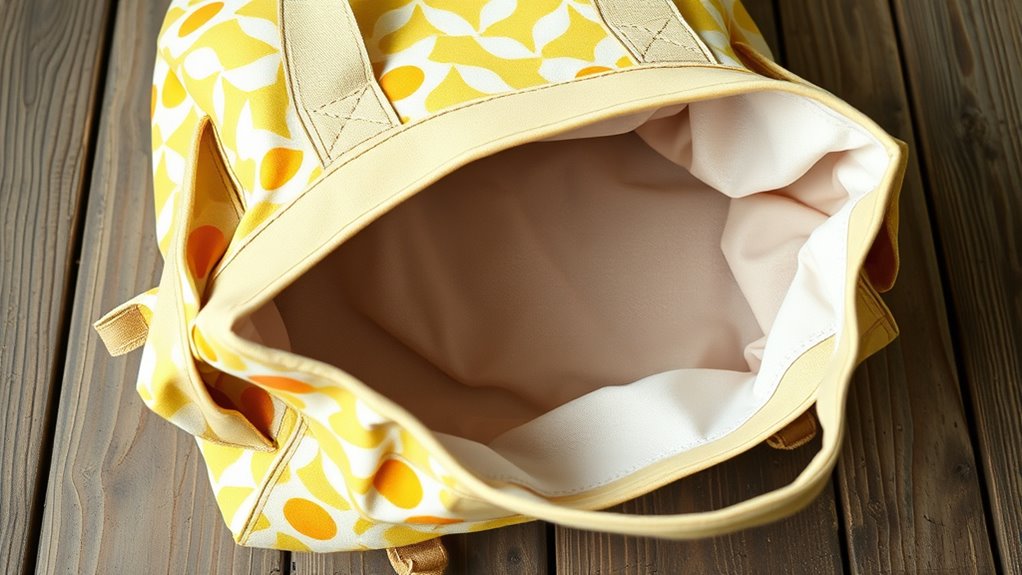

To make a lined tote bag with pockets, start by choosing sturdy fabrics like canvas or denim for durability, and coordinating lining for a finished look. Cut your pieces carefully, sew the exterior and lining together, and add interior or exterior pockets with neat topstitching. Reinforce handle attachments and finish with clean edges. If you keep going, you’ll discover detailed steps to craft a practical, stylish tote that fits your personal style and needs.
Key Takeaways
- Select durable fabrics for the exterior and lightweight lining, ensuring compatibility in weight and texture.
- Cut fabric pieces precisely, sew seams securely with reinforcement, and add interior or exterior pockets with topstitching.
- Sew exterior and lining together at the top edge, leaving an opening in the lining for turning, then press and finish edges.
- Attach handles or straps securely with reinforced stitching, considering weight capacity and durability.
- Turn the bag right-side out through the lining opening, topstitch around the opening, and finalize for a sturdy, stylish tote.
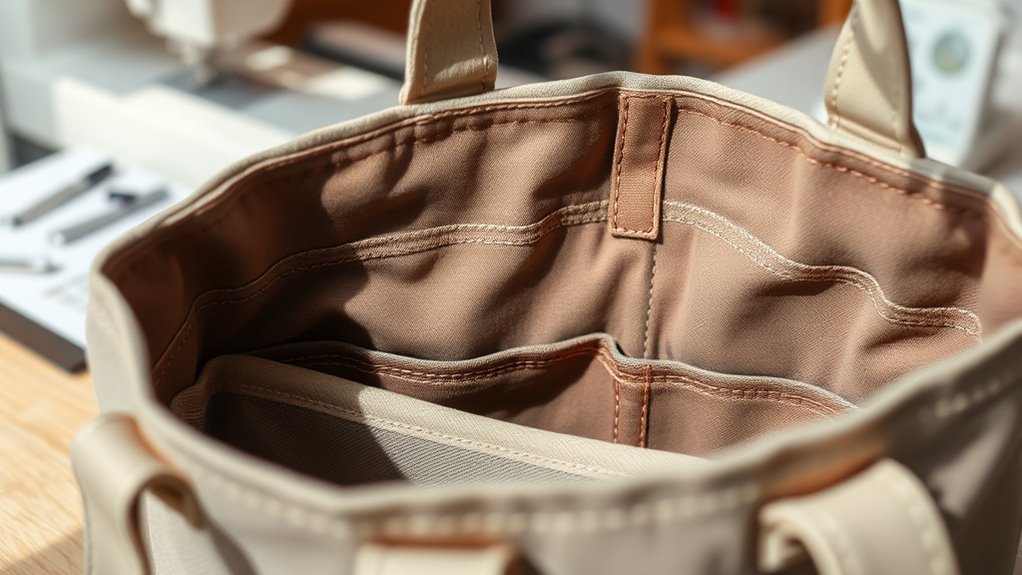
A lined tote bag with pockets is a versatile and practical accessory that helps you stay organized on the go. When designing your tote, your first consideration should be fabric choices. Opt for durable, sturdy fabrics like canvas, denim, or heavy cotton for the main body, as these materials can withstand daily wear and tear. Lining fabrics, such as lightweight quilting cotton or nylon, add a smooth finish inside and protect your belongings. Choosing contrasting fabrics for the lining and exterior can give your tote a stylish edge, but coordinating colors create a more unified look. Whatever fabrics you select, make sure they’re compatible in weight and texture to guarantee your project turns out sturdy and professional.
Choose durable fabrics like canvas or denim for a sturdy, stylish tote bag.
As you move into sewing techniques, focus on precision and neatness. Start by cutting your fabric pieces carefully, using a rotary cutter and a ruler for straight edges. When sewing the main panels together, use a straight stitch and reinforce the seams with backstitching at the beginning and end to prevent fraying. To add pockets, decide on the size and placement first; typically, small interior or exterior pockets are easiest to sew. Use the same sewing techniques—straight seams and neat hem finishes—and consider topstitching around the pocket edges for durability and a finished look. Adequate seam allowances contribute to the overall strength and longevity of your tote.
Attaching the lining to the exterior involves a technique called bag construction. With right sides together, sew the exterior and lining pieces along the top edge, leaving an opening in the lining for turning. Before turning the bag right-side out, press the seams flat with an iron to create crisp edges, which makes sewing the top edge neater and more professional-looking. When you pull the bag right-side out through the opening, take your time to align the edges carefully. Topstitch around the entire opening to secure the lining, reinforce the seam, and give your tote a clean finish.
Don’t forget to add handles or straps—these can be sewn directly onto the exterior or attached via hardware. Use strong, reinforced stitches at the attachment points, especially if you plan to carry heavy items. Overall, selecting the right fabrics and employing precise sewing techniques will result in a durable, attractive lined tote bag with pockets that’s perfect for daily use. This project combines practicality with creativity, and once completed, you’ll have a custom piece that’s both functional and distinctively yours. Understanding home theatre projectors can inspire you to create a tote that also reflects your personal style and interests.
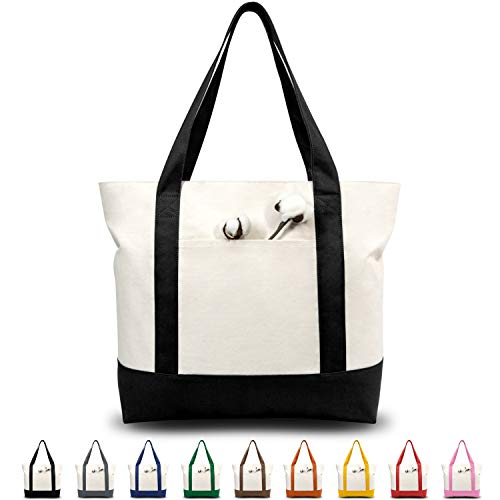
TOPDesign 1 | 3 | 6 | 30 Pack Canvas Tote Bag with an External Pocket, Reusable Grocery Shopping Bag, Top Zipper Closure, Daily Essentials (Black/Natural Pack of 1)
- Large Capacity and Durable Material: 21x15x6 inches, heavy-duty 12oz cotton canvas
- Secure Top Zipper Closure: Keeps belongings safe and secure
- External Pocket for Small Items: 8×8 inch outside pocket for convenience
As an affiliate, we earn on qualifying purchases.
As an affiliate, we earn on qualifying purchases.
Frequently Asked Questions
What Types of Fabric Are Best for a Lined Tote Bag?
For your lined tote bag, choose sturdy fabric choices like canvas, denim, or heavy-duty cotton for durability. These fabrics hold up well to daily use and can handle weight. To guarantee your bag lasts, follow durability tips like reinforcing seams and adding interfacing. Avoid lightweight fabrics that may tear or sag over time. Picking the right fabric will give your tote a professional look and long-lasting strength.
Can I Customize Pocket Sizes and Placements?
Think of your tote like a blank canvas waiting for your personal touch. Yes, you can customize pocket sizes and placements to suit your style. Play with pocket customization by resizing or reshaping them, and experiment with pocket placement to balance accessibility and aesthetics. This way, your tote becomes uniquely yours, reflecting your needs and taste, turning a simple bag into a functional piece of art.
How Do I Reinforce the Bag’s Handles for Durability?
To reinforce the bag’s handles and improve strap durability, double stitch along the handle attachments and use extra layers of fabric or interfacing. You can also add rivets or metal fasteners for extra strength at stress points. This guarantees your handles stay secure and withstand daily wear and tear, making your tote more durable and reliable for carrying heavier items.
Is This Project Suitable for Beginners?
Think of this project as a friendly garden; it’s perfect for beginners planting their first seeds. With basic sewing experience, you’ll find the project’s complexity manageable, like tending to familiar plants. The step-by-step instructions guide you smoothly, making it a rewarding experience. While not overly simple, it’s designed to help you build confidence and skills, making your sewing journey enjoyable and successful from start to finish.
How Can I Add a Closure or Zipper to the Tote?
You can add a closure or zipper to your tote by installing a zipper along the top edge for easy access, or attaching a magnetic snap for quick closure. To install a zipper, sew it into the opening, ensuring smooth sliding. For a magnetic snap, sew it onto the fabric’s exterior or interior flap. Both options keep your belongings secure and give your tote a polished look.
Conclusion
Now that you’ve completed your lined tote bag with pockets, you’ve crafted a practical masterpiece that’s as versatile as a Swiss Army knife. With each stitch, you’ve woven together style and function, turning fabric into a trusty companion for your daily adventures. Just like a well-tended garden blooms with life, your sewing skills have blossomed into a beautiful creation. Keep experimenting, and soon, your projects will be as abundant as stars in the night sky.