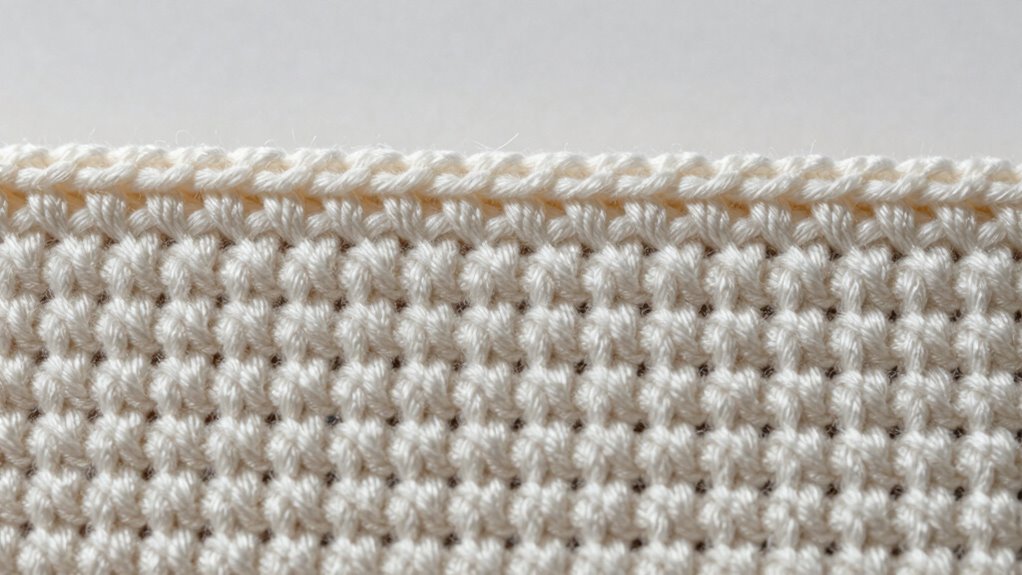

Skipping the traditional foundation chain and working directly into foundation stitches helps you achieve a cleaner, more even edge in your crochet projects. By using techniques like foundation single crochet, you can eliminate gaps and uneven tension often caused by chains. This method provides more control and a professional finish. To master it, explore step-by-step instructions and tips that will help you create flawless starts—keep going to learn more about perfecting your foundation stitches.
Key Takeaways
- Use slip stitches or slip knot rows instead of chains for a more even, stable foundation.
- Maintain consistent tension throughout to prevent loose or uneven edges.
- Practice foundation single crochet and variations for cleaner, professional-looking starts.
- Incorporate anchor or slip stitches at row beginnings to secure and neaten the foundation.
- Regularly check tension and stitch size to ensure a smooth, polished edge without chains.

Disney Lilo & Stitch Crochet Kit for Beginners – Stitch & Scrump Craft Kit
- Create Stitch & Scrump Characters: Make plush Stitch and Scrump dolls
- Complete Beginner Kit: Includes yarn, felt, hook, needle, stuffing, instructions
- Learn a New Skill: Build crochet techniques with easy instructions
As an affiliate, we earn on qualifying purchases.
As an affiliate, we earn on qualifying purchases.
Struggling With Uneven Foundation Chains? Here’s the Fix

If you find your foundation chains coming out uneven, don’t worry—there’s a simple fix. Instead of relying solely on traditional chains, try using chain alternatives like slip stitches or slip knot rows to create a more even base. These methods help improve tension control, preventing your work from becoming loose or tight in spots. Focus on maintaining consistent tension as you work, pulling your yarn with steady pressure, not too tight or too loose. Using chain alternatives can also eliminate the need for overly tight or uneven foundation chains, giving you cleaner edges. Practice these techniques to develop better tension control and achieve a smooth, even foundation without frustration. Incorporating tension consistency and mindful technique adjustments into your process can further enhance your results and ensure your project develops steadily and harmoniously. Being mindful of foundation stability can also help prevent issues with uneven edges and unbalanced stitches. With a little adjustment, your foundation will become more uniform, setting the stage for a professional-looking project.
What Are Foundation Crochet Stitches: And Why Skip the Chain?
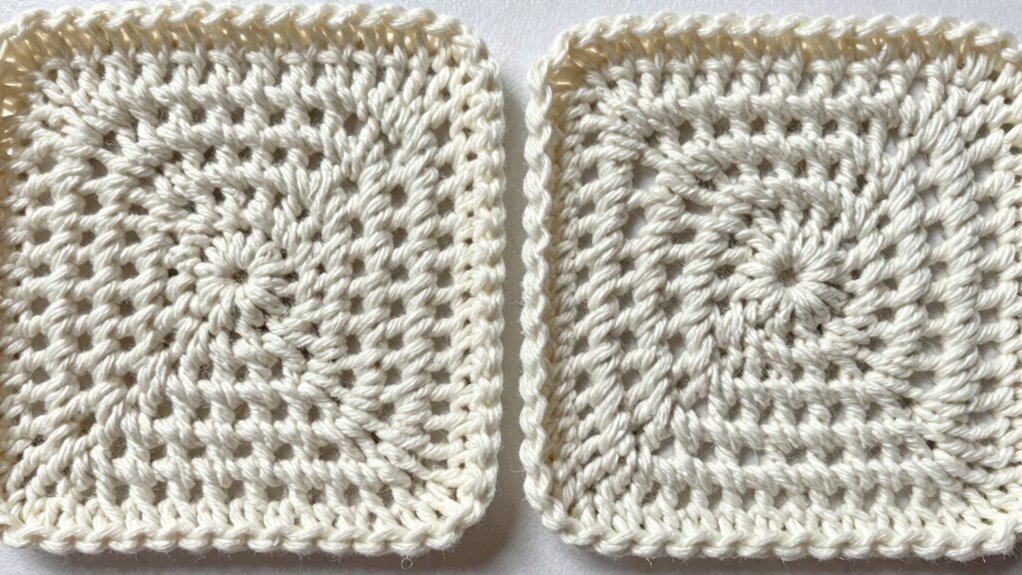
Foundation crochet stitches offer a flexible and even starting point for your projects, saving you time and frustration. Skipping the traditional chain allows you to work directly into the stitch, providing a stronger and more stretchable foundation. Understanding these benefits helps you decide when it’s best to use foundation stitches instead of chains. Additionally, mastering upgrades and maintenance techniques can enhance the durability and appearance of your crochet work, much like how proper garage upkeep ensures vehicle longevity.
Benefits of Foundation Stitches
Foundation stitches offer several advantages that make them a popular choice for many crocheters. One key benefit is their flexibility with yarn selection, allowing you to customize your project’s look and feel. Unlike traditional chains, foundation stitches create a more even, stable base, which helps maintain consistent stitch tension throughout your work. This stability contributes to a more professional-looking finish, especially for garments or accessories that require precision. Additionally, foundation stitches eliminate the need to crochet into a chain, saving time and reducing frustration. They also give your project better stretch and drape, making it easier to achieve a polished result. Furthermore, understanding foundation stitches’ role in creating a strong initial row can improve your overall technique and project durability. Overall, foundation stitches streamline your crochet process while enhancing the quality and appearance of your finished piece.
Reasons to Skip Chain
Ever wondered why many crocheters choose to skip the traditional chain when starting a project? Skipping the chain allows you to use chain alternatives that offer better foundation stability and a cleaner edge. By avoiding the initial chain, you reduce gaps and uneven tension that often occur with standard chains. This method creates a more uniform and professional finish, especially for projects like sweaters or hats. Additionally, it saves time and effort, making your work more efficient. The foundation stitches directly build on your work, providing a stronger base for subsequent rows. Overall, skipping the chain helps you achieve a neater, more durable edge while simplifying the starting process.
- Better foundation stability for seamless projects
- Reduced gaps and uneven tension
- Cleaner, more professional-looking edges
- Saves time by eliminating unnecessary steps
- Creates a stronger, more durable base
How to Start Your Foundation Stitch Without a Chain
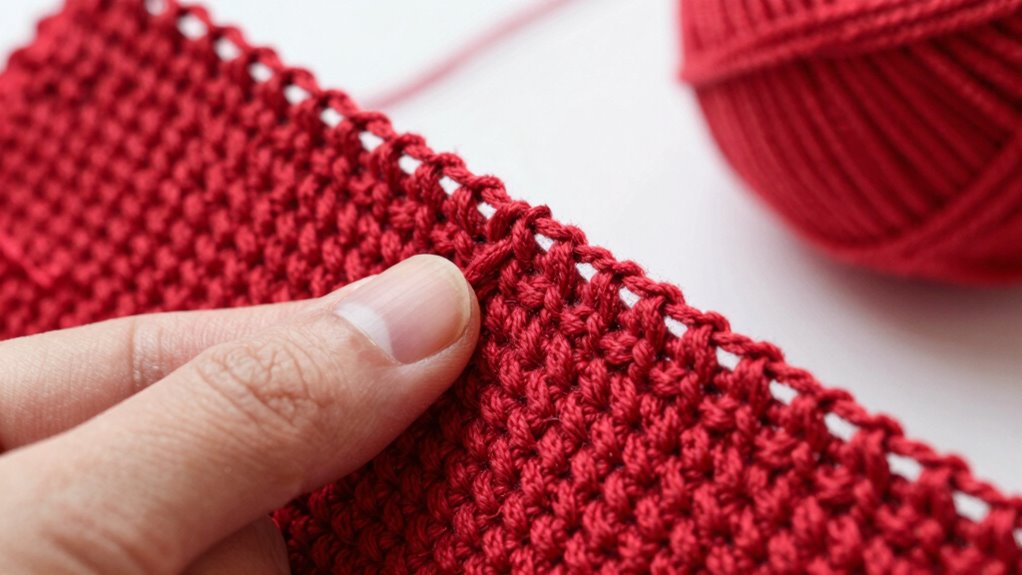
Starting your foundation stitch without a chain can seem tricky at first, but it’s a useful technique that saves time and yarn. To get started, hold your yarn with consistent tension to guarantee even stitches. Use your hook size that matches your yarn and project, as this affects the size and tightness of your stitches. Make a slip knot and insert your hook into the yarn’s working end, then pull up a loop. From there, yarn over and pull through the loop to create your first stitch. Continue working into the same loop, maintaining even tension and adjusting your hook size if needed for a tighter or looser stitch. This method helps you achieve a cleaner edge and more control over your foundation row. Additionally, understanding foundation crochet techniques can improve your overall crochet skills and help you create more polished projects, especially when you master starting without a chain. Developing proficiency in foundation stitches can also streamline your workflow and reduce material waste, and exploring crochet edge finishes can further enhance the neatness of your work. Mastering foundation row techniques can make your crochet projects look more professional from the very first row.
Learn How to Work Foundation Single Crochet (Step-by-Step)
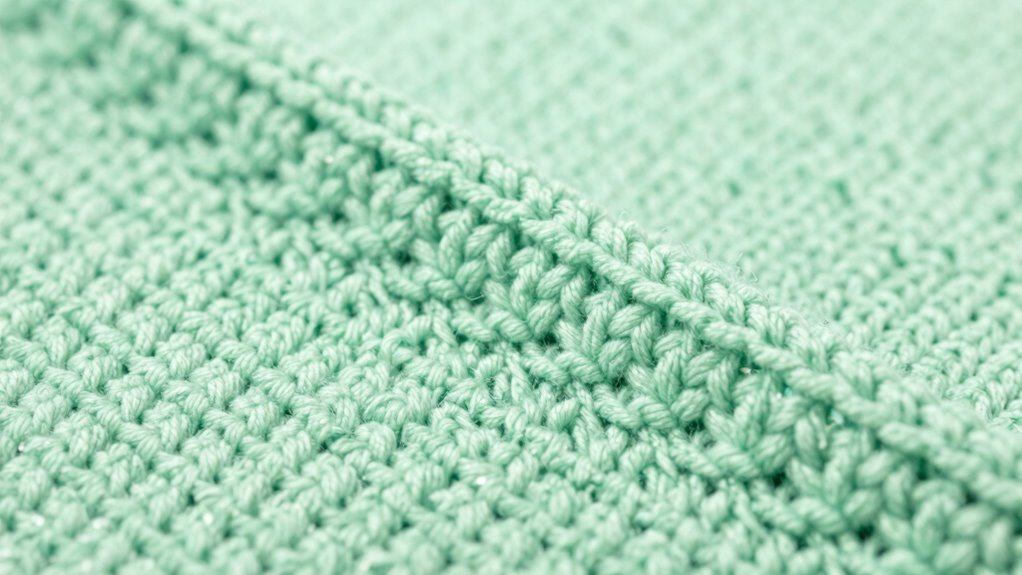
Once you’re comfortable with basic stitches, working a foundation single crochet allows you to create a stretchy, even edge without a traditional chain. To start, make a slip knot and chain one. Then, yarn over and insert your hook into the slip knot’s loop, pulling up a loop to create two loops on your hook. Yarn over again and draw through both loops to complete the stitch. Keep your yarn tension consistent to guarantee even stitches and proper stitch height. As you work, focus on maintaining stitch consistency, which results in a smooth, professional edge. Practicing this technique helps develop your control over stitch size and tension, making your project look cleaner and more polished. Understanding the role of media in shaping perceptions of cryptids can also inspire creative storytelling in your crochet projects. Additionally, paying attention to technique consistency ensures a uniform appearance throughout your work.
Why Use Foundation Stitches? Benefits Over Traditional Chains
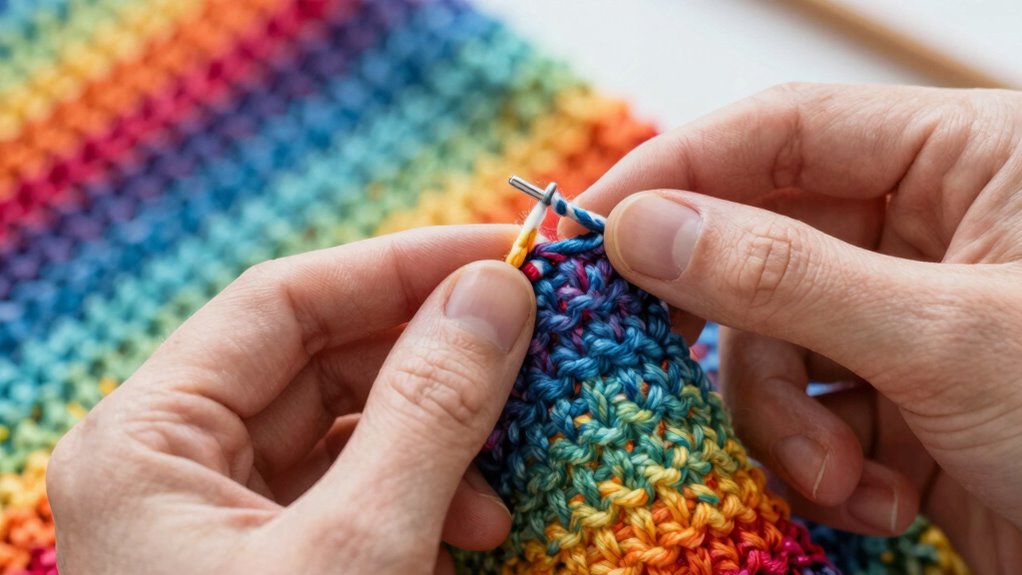
Using foundation stitches gives you a neater edge finish, making your project look more polished. It also speeds up your work by starting directly with the stitch instead of chaining first. Once you try it, you’ll notice how much smoother and quicker your crochet projects become.
Neater Edge Finish
Have you noticed that traditional chain edges can look uneven or curl over time? Using foundation stitches creates a neater edge finish because it provides a more consistent starting point. With proper yarn tension and stitch gauge, your edges stay flat and uniform, avoiding the common curling or unevenness. Foundation stitches also reduce the need for extra finishing work, giving your project a cleaner look. Plus, they help maintain even tension throughout, preventing puckering or loose edges. This method ensures your edges stay straight, professional, and durable, especially when working with textured or stretchy yarns. By controlling stitch gauge from the start, you achieve a polished, neat border that enhances your overall project appearance.
- Consistent tension improves edge stability
- Fewer finishing touches needed
- Maintains shape over time
- Prevents curling or puckering
- Creates a professional, polished look
Faster Starting Technique
Foundation stitches offer a faster starting technique than traditional chain edges because they eliminate the need to crochet into a loose chain, which can be time-consuming and prone to stretching out of shape. Using chain alternatives like foundation single or double crochet provides a more stable, uniform edge from the start. This method streamlines your workflow, saving you time and effort. Plus, it ensures edge perfection, reducing the risk of uneven or curled edges that often occur with loose chains. With foundation stitches, you start your project with a solid, even base, making it easier to maintain consistent tension throughout. Whether you’re new to crochet or looking to improve your finishing, this technique helps you achieve a cleaner, more professional look right from the beginning.
When Should You Use Foundation Stitches in Your Projects?
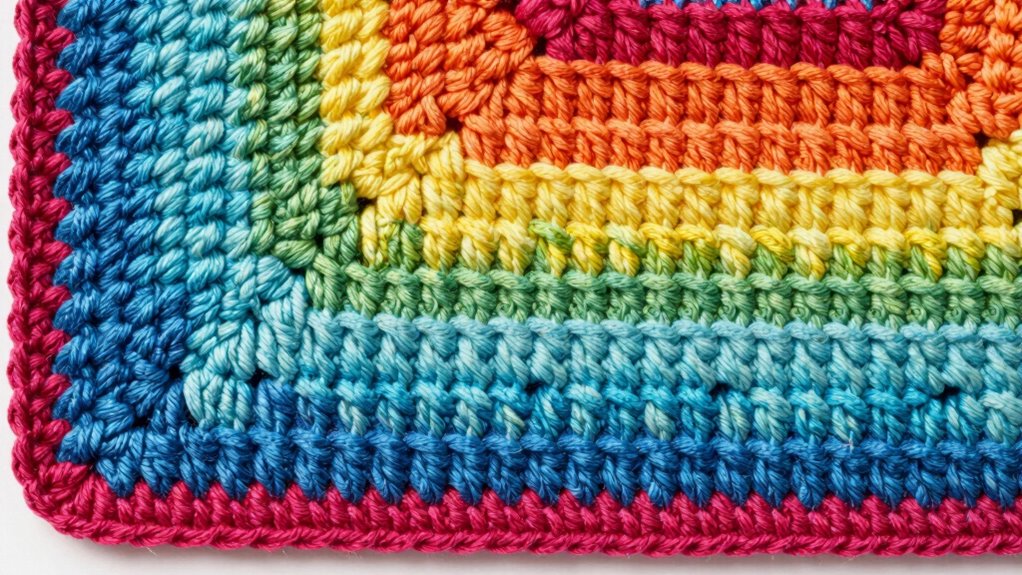
Wondering when to incorporate foundation stitches into your crochet projects? You should consider using them when you want enhanced foundation stability and stitch consistency from the start. Foundation stitches work well for projects that benefit from a flexible, even edge and a seamless start. They’re especially useful when working with stretchy yarns or creating garments like sweaters and tops, where a smooth, tidy foundation matters. Additionally, they’re ideal if you want to skip the traditional chain and avoid uneven edges. Using foundation stitches can also save time during setup and give you more control over tension. Incorporating foundation stitches can also help improve your overall crochet technique and achieve more polished results. Moreover, adopting traditional Piercing Care and Hygiene practices can inspire a mindful approach to crafting, emphasizing patience and connection to your work, which can lead to more consistent and satisfying stitch quality. When practicing these techniques, maintaining good tool hygiene ensures your project stays clean and your stitches remain even, further enhancing your finished piece.
Common Mistakes When Skipping the Chain and How to Avoid Them
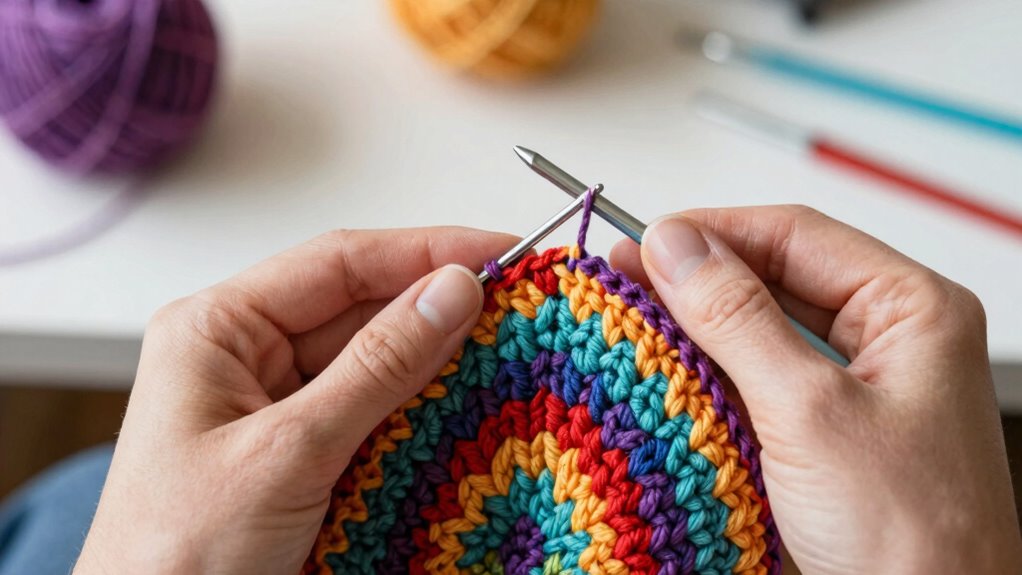
Skipping the chain properly can lead to an incorrect foundation length and uneven tension. If you don’t verify your stitch count regularly, your project might end up skewed or too loose. Paying attention to these details helps avoid common mistakes and ensures your work stays neat and even. Additionally, understanding creative storytelling can help you develop more engaging crochet patterns that resonate with your audience. Recognizing the importance of foundation techniques can also improve the overall quality of your crochet work and prevent common errors. Being aware of proper tension control is essential for maintaining consistent and professional-looking results throughout your project.
Incorrect Chain Foundation Length
One common mistake beginners make is creating a chain that’s either too long or too short for the project. An incorrect chain foundation length affects the overall look and tension consistency of your stitches. If the chain is too long, your work may sag or warp, making it difficult to maintain even tension. A chain that’s too short can cause puckering and uneven edges, disrupting your project’s neatness. To avoid this, measure your starting chain carefully, matching it to your pattern’s recommended length. Keep your tension consistent while chaining to ensure uniformity. Remember, a proper chain foundation sets the stage for smooth, even stitches, preventing the need for reworking later. Paying attention to chain length helps you achieve a cleaner edge and professional finish.
Uneven Stitch Tension
Uneven stitch tension often occurs when you skip the chain and jump directly into the first row, leading to inconsistent stitch sizes. When your yarn tension varies, stitches become tighter or looser, disrupting stitch consistency. To prevent this, maintain steady tension throughout your work by gripping the yarn consistently and avoiding pulling too tightly or leaving it too loose. Practice controlling your yarn as you work into each stitch to keep tension uniform. If your tension fluctuates, your stitches will look uneven, affecting the overall edge and appearance of your project. Consistent yarn tension is essential for even stitches and a cleaner edge, especially when skipping the chain. Take your time, check your tension regularly, and adjust as needed to ensure smooth, uniform stitches from start to finish. Proper tension control is fundamental for achieving professional-looking results in crochet.
Skipping Proper Stitch Checks
Have you ever started a project by skipping the initial stitch check? Skipping this step can lead to uneven edges and inconsistent tension, especially if you rely solely on chain alternatives. Without proper stitch checks, you might miss tension issues that affect your work’s overall look. To avoid this, always verify your first stitch, ensuring it’s neither too tight nor too loose. Keep in mind that skipping can cause misalignment, affecting the foundation of your project. Remember, consistent tension is key to a professional finish. Monitoring tension helps maintain even stitches throughout your work. Proper stitch checks help identify tension irregularities early. Chain alternatives can mask foundational issues. Consistent tension ensures an even, clean edge. Skipping checks often results in uneven stitch height. Regular stitch verification maintains project accuracy.
Different Variations of Foundation Stitches for Your Projects
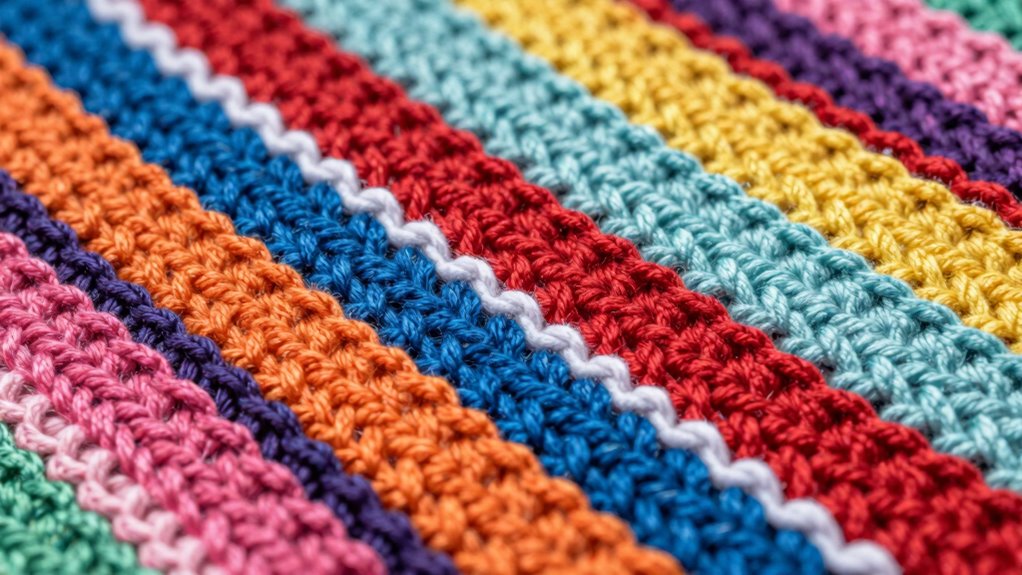
Are you looking to add variety and flexibility to your crochet projects? Exploring different variations of foundation stitches can help you achieve unique textures and clean edges. Your choice of yarn selection influences the stitch’s appearance and stretch, so pick a yarn that suits your project’s purpose. Additionally, using the right hook size is essential; a larger hook creates looser stitches, while a smaller hook results in tighter, more defined stitches. Variations like the adjustable foundation double crochet or the half-double foundation stitch can offer different lengths and textures, giving your project a personalized touch. These options allow you to start your work without chains, leading to a more even and professional-looking foundation. Experimenting with these variations can enhance both the look and functionality of your crochet pieces. Understanding crochet techniques can help you make informed decisions about which foundation stitch variation best suits your project, especially when considering foundation stitches’ versatility in your craft.
Tips for Achieving a Neat and Consistent Foundation Edge
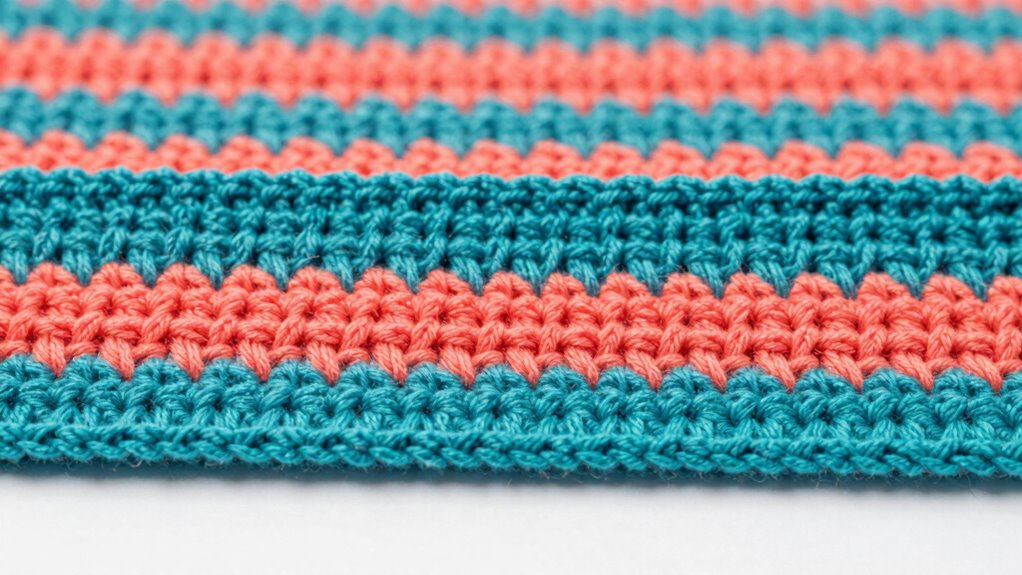
A neat and consistent foundation edge sets the tone for a polished crochet project. To guarantee foundation stability and improve edge consistency, start with a firm tension that isn’t too tight or loose. Use the correct foundation stitch that matches your project’s needs, and maintain even stitch size throughout. Pay close attention to your initial stitches, as they influence the entire row’s neatness. Keep your yarn tension steady as you work, avoiding sudden changes that cause uneven edges. Incorporate anchor stitches or slip stitches at the beginning of rows to secure the edge. Regularly check your work, adjusting tension if needed. Remember, consistent stitch placement and mindful tension control are key to achieving a clean, professional-looking foundation.
Troubleshooting Loose Edges and Uneven Foundation Rows
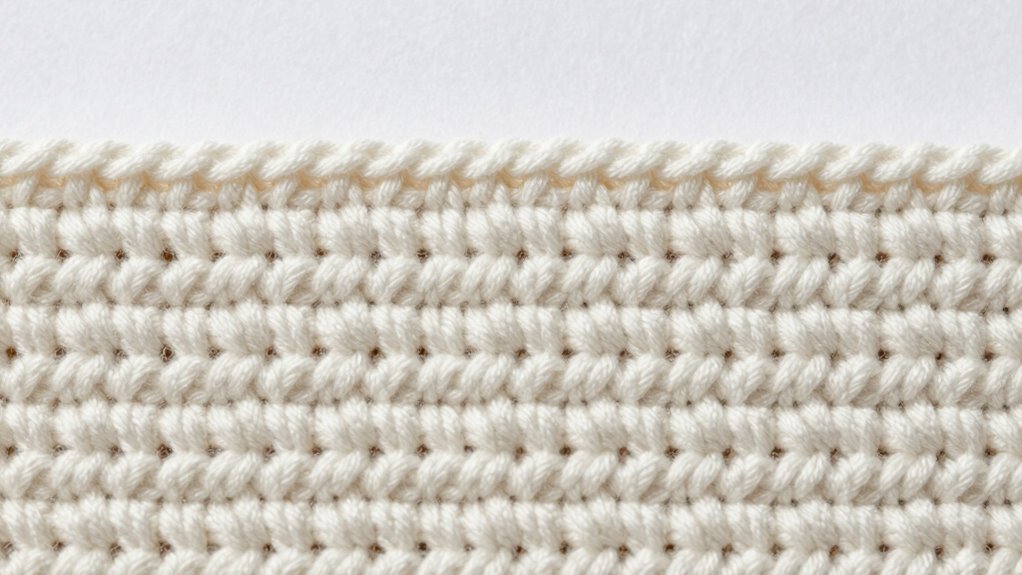
When you notice loose edges or uneven foundation rows, it often means your tension has varied or your stitches are inconsistent. To improve edge perfection and tension control, focus on maintaining even stitch size throughout. Consistent tension helps prevent gaps or tight spots that cause irregular edges. Adjust your grip or yarn tension if you see fluctuations. Keep your stitching rhythm steady, and don’t rush. Here’s a quick comparison:
| Issue | Solution |
|---|---|
| Loose edges | Use a slightly tighter tension at edges |
| Uneven foundation rows | Maintain consistent tension across rows |
| Inconsistent stitch size | Practice even spacing and stitch size |
Applying these tips ensures cleaner, more uniform foundation rows every time.
Frequently Asked Questions
Can Foundation Stitches Be Used With All Crochet Yarn Types?
Yes, foundation stitches can be used with most crochet yarn types, but yarn compatibility varies depending on the project. You might find they offer great stitch versatility, especially with lightweight or stretchy yarns. However, thicker or textured yarns may require adjustments to your tension or technique. Always test a small swatch first to guarantee your foundation stitches work well with your chosen yarn, giving you a cleaner edge and better overall results.
Are Foundation Stitches Suitable for Beginner Crocheters?
Yes, foundation stitches are suitable for beginner crocheters. They offer a smoother edge and eliminate the need to chain first, which can be tricky for newcomers. As you learn, keep in mind beginner tips like practicing consistency in tension. Be aware of common mistakes, such as twisting stitches or uneven tension, and take your time. With patience, foundation stitches will boost your confidence and improve your overall crochet skills.
How Do Foundation Stitches Affect Project Stretch and Drape?
Imagine your project like a flowing river—foundation stitch variations can make it more flexible or sturdy. When you use these stitches, they often add stretch, making your work more forgiving and drapey, especially in garments. However, this increased stretch can reduce project durability if not balanced well. So, choosing the right foundation stitch helps you control how your project drapes and how resilient it remains over time.
Can Foundation Stitches Be Integrated Into Existing Crochet Projects?
Yes, you can incorporate foundation stitches into existing crochet projects. They serve as versatile starter options that replace traditional chains, giving you a cleaner edge. To do this, carefully unravel some rows or work additional foundation rows into your project’s beginning. Foundation stitches also work well for decorative applications, adding texture and a polished look. Just guarantee your yarn tension matches to seamlessly blend the new stitches with your existing work.
What Tools or Techniques Help Ensure Even Foundation Rows?
Think of your foundation row as the foundation of a sturdy house; you need it level and strong. To achieve this, maintain tension consistency and use stitch markers to keep track of your stitches. These tools act like scaffolding, guiding you to even, uniform rows. Practice helps, but with patience and the right tools, your foundation will set perfectly, providing a stable base for the entire project.
Conclusion
By skipping the traditional chain and using foundation stitches, you can achieve a cleaner, more even edge every time. Think of it like building a sturdy foundation for a house—skipping the chain simplifies the process and results in a neater finish. Just like a well-laid foundation prevents cracks, these stitches give your project strength and consistency. Give it a try, and you’ll see how much smoother your crochet edges become, making your work look professional and polished.