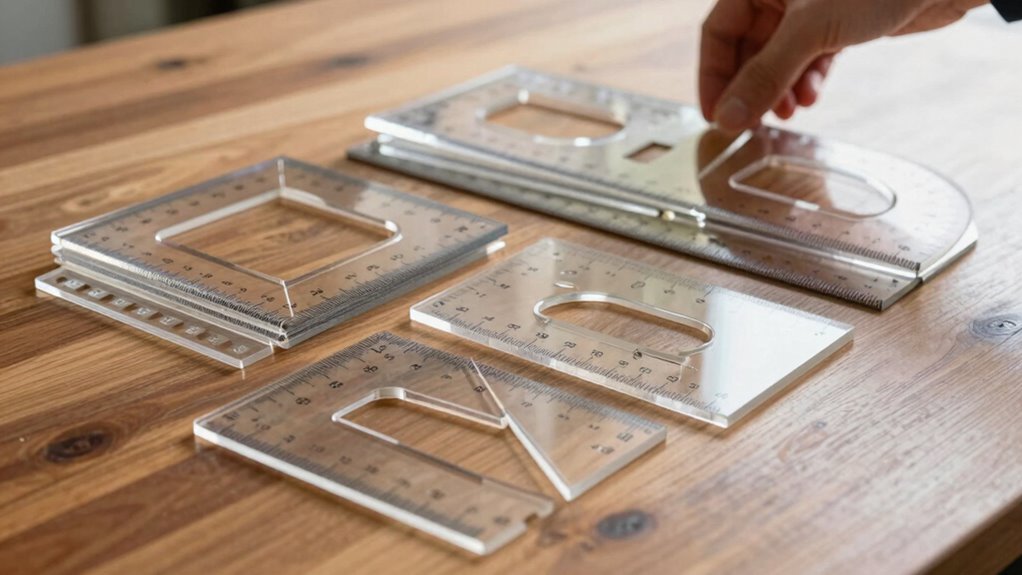

To choose quilting rulers without overbuying, focus on versatile, high-quality tools suited to your projects. Measure your needs based on fabric types, project sizes, and workspace space. Stick to essential sizes like a 6-inch square and a 12-inch straight ruler that can handle most tasks. Avoid clutter by selecting rulers that can serve multiple purposes. If you want to discover more tips to build a practical toolkit, keep exploring what suits your quilting style best.
Key Takeaways
- Assess your project sizes and fabric patterns to select only the rulers that meet your specific needs.
- Invest in versatile, high-quality rulers that can handle multiple project types, reducing the need for many specialized tools.
- Prioritize essential sizes like 6-inch squares and 12-inch rulers to cover most common quilting tasks.
- Choose lightweight, compact rulers suitable for your workspace to avoid clutter and improve maneuverability.
- Regularly review your project habits and tools to prevent unnecessary purchases and maintain an efficient quilting toolkit.
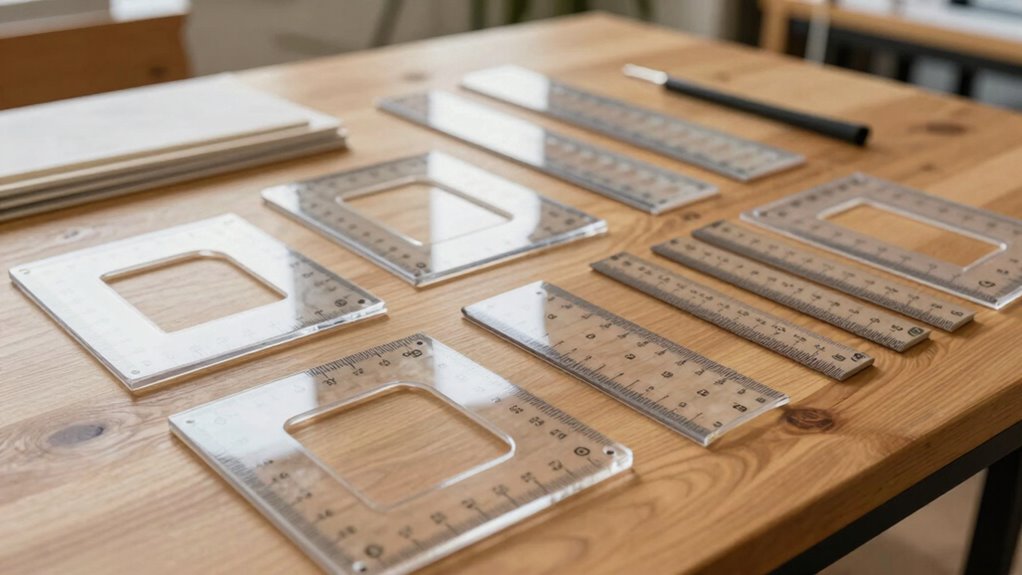
Have you ever wondered how the right quilting ruler can transform your sewing projects? Choosing the perfect ruler isn’t just about picking the most popular or the most expensive one; it’s about understanding your needs and avoiding unnecessary clutter. When you’re selecting quilting rulers, it’s tempting to buy many different sizes and shapes, but focusing on what truly serves your projects is key. Start by considering your fabric selection—if you mainly work with small, intricate patterns, a smaller, precise ruler might be your best bet. Conversely, if you love large, bold designs, bigger rulers will help you achieve those clean, straight cuts efficiently. By aligning your ruler choices with your typical fabric selection, you avoid wasting money on tools you won’t use often.
Another critical aspect often overlooked is how your sewing machine maintenance plays into choosing rulers. A well-maintained machine ensures clean, accurate cuts, making the right ruler even more effective. If your machine is running smoothly, you can rely on precise measurements and straight lines, so investing in a few versatile rulers makes sense. On the other hand, if your machine needs repairs or isn’t properly maintained, even the most expensive ruler won’t deliver the accuracy you need, and you might find yourself redoing work or wasting fabric. Keeping your sewing machine in top shape allows you to maximize the value of your rulers and reduces frustration when cutting or measuring. Additionally, understanding how your sewing machine maintenance impacts your accuracy can help you make better choices in ruler selection. Regularly checking your machine’s alignment can prevent miscuts and ensure your rulers are used to their full potential. Proper tool maintenance not only improves your project quality but also helps you avoid unnecessary expenses by prolonging the lifespan of your tools. Furthermore, maintaining your equipment can extend the lifespan of your tools and save you money in the long run. Moreover, using properly maintained equipment can extend the lifespan of your tools and improve overall project quality.
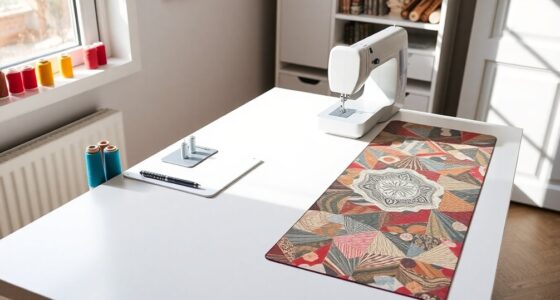
When it comes to avoiding buying more than you need, think about the projects you typically undertake. Do you often work on small wall hangings or large quilts? Your project scale will determine the size of rulers you should prioritize. It’s smarter to purchase a couple of high-quality, multipurpose rulers rather than a bunch of specialized ones that sit unused. For example, a 6-inch square ruler and a 12-inch straight ruler might cover most of your needs, saving you space and money. Also, consider the compatibility of your rulers with your sewing setup. If your workspace is limited, choosing compact, lightweight rulers can make your workflow more comfortable. Selecting versatile tools that suit multiple projects helps you maximize your investment, making your quilting experience more efficient and enjoyable.
In the end, choosing quilting rulers wisely means matching your fabric selection, project scope, and sewing machine maintenance habits. This approach helps you build a practical toolkit without cluttering your space or wasting money. Focus on quality and versatility, and remember that the right rulers will enhance your sewing precision and enjoyment—without the burden of unused tools cluttering your craft area.

Quilting Rulers,Sewing Ruler,4 Piece Acrylic Square Quilting Templates,Clear Precision Ruler for Quilting Sewing,Tools Supplies Accessories Green(3.5"x3.5" 5"x5" 6.5"x6.5" 10.5"x10.5")
- Premium Thick Acrylic Construction Made of high grade…
- Precise Clear and Crisp Green Markings Equipped with…
- Complete Multi Size Square Set Includes 4 essential…
As an affiliate, we earn on qualifying purchases.
As an affiliate, we earn on qualifying purchases.
Frequently Asked Questions
Are Plastic or Acrylic Rulers More Durable?
Plastic and acrylic rulers both offer good impact resistance, but acrylic tends to be more durable overall. It has better material longevity because it resists cracking and warping over time. Plastic rulers may be more prone to scratches and breakage, especially with frequent use. If you want a ruler that lasts longer and withstands impact, acrylic is the smarter choice. It provides reliable performance without easily deteriorating.
Can I Use a Quilting Ruler for Cutting Fabric?
Yes, you can use a quilting ruler for cutting fabric, but you need to pay attention to fabric grain and ruler safety. make certain your ruler has non-slip features to prevent slipping, which could damage your fabric or cause injury. Align the ruler carefully along the fabric grain for precise cuts, and always keep your fingers clear of the blade to ensure safe cutting. Proper ruler use enhances accuracy and safety in your quilting projects.
What Is the Best Size for a Beginner Quilting Ruler?
The best size for a beginner quilting ruler is a 6-inch by 24-inch rectangle. It’s versatile for fabric alignment and manageable to handle, helping you learn precise cutting. This size fits easily into your ruler storage and allows for a variety of project sizes. Starting with this ruler gives you plenty of options without overwhelming your workspace or collection, making quilting both enjoyable and efficient.
How Do I Clean and Maintain My Quilting Rulers?
To clean and maintain your quilting rulers, start with gentle cleaning techniques like wiping with a damp cloth to remove dust and residues. Avoid harsh chemicals that could damage the surface. Store your rulers properly in dedicated ruler storage to prevent warping and scratches. Regularly check for nicks or damage, and avoid dropping them. Proper cleaning and storage guarantee your rulers stay accurate and last longer for your quilting projects.
Are There Rulers Specifically for Curved or Intricate Designs?
Yes, there are rulers designed specifically for curved or intricate designs. These rulers help you handle fabric with precision, making complex patterns easier to execute. When choosing such rulers, consider their flexibility and stability for smooth fabric handling. Proper ruler storage keeps your tools in top shape, preventing damage. Investing in a few versatile curved rulers can expand your quilting possibilities without cluttering your workspace or buying unnecessary tools.
Conclusion
When selecting quilting rulers, remember that more isn’t always better—you want tools that truly enhance your projects. Start with versatile sizes like 6-inch and 12-inch rulers to cover most needs without clutter. Imagine your workspace with just these two, and see how they help you cut precise strips and squares effortlessly. As you gain experience, you can add specialized rulers, but initially, focus on quality and simplicity to keep your quilting enjoyable and manageable.