
To sew durable reusable bowl covers with elastic, start by choosing lightweight, stretchable, and washable fabrics like cotton or organic blends, preferably in bright colors or fun patterns. Cut circles slightly larger than your bowls, hem the edges, and insert elastic through the hem using a safety pin. Sew the elastic securely and reinforce seams for durability. Test and adjust the fit, then wash and air dry to keep them in good shape. More tips are just below.
Open a free Amazon Business account
Business pricing, bulk buying and tax-exempt orders.
As an affiliate, we earn on qualifying purchases.
Key Takeaways
- Choose durable, washable fabrics with a bit of stretch and reinforce edges with decorative stitches for added strength.
- Measure bowls accurately, add extra fabric for a snug fit, and cut precise circles using sharp tools.
- Sew a neat hem with an elastic channel, ensuring consistent stitches and reinforced seams for durability.
- Thread elastic through the hem with a safety pin, secure ends firmly, and test fit on various bowl sizes.
- Wash covers gently, air dry, and reinforce elastic seams regularly to maintain longevity and secure fit.
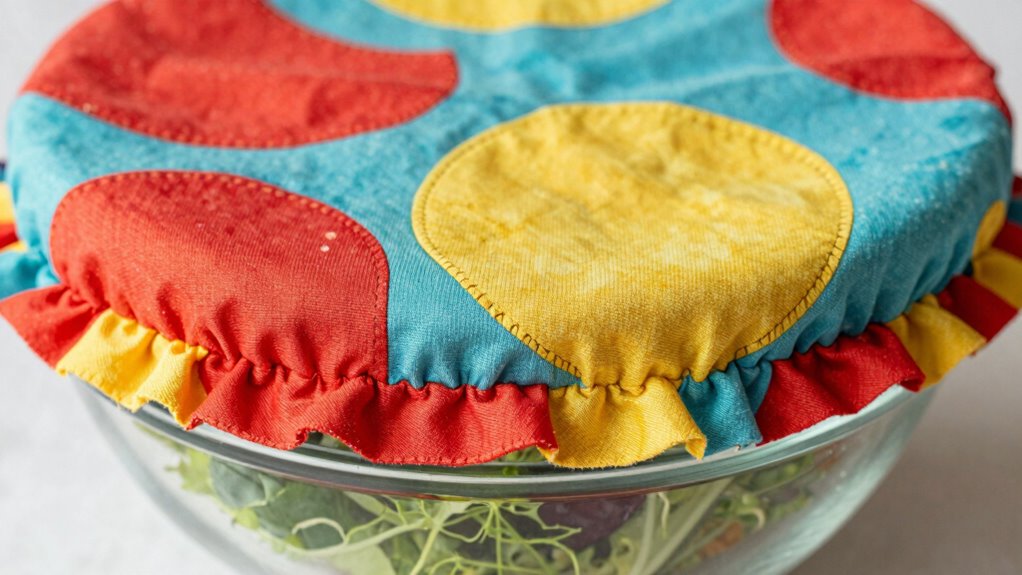
Sewing reusable bowl covers is a simple and eco-friendly way to keep your food fresh while reducing waste. When you’re ready to start, choosing the right fabric is vital. Opt for lightweight, flexible materials like cotton or organic cotton blends because they stretch easily and form snug seals around bowls. Bright colors or fun patterns can add a decorative touch to your kitchen, making your bowl covers not just functional but also charming. Consider fabric selection carefully—make certain it’s washable and durable enough for repeated use, and check that the fabric is food-safe if it comes into direct contact with food.
Once you’ve picked your fabric, cutting your circles is straightforward. Measure your bowls’ widest part and add a few extra inches to guarantee a good fit. Use a sharp pair of scissors or a rotary cutter for clean edges. To make your covers more attractive, incorporate decorative stitches along the edges. Decorative stitches not only reinforce the seam but also give your covers a personalized, professional look. You can try zigzag, scalloped, or even decorative topstitches, depending on your skill level and style preference. These stitches help prevent fraying and add a splash of personality to your creations.
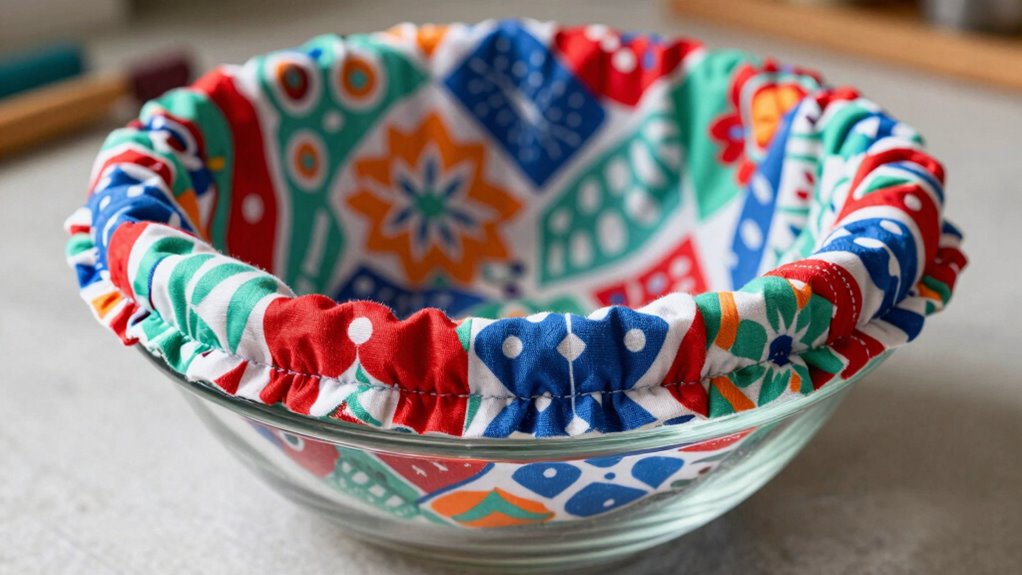
When sewing, keep your stitches even and consistent to make sure the cover stretches smoothly over the bowl without bunching or gaps. After sewing the main circle, fold the edge about half an inch inward and sew a narrow hem. This hem will serve as the channel for your elastic. Threading elastic through this channel is the next step; use a safety pin attached to the elastic to guide it through easily. Once the elastic is in place, sew the ends together securely, then close the gap in the hem. The elastic gathers the fabric around the bowl’s edge, creating a snug, reusable seal that keeps food fresh.
It’s important to test your cover on different-sized bowls to verify it fits well and stays in place. If the elastic feels too tight or too loose, adjust accordingly. Reinforcing the elastic seam with additional stitches can prevent wear and tear over time. After each use, wash your bowl covers gently in cold water and let them air dry. Their durability depends on your fabric choice and how well you finish the edges with decorative stitches, which protect against fraying and add strength.
reusable bowl covers with elastic
As an affiliate, we earn on qualifying purchases.
As an affiliate, we earn on qualifying purchases.
Frequently Asked Questions
What Type of Fabric Is Best for Reusable Bowl Covers?
You should choose fabrics with good durability, like tightly woven cotton or cotton-polyester blends, for your reusable bowl covers. These fabrics resist tearing and maintain their integrity over time, extending elastic lifespan and ensuring a snug fit. Avoid flimsy or stretchy fabrics that wear out quickly. By selecting durable material, you’ll create covers that last longer, stay secure, and provide reliable protection for your bowls through repeated use.
Can I Make Reusable Covers in Different Sizes?
You can definitely make reusable covers in different sizes—think of it as tailoring your own set! Use fabric patterns and sewing techniques to customize each cover to fit various bowls. Measure carefully and cut your fabric accordingly; sewing techniques like straight stitches and elastic insertion help guarantee a snug fit. With some practice, you’ll master creating covers for all shapes and sizes, keeping your kitchen eco-friendly and stylish.
How Do I Prevent Elastic From Losing Elasticity Over Time?
To prevent elastic from losing elasticity over time, choose elastic with high durability and avoid cheap, low-quality options. Incorporate fabric stretch into your design to reduce stress on the elastic. When sewing, guarantee a snug but not overly tight fit, and avoid overstretching the elastic during assembly. Proper care, like gentle washing and air drying, helps maintain elastic durability and keeps the covers fitting well longer.
Are There Eco-Friendly Alternatives to Elastic?
Think of eco-friendly alternatives like the wise owl choosing natural options. You can opt for biodegradable alternatives such as plant-based elastic or recycled materials like old fabric scraps, which offer sustainable options for your bowl covers. These choices help reduce plastic waste and are gentle on the environment. By using these eco-conscious materials, you create reusable covers that are both durable and kind to our planet, much like nature’s own resilience.
How Do I Wash and Store Reusable Bowl Covers?
To wash your reusable bowl covers, hand wash or use a gentle cycle with mild detergent, then air dry to preserve elasticity. For storage solutions, fold them neatly or roll them up and keep them in a breathable container. Follow care tips like avoiding harsh chemicals and high heat, which can damage the elastic. Proper washing and storing help your covers last longer and stay effective for future use.
Conclusion
Now that you’ve mastered sewing these reusable bowl covers, imagine the endless possibilities—covering bowls of all sizes, keeping food fresh with just a stretch of elastic. But the real surprise? They’re so durable, you’ll wonder how you ever lived without them. As you stretch the elastic over your bowls, picture the fresh ingredients, the vibrant colors, and the eco-friendly future you’re creating. Ready to transform your kitchen—and maybe even your habits? The cover’s waiting.
Fall yard work Picks
leaf blowers
As an affiliate, we earn on qualifying purchases.