To care for delicate fabrics like silk, lace, and chiffon, handle them gently to avoid damage. Always wash with cold water and a mild detergent, using a mesh bag or hand washing when possible. Lay garments flat to dry and avoid hanging, which can cause stretching. Steaming is safer than ironing, and always test cleaning methods on small areas first. With careful treatment, your delicate pieces will stay beautiful longer, and you’ll discover more tips to keep them pristine.
Key Takeaways
- Handle silk, lace, and chiffon gently, avoiding rubbing or twisting to prevent damage.
- Hand wash with cold water and mild detergent, or use a mesh bag for machine washing on a delicate cycle.
- Air dry flat on a clean towel to maintain shape and prevent stretching; avoid hanging delicate fabrics.
- Use low heat or steaming to remove wrinkles, and always test methods on small areas first.
- Seek professional cleaning for stains, especially oil or ink, to ensure proper treatment without harming fibers.
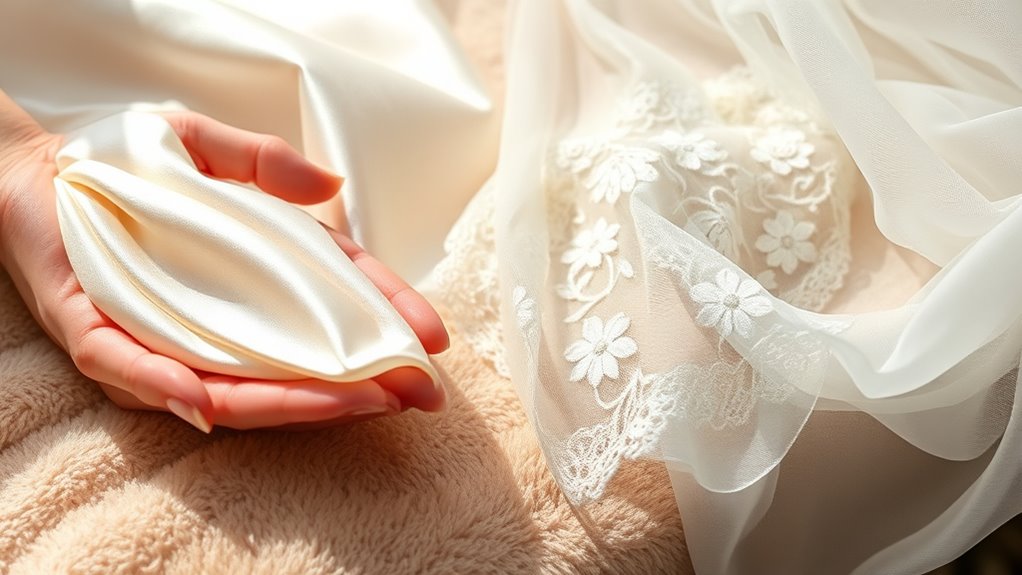
Caring for delicate fabrics requires careful attention to prevent damage and preserve their beauty. When dealing with materials like silk, lace, and chiffon, it’s crucial to handle them gently and choose the right cleaning methods. Dry cleaning is often the safest option, especially for garments with intricate details or those prone to shrinking or color bleeding. Professional cleaners understand how to treat delicate fibers without causing harm, ensuring your favorite pieces stay vibrant and intact for years. If you’re considering stain removal, resist the temptation to rub or scrub the fabric, as this can weaken fibers and create permanent damage. Instead, gently blot the stain with a clean, damp cloth and seek advice from a professional if needed. Some stains, like oil or ink, require specialized treatments that only experts can provide without compromising the fabric’s integrity.
When washing delicate fabrics at home, always opt for cold water and a gentle cycle if machine washing is unavoidable. Use a mild detergent formulated for delicate textiles, avoiding bleach or harsh chemicals that can weaken fibers or cause discoloration. For silk and chiffon, consider placing the garment in a mesh laundry bag to prevent snagging or stretching during the wash. If you’re unsure about washing your delicate items, it’s safer to hand wash them carefully. Fill a basin with cold water, add a small amount of gentle detergent, and gently swirl the fabric, avoiding wringing or twisting. Rinsing thoroughly to remove all soap residue is essential, and then lay the garment flat on a clean towel to air dry. Hanging delicate fabrics can cause stretching or misshaping, so flat drying is the best approach.
Additionally, using appropriate cleaning techniques can help prevent damage and extend the lifespan of your delicate garments. Ironing delicate fabrics requires extra caution. Use the lowest heat setting or a pressing cloth between the iron and the fabric to avoid direct contact. For silk and lace, steaming is often a gentler option that relaxes wrinkles without risking scorching. Keep in mind that some fabrics, like chiffon, are extremely lightweight and prone to tearing if handled roughly. Always test any cleaning method on a small, inconspicuous area first to prevent surprises. When in doubt, consult a professional for stain removal or cleaning advice; they have the expertise to treat delicate fabrics properly. By following these tips, you can maintain the beauty and longevity of your delicate garments, ensuring they remain stunning and intact for many seasons to come.
Frequently Asked Questions
Can Delicate Fabrics Be Washed With Regular Laundry Detergent?
No, you shouldn’t wash delicate fabrics with regular laundry detergent. These fabrics require gentle cleaning, so consider detergent alternatives like mild, specialized detergents for silks or lace. Avoid harsh chemicals that can damage fibers. Also, use fabric softening products sparingly, as they can weaken delicate fibers over time. Always opt for cold water and gentle cycles to preserve the fabric’s integrity and extend its lifespan.
How Do I Remove Stains From Silk or Lace Without Damage?
Imagine a drop of ink on your vintage silk, like a secret from the past. To remove stains from silk or lace without damage, use gentle stain removal techniques—dab with a mixture of mild detergent and cold water, or try fabric-specific cleaning methods. Avoid rubbing, and never use harsh chemicals. Patience and careful handling restore your delicate fabrics’ beauty, like a master restorer saving a priceless artwork.
Is It Safe to Iron Chiffon Directly?
It’s not safe to iron chiffon directly, as high heat can damage the delicate fabric. Use ironing techniques like placing a pressing cloth between the iron and the chiffon, and set the fabric temperature to the lowest setting. Gently press without applying too much pressure, and avoid using steam if possible. Always test a small area first to prevent any unintended damage.
How Should I Store Delicate Fabrics to Prevent Damage?
You should store delicate fabrics like silk, lace, and chiffon in breathable storage solutions such as cotton garment bags or boxes, avoiding plastic that traps moisture. Keep them in a cool, dry environment away from direct sunlight, which can cause fading and weakening. Hang lightweight pieces on padded hangers to prevent creases, and fold heavier fabrics carefully with acid-free tissue to avoid stretching or damage over time.
Can I Dry Delicate Fabrics in a Tumble Dryer?
Did you know that over 60% of delicate fabric damage occurs during improper drying? You should avoid tumble dryers for delicate fabrics because of risks like shrinking, stretching, or fabric weakening. Instead, opt for air drying or laying your items flat. Tumble dryer risks are too high, and delicate fabric care requires gentle handling to keep your garments looking their best and lasting longer.
Conclusion
Remember, a stitch in time saves nine, especially with delicate fabrics like silk, lace, and chiffon. Handle them gently, wash with care, and store properly to keep their beauty intact. Always follow the care instructions and avoid harsh chemicals. When in doubt, trust your instincts and treat these fabrics with love and respect. With patience and attention, you’ll enjoy their elegance for years to come—because taking care of delicate fabrics is truly an art worth mastering.