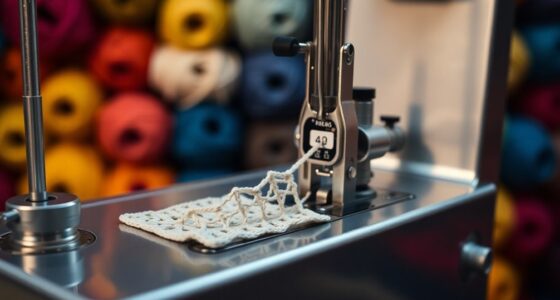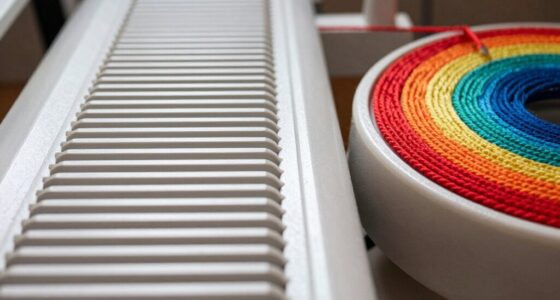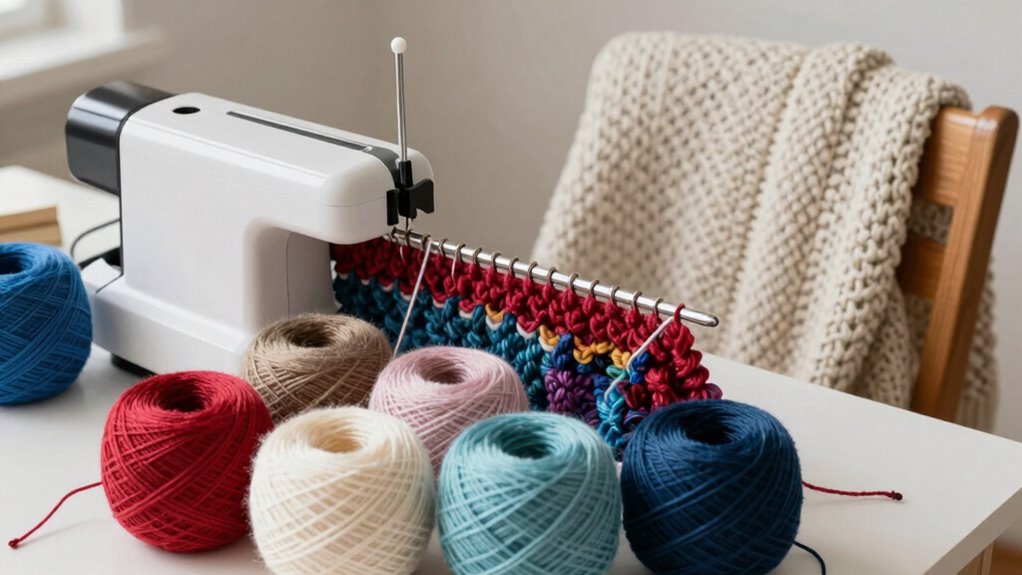

To choose a knitting machine based on what you make, consider your project size and complexity. If you craft textured garments or intricate designs, manual machines give you better control, though they require more skill. For faster production of scarves or hats, electronic models save time and effort with pre-set patterns. Your skill level and budget also matter—beginners and smaller budgets may prefer manual, while experienced knitters or larger projects might find electronic models more suitable. Keep exploring to find the best fit!

Get business pricing on tools and workshop supplies
- Business-only prices and quantity discounts
- Tax-exempt purchasing
- Multiple users, one account, clear invoices
Key Takeaways
- Match your project complexity and texture needs with manual machines for detailed work or electronic machines for speed.
- Consider the size and scale of items like scarves or hats to determine whether a small manual or larger electronic machine is suitable.
- Evaluate your skill level: beginners may prefer electronic machines for ease, while experienced knitters can utilize manual control for customization.
- Factor in budget and space: manual machines are affordable and portable, whereas electronic models offer advanced features for larger projects.
- Review machine features, ergonomics, and automation options to ensure they align with your typical knitting projects and usage frequency.
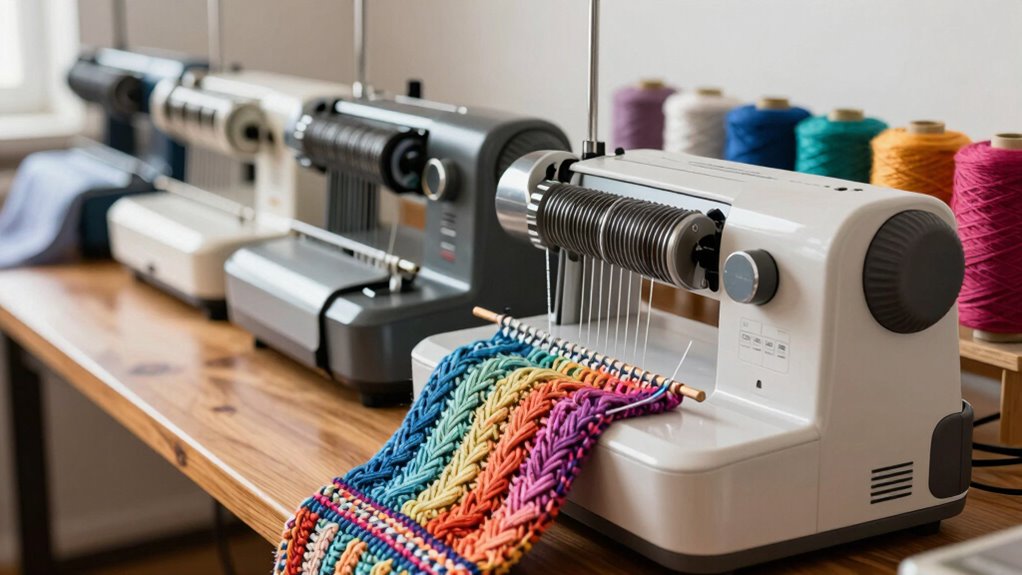
Are you ready to pick the perfect knitting machine for your projects? The first step is understanding how you plan to use it. If you enjoy hands-on control and want to experiment with different textures and techniques, a machine with manual operation might be your best choice. Manual machines give you the freedom to adjust tension, select specific needles, and control every detail of your knitting process. They’re often more affordable and portable, making them ideal for hobbyists or those just starting out. However, they require more skill and effort to operate, so if you prefer a more straightforward approach, they might demand a bit more patience.
Manual knitting machines offer hands-on control, versatility, and portability for hobbyists and beginners.
On the other hand, if you’re looking for speed, precision, and ease of use, electronic controls are worth considering. Machines equipped with electronic controls often feature pre-set patterns, automated tension adjustments, and user-friendly interfaces. This makes complex projects more manageable and allows you to produce consistent results with less manual effort. If you tend to work on larger projects or want to save time, an electronic machine can streamline your workflow without sacrificing quality. Plus, many models offer programmable options, letting you customize patterns and save favorite designs for future use.
When deciding between manual operation and electronic controls, think about what kind of projects you want to create. For instance, if you’re interested in designing intricate, textured garments or experimenting with custom stitches, a manual machine offers greater control and flexibility. But if your goal is to produce large quantities of simple pieces, such as scarves or hats, an electronic machine can speed up the process and reduce fatigue. Consider your skill level too; beginners might find electronic controls easier to learn, while more experienced knitters might appreciate the tactile engagement of manual operation. Additionally, understanding the different types of knitting machines can help you make an informed decision that aligns with your goals. Exploring machine features and capabilities can also guide you toward models that match your desired projects and skill level.
Another important factor is your budget and space. Manual machines tend to be less expensive and more compact, fitting comfortably into small craft spaces. Electronic models can be pricier, but they often come with additional features that justify the investment if you plan to knit regularly. Think about the types of projects you want to make, how much time you’re willing to dedicate to mastering your machine, and the level of automation that will keep you motivated. An understanding of knitting machine ergonomics can help you choose a model that is comfortable for extended use. Ultimately, choosing between manual operation and electronic controls depends on your personal knitting style, project ambitions, and how you want to enjoy your craft. Exploring the features and capabilities of various models can ensure you select a machine that truly fits your needs.
Popular right now

De'Longhi Linea Classic Espresso Machine with Adjustable Milk Frother

Breville Barista Pro Espresso Machine with Grinder, Brushed Stainless Steel

Breville Bambino Espresso Machine, Brushed Stainless Steel
As an affiliate, we earn on qualifying purchases.
Frequently Asked Questions
Can I Switch Between Different Yarn Weights Easily?
Yes, you can switch between different yarn weights easily, but it depends on your machine’s yarn compatibility. Some knitting machines are designed for weight versatility, allowing you to handle a range of yarns from fine to bulky. Check your machine’s specifications to see which yarn weights it supports. Using the right tension settings for each yarn weight guarantees smooth knitting and great results, regardless of the yarn you choose.
What’s the Maintenance Required for a Knitting Machine?
Maintenance is a breeze—if you enjoy endless opportunities for machine lubrication and needle replacement. Keep your machine running smoothly by regularly oiling moving parts to prevent squeaks and jams. When needles bend or break, swap them out swiftly to avoid knitting chaos. A little routine care, like cleaning and checking tension, keeps your machine happy. Think of it as giving your knitting partner a spa day—necessary, but oddly satisfying.
Are Portable Knitting Machines Suitable for Large Projects?
Portable knitting machines aren’t ideal for large projects because of their limitations. You’ll find they struggle with extensive work, making large or complex projects challenging due to their smaller size and fewer features. While perfect for quick, small items, they can slow you down on bigger tasks. If you plan to work on large projects regularly, consider a more robust, non-portable machine designed to handle bigger, more demanding knitting tasks efficiently.
How Loud Are Different Types of Knitting Machines?
Some knitting machines are so loud they could wake the neighbors, while others whisper like a gentle breeze. The noise levels vary widely; manual models tend to be quieter, producing a soft hum, whereas motorized machines can sound like a small thunderstorm. Sound comparison shows that electronic machines often generate more noise, but newer models are designed to minimize this. Think about your environment and patience level when choosing—quiet might just be your new best friend.
Can I Upgrade or Customize My Knitting Machine Later?
Yes, you can often upgrade or customize your knitting machine later. Many models offer compatibility with various accessories and parts, allowing you to expand its capabilities. You might add new carriage types, change stitch patterns, or incorporate digital controls. Before purchasing, check the machine’s compatibility with customization options, ensuring it suits your future knitting projects. This way, you can tailor your machine to grow with your skills and creative needs.
Conclusion
Ultimately, choosing the right knitting machine is about more than just features—it’s about your passion and dreams woven into every stitch. Imagine your projects coming to life effortlessly, each loop a proof to your creativity. Don’t settle for less; let your heart guide your choice. Remember, this machine isn’t just a tool—it’s the gateway to your handmade masterpieces. Embrace the journey ahead, and watch your knitting dreams unfold with every stitch you make.