
Climate control matters more for natural fibers because they actively respond to your body and environment, helping you stay comfortable. They can absorb and release moisture, preventing dampness and skin irritations, while trapping air to provide insulation and temperature regulation. Unlike synthetics, natural fibers adapt to humidity and heat, making you feel dry and comfortable in varying conditions. If you want to understand how these fibers enhance your comfort and sustainability, there’s more to discover ahead.

Get business pricing on tools and workshop supplies
- Business-only prices and quantity discounts
- Tax-exempt purchasing
- Multiple users, one account, clear invoices
Key Takeaways
- Natural fibers respond actively to environmental changes, providing superior moisture and temperature regulation compared to synthetics.
- They absorb and release moisture efficiently, preventing dampness and ensuring consistent comfort.
- Natural fibers trap air for better insulation, maintaining warmth in cold and cooling in hot conditions.
- Their biodegradability and durability support sustainable climate-responsive clothing solutions.
- Natural fibers adapt with the body’s processes, promoting health and comfort amid fluctuating environmental conditions.

Have you ever wondered how natural fibers can help regulate climate? It’s because these fibers possess unique properties that actively respond to your body’s needs and the environment around you. Unlike synthetic materials, which are often designed for durability and cost-effectiveness, natural fibers excel at moisture regulation and temperature stability. When you wear clothing made from materials like wool, cotton, or silk, you’re engaging with fabrics that naturally adapt to changes in humidity and heat. This dynamic response helps keep you comfortable in a variety of conditions, making climate control a significant advantage of natural fibers.
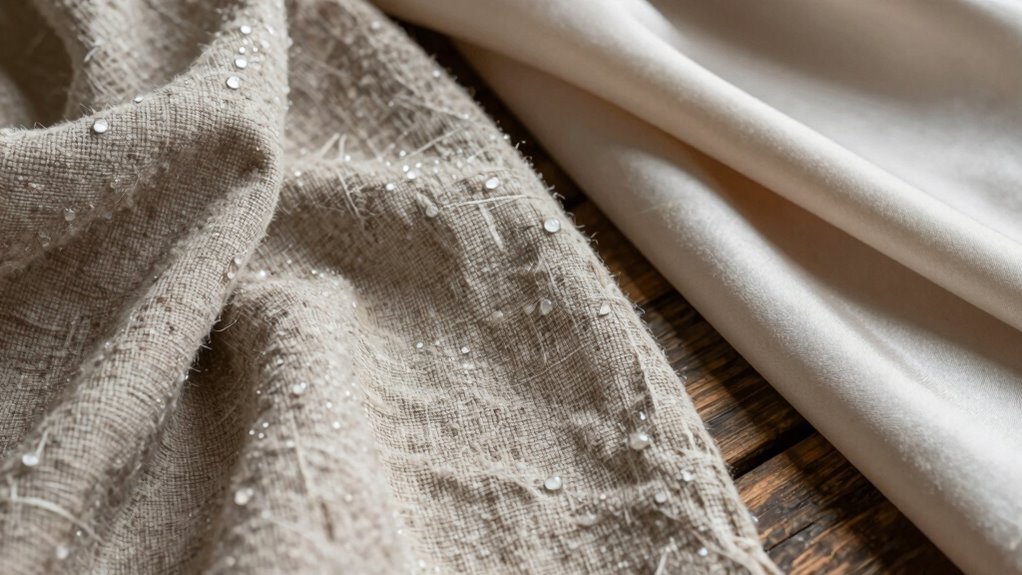
Moisture regulation is one of the standout features of natural fibers. They can absorb and release moisture without feeling damp or clammy. For example, wool fibers can absorb up to 30% of their weight in moisture while still feeling dry to the touch. This means that when you sweat, the fibers wick moisture away from your skin, preventing chafing and reducing the risk of skin irritations. As the moisture evaporates, the fibers release it into the air, helping you stay dry and comfortable. Synthetic fibers, on the other hand, tend to trap moisture against your skin, leading to discomfort and even odor. Natural fibers’ ability to regulate moisture not only improves comfort but also contributes to better skin health and overall well-being.
Natural fibers absorb and release moisture, keeping you dry and comfortable without feeling damp.
Temperature stability is another key benefit. Natural fibers are excellent insulators, trapping air within their structure to maintain a stable microclimate around your body. Wool, in particular, is renowned for its insulating properties, keeping you warm in cold weather while still allowing breathability. When it’s hot outside, these fibers help dissipate excess heat, preventing overheating. This dual function is essential in fluctuating climates, where synthetic fabrics often struggle. Synthetic materials might trap heat and moisture, making you feel sticky and overheated, or fail to insulate properly in colder conditions. Natural fibers respond to temperature changes naturally, helping you stay at a comfortable, steady temperature regardless of external weather. Additionally, biodegradability of natural fibers makes them an environmentally friendly option compared to synthetics. Incorporating climate-responsive fibers into your wardrobe can enhance comfort and reduce environmental impact. Furthermore, their durability ensures they maintain these properties over time, making them a practical choice for everyday wear.
Moreover, natural fibers often have self-cleaning properties that allow them to resist odors and bacteria, reducing the need for frequent washing and extending their lifespan. Because of these qualities, climate control becomes a fundamental reason to choose natural fibers over synthetics. They work with your body’s natural processes, providing moisture management and temperature regulation that synthetics simply can’t replicate. As climate patterns grow more unpredictable, natural fibers offer a sustainable, effective way to stay comfortable and healthy, no matter where you are. Their ability to adapt to environmental changes makes them a smart choice for anyone looking to optimize comfort while reducing their ecological footprint. Moreover, considering the sustainability of natural fibers highlights their importance in promoting a healthier planet.
Popular right now

Breville Bambino Espresso Machine, Brushed Stainless Steel

KitchenAid Classic Series 4.5-Quart Tilt-Head Stand Mixer, Onyx Black

Philips 4400 Series Fully Automatic Espresso Machine with LatteGo Milk System
As an affiliate, we earn on qualifying purchases.
Frequently Asked Questions
How Does Humidity Affect Natural Fiber Durability Over Time?
Humidity impacts natural fibers by increasing moisture absorption, which accelerates fiber aging and weakens their structure over time. When humidity levels rise, fibers swell and become more susceptible to mold, mildew, and rot. You’ll notice their durability diminishes faster without proper climate control. Keeping humidity in check helps prevent excessive moisture absorption, ensuring your natural fibers stay strong, resilient, and maintain their appearance longer.
Can Climate Control Prevent Mold and Mildew in Natural Fiber Products?
Think of climate control as a shield that stops mold and mildew from creeping into your natural fiber products. By maintaining ideal humidity and temperature, you can effectively prevent mold growth and mildew formation. Proper climate control is essential for mold prevention and mildew control, ensuring your natural fibers stay fresh and durable over time. Without it, those fibers could become a breeding ground for unwanted, damaging fungi.
What Are the Best Storage Conditions for Natural Fibers?
To store natural fibers properly, you should focus on fiber drying and effective storage techniques. Keep fibers in a cool, dry, and well-ventilated environment to prevent moisture buildup. Avoid direct sunlight and high humidity, which can promote mold growth. Use breathable containers or bags, and make sure fibers are completely dry before storage. Regularly inspect your storage area to maintain ideal conditions and preserve the quality of your natural fibers.
How Does Temperature Fluctuation Impact Natural Fiber Strength?
Imagine your natural fibers suddenly turning into fragile glass overnight—that’s what happens when temperature fluctuates wildly. You see, natural fibers are super sensitive to temperature swings, and these shifts accelerate fiber degradation, making them weak and brittle. You gotta keep the climate steady to prevent this, because temperature sensitivity can turn your sturdy fibers into useless tatters. Stay consistent, and your fibers will thank you by staying strong!
Are Natural Fibers More Prone to Pests Without Climate Regulation?
Yes, natural fibers are more prone to pest infestation without climate regulation. You might see pests like moths or beetles attack the fibers, leading to damage. To prevent this, you often rely on chemical treatments, which can be harmful and less effective over time. Proper climate control helps keep humidity and temperature levels stable, reducing pest activity naturally and minimizing the need for chemical interventions.
Conclusion
So, next time you choose natural fibers, remember that climate control isn’t just a luxury—it’s essential. When you protect these materials from humidity and temperature swings, they last longer and retain their beauty. Sometimes, it’s the small choices—like where and how you store your natural fabrics—that make a big difference. After all, isn’t it fascinating how a little climate awareness can turn everyday items into lasting treasures?