
One common crochet mistake is uneven tension, which can make your stitches look sloppy and affect shape. To avoid this, focus on maintaining consistent tension by relaxing your grip and adjusting it periodically. Pay attention to stitch size, count stitches regularly, and work into correct parts of stitches or chains to keep your projects even. Practicing these techniques will help you improve your consistency—you’ll discover more tips as you continue to improve.
Key Takeaways
- Maintain consistent tension by relaxing your grip and adjusting it periodically to prevent uneven stitches.
- Practice counting stitches regularly to ensure even stitch length and avoid skewed or uneven projects.
- Focus on controlling tension to avoid stitches that are too tight or too loose, which can affect project structure.
- Develop a steady rhythm and pause to compare stitches, catching inconsistencies early for neat results.
- Be patient and practice fundamentals repeatedly, as improving tension control and stitch consistency takes time.
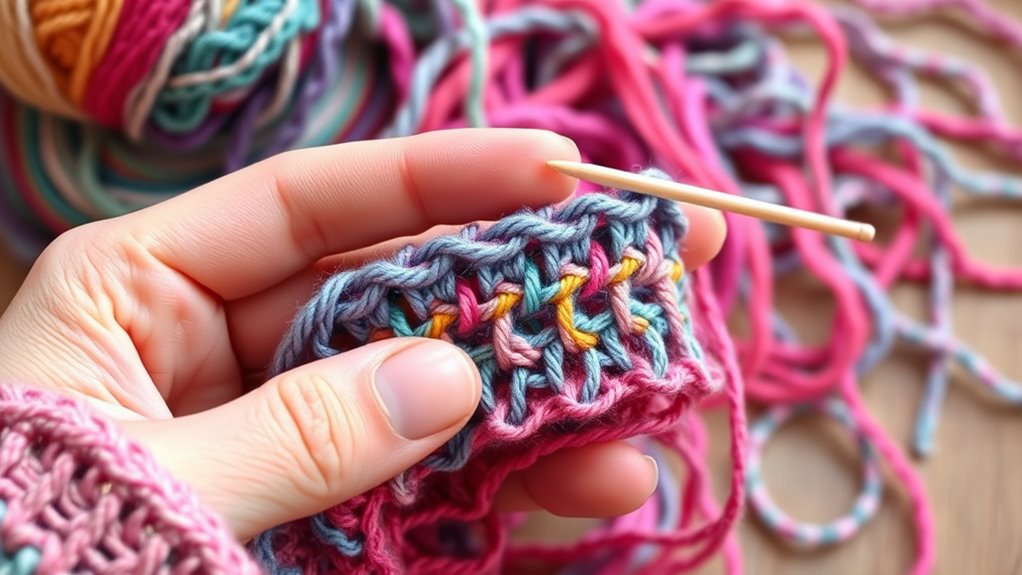
Crocheting can be a rewarding craft, but beginners often make simple mistakes that can hinder their progress. One of the most common issues is uneven stitch consistency, which occurs when your stitches are irregular in size and tension. This inconsistency can make your project look sloppy and affect the overall shape and structure. To improve stitch consistency, pay close attention to your tension control. Keeping your tension even helps guarantee each stitch is uniform, creating a smooth, professional finish. Practice maintaining a steady grip on your yarn and hook, and don’t pull too tightly or leave stitches too loose. As you gain experience, your tension will naturally become more consistent, but early on, consciously focusing on this aspect makes a big difference.
Another frequent mistake involves not paying attention to your tension control, which directly impacts your project’s quality. When your tension is too tight, your stitches become stiff and difficult to work into, leading to frustration and fatigue. Conversely, if your tension is too loose, your stitches may look sloppy and your project may lack structure. Finding the right tension takes practice; try to maintain a relaxed grip on your yarn and hook, and periodically check your work to see if your stitches are even. Adjust your grip if necessary, and don’t be discouraged if it takes time to develop a feel for balanced tension. Consistent tension is vital for achieving even stitch size, which in turn guarantees your project looks polished and professional.
Maintaining consistent tension is key to polished, professional-looking crochet projects.
Many beginners also struggle with maintaining even stitch length, which is closely related to stitch consistency and tension control. When your stitches vary in size, your project can end up skewed or uneven. To combat this, focus on counting your stitches regularly and making sure you’re working into the correct part of each stitch or chain. Keep your tension steady as you pull through your yarn, and aim to make each stitch the same size. A good tip is to pause and compare your stitches periodically, especially in the beginning, to catch any inconsistencies early. Over time, these habits will help you develop a more even and uniform crochet technique. Additionally, understanding the role of proper tension management in achieving even stitches can dramatically improve your overall results.
Finally, remember that mistakes are part of learning. Be patient and gentle with yourself as you practice controlling your tension and maintaining stitch consistency. With time and attention, your crochet will become more even, neat, and enjoyable. Practice makes perfect, and the more you focus on these fundamentals, the quicker you’ll see improvement in your craft.
Frequently Asked Questions
How Do I Fix a Dropped Stitch in My Project?
To fix a dropped stitch, first secure your crochet tension by gently pulling on the stitch to loosen it. Use a crochet hook to carefully lift the dropped stitch back onto the hook, working from the bottom up if necessary. Then, perform stitch repair by tightening the stitch and adjusting your tension to match your project. This keeps your work even and prevents further mistakes, ensuring your project stays neat.
What’s the Best Way to Choose the Right Yarn for Beginners?
To choose the right yarn for beginners, start with fiber selection that’s soft and easy to work with, like acrylic or cotton. Opt for light-colored yarns to see your stitches clearly and improve your technique. Consider color coordination to match your project’s style and make it more enjoyable. Pick a medium weight yarn, such as worsted, which is versatile and forgiving, helping you build confidence as you learn.
How Can I Maintain Consistent Tension Throughout My Work?
To maintain consistent tension throughout your work, focus on tension control by holding your yarn with a gentle but steady grip. Keep your yarn tension even as you crochet, avoiding pulling too tightly or too loosely. Practice regularly to develop muscle memory, and if your tension varies, pause to check your yarn tension and adjust your grip. Consistent tension guarantees your stitches look even and professional.
What Tools Are Essential for Troubleshooting Crochet Mistakes?
To troubleshoot crochet mistakes, you’ll want tools like stitch markers to identify uneven tension and keep track of your stitches. A row counter helps you manage tension management across rows, ensuring consistency. A good quality crochet hook suited to your yarn also helps maintain even tension. Additionally, a small ruler or gauge swatch can help spot tension issues early, allowing you to adjust your technique before your project gets complicated.
How Do I Prevent My Project From Curling or Bunching?
Think of your project as a delicate sculpture that needs careful shaping. To prevent curling or bunching, use blocking techniques to gently stretch and set your work, much like a sculptor refines a masterpiece. Incorporate yarn stabilization by adjusting tension and choosing the right yarn type. These steps help your project stay flat and even, giving it a polished look. With patience, your crochet will resemble a beautifully crafted artwork, not a crumpled mess.
Conclusion
By learning to spot and avoid common crochet mistakes, you’ll craft with confidence and precision. For example, imagine you’re creating a hat, and uneven tension causes it to stretch out of shape. If you stay mindful of tension and counting stitches, you’ll produce a beautiful, professional-looking piece. Remember, every mistake is a chance to learn. Keep practicing, stay patient, and soon you’ll be creating flawless projects that you’ll be proud of.