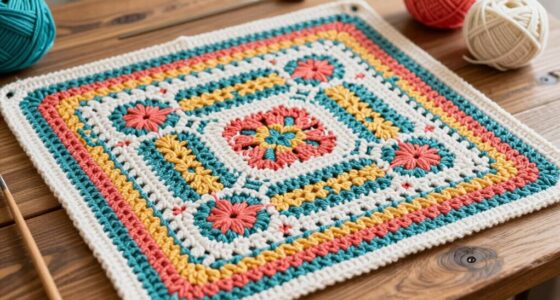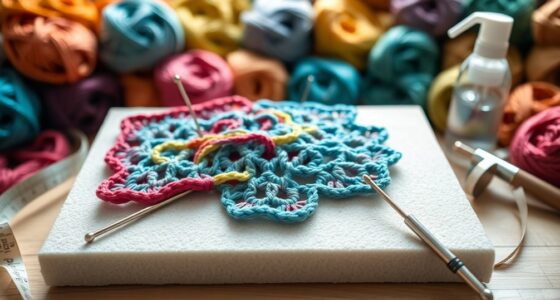
For beginner caregivers, understanding fabric types helps you pick the best materials for your needs. Natural fabrics like cotton, linen, wool, and silk offer breathability and biodegradability, ideal for comfort and sustainability. Synthetic fabrics such as polyester and nylon are durable and versatile but may shed microplastics. Sustainable options like hemp and bamboo support eco-friendly choices. To learn more about fabric properties and their uses, continue exploring this guide for practical tips and insights.
Key Takeaways
- Natural fibers like cotton, linen, wool, and silk are biodegradable, breathable, and ideal for clothing and home textiles.
- Synthetic fabrics such as polyester and nylon are durable, versatile, and commonly used in activewear and fashion.
- Sustainable fabrics like organic cotton, hemp, and bamboo reduce environmental impact and are suitable for eco-friendly products.
- Proper care varies by fabric type: natural fibers often need gentle washing, while synthetics require cold water and air-drying.
- Understanding fabric properties helps in selecting the right material for specific uses, ensuring durability and comfort.
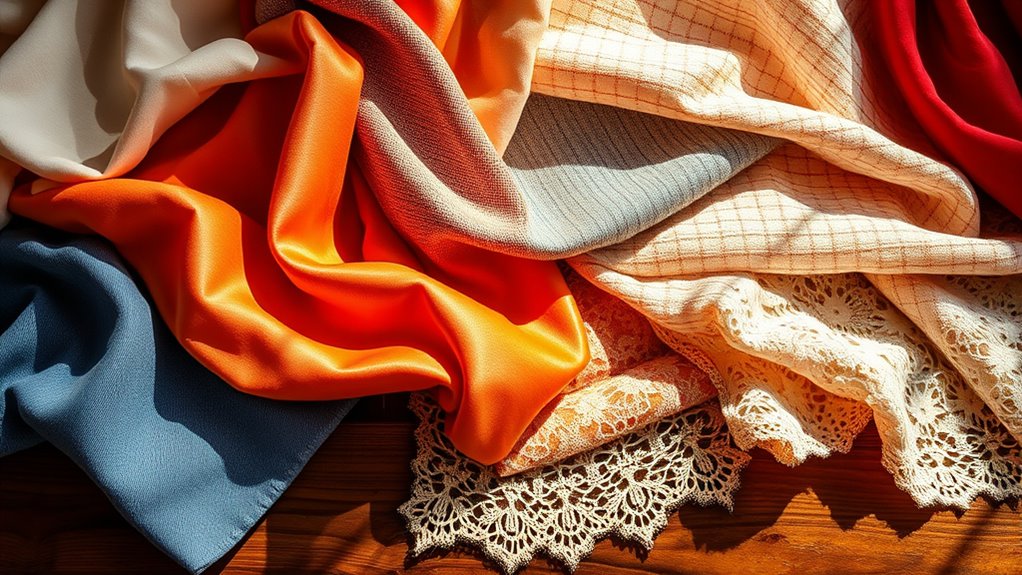
Fabrics come in a wide variety of types, each with unique properties that make them suitable for specific uses. When choosing the right fabric, it’s important to contemplate not only its appearance and feel but also its sustainability and how to care for it properly. Sustainable fabrics, like organic cotton, hemp, and bamboo, are gaining popularity because they reduce environmental impact and often require less water and chemicals during production. If you opt for these eco-friendly options, you’ll want to follow specific fabric care tips to prolong their lifespan and maintain their eco-credentials. For example, washing sustainable fabrics in cold water, avoiding harsh detergents, and air-drying can help preserve their fibers and reduce energy consumption.
Understanding fabric sustainability means recognizing how different materials are produced and their effects on the environment. Natural fibers like linen, wool, and silk are biodegradable and often sustainably harvested, but their care might differ. For instance, wool needs gentle washing or dry cleaning, and silk requires delicate handling to prevent damage. On the other hand, synthetic fabrics like polyester and nylon, while durable and versatile, are derived from non-renewable resources and can shed microplastics during washing. Being aware of this helps you make more informed choices and take steps to minimize environmental impact, such as using microfiber filters or choosing recycled polyester.
Caring for your fabrics properly not only extends their life but also supports fabric sustainability. For natural fibers, gentle washing and avoiding high heat are key fabric care tips. For example, linen and cotton can usually be machine washed, but using a gentle cycle and avoiding bleach will keep them looking fresh longer. Wool and silk, being more delicate, benefit from hand washing or dry cleaning, along with storing in cool, dry places. Synthetic fabrics often withstand frequent washing, but using cold water and avoiding fabric softeners can prevent fiber degradation and reduce environmental impact. Additionally, reducing wash frequency and air-drying whenever possible are effective fabric care tips that help conserve resources and keep your garments looking new.
Frequently Asked Questions
How Do I Care for Delicate Fabrics?
To care for delicate fabrics, always hand wash or use a gentle cycle with cold water. Avoid fabric softening products, as they can damage the fibers. When removing stains, gently dab with a mild stain remover instead of rubbing. Hang or lay flat to dry, avoiding direct sunlight. These steps help preserve your delicate fabrics and keep them looking their best longer.
Which Fabrics Are Most Eco-Friendly?
You can choose fabrics made from sustainable fiber options like organic cotton, hemp, Tencel, and linen, which are known for their eco-friendly fabric production. These materials typically require less water and chemicals, reducing environmental impact. By selecting these eco-friendly fabrics, you support sustainable practices and help lower your carbon footprint. Always look for certifications like GOTS or OEKO-TEX to verify the fabric truly aligns with eco-conscious standards.
Are Synthetic Fabrics Suitable for All Seasons?
Imagine wearing a synthetic jacket that keeps you warm during winter and dries quickly after rain. Synthetic fabrics are suitable for all seasons because they offer fabric breathability and synthetic durability. They maintain their shape and resist wear in harsh conditions. Whether it’s summer or winter, synthetic fabrics adapt well, making them practical choices for year-round wear, especially when you need durability and comfort in varying weather.
How Can I Identify Fabric Quality?
You can identify fabric quality by checking the fiber composition and fabric durability. Look closely at the fibers; natural fibers like cotton or wool tend to be softer and more breathable, while synthetic ones may feel smoother or shinier. Test durability by gently stretching the fabric; high-quality fabrics resist pilling, fraying, and tearing. Feel the weight and texture—better quality fabrics often feel more substantial and well-made.
What Fabrics Are Best for Sensitive Skin?
If you have sensitive skin, opt for fabrics made from hypoallergenic fibers or skin-friendly textiles. Look for materials like organic cotton, bamboo, linen, or silk, which are gentle and breathable. These fabrics reduce irritation and keep your skin comfortable all day. Always check labels for natural, chemical-free options, and avoid synthetic fabrics like polyester or nylon, which can cause itching or allergic reactions.
Conclusion
Understanding different fabric types helps you choose the right material for your projects. Did you know that cotton accounts for nearly 40% of global textile production? This highlights its popularity and versatility. By learning about fabrics, you can make smarter choices, ensuring comfort and durability. Keep experimenting with different materials, and you’ll soon craft clothing and home items that suit your style perfectly. Happy sewing and shopping!