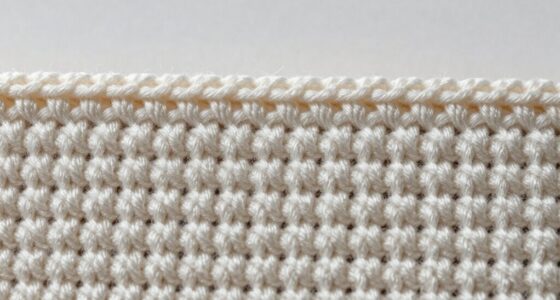
To mix fabrics without creating clutter, start with a unified color palette to keep everything cohesive. Contrast different textures like plush velvets, soft linens, and cozy knits to add depth without overwhelming the eye. Vary pattern sizes and keep bolder patterns balanced with solids. Layer textures thoughtfully, pairing smooth, matte finishes with glossy or textured options. Continue exploring smarter ways to combine fabrics to craft a warm, stylish space that feels both lively and balanced.
Key Takeaways
- Balance bold patterns with solid, neutral fabrics to prevent visual clutter and create a harmonious look.
- Vary fabric textures and weights thoughtfully to add interest without overwhelming the space.
- Use a cohesive color palette to unify different fabrics and maintain visual flow.
- Mix large-scale patterns with subtle prints to add depth while keeping the design balanced.
- Focus on contrast—pair smooth fabrics with textured ones—to enhance interest without appearing busy.
Why Texture Matters in Interior Design
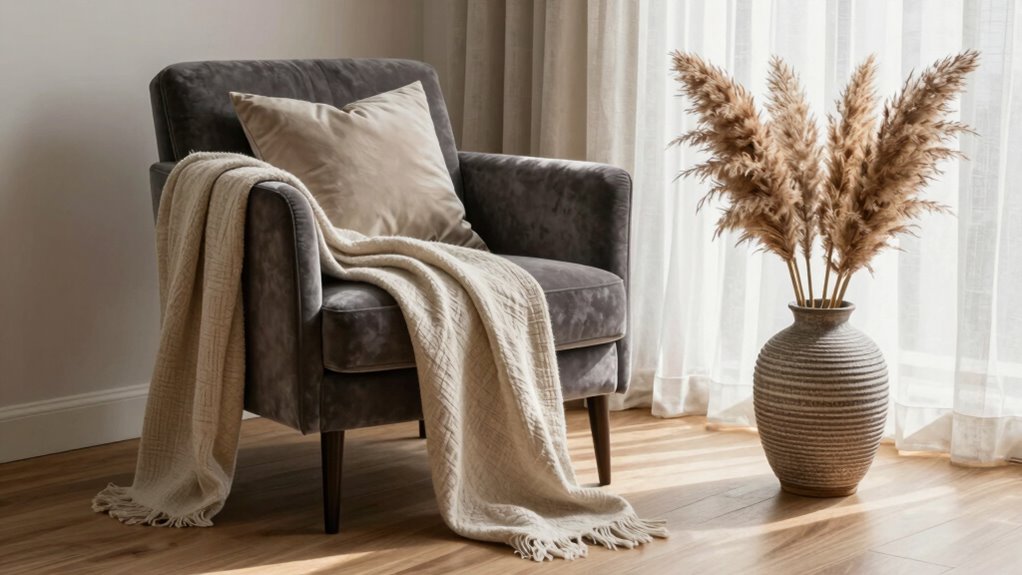
Texture plays an essential role in interior design because it adds depth and visual interest to a space. When you incorporate textural contrast, you create a layered look that keeps the eye engaged without feeling overwhelming. Texture enriches the sensory experience, making your environment more inviting and dynamic. It allows you to highlight different elements, such as soft throws against sleek furniture or rough stone walls contrasted with smooth surfaces. By thoughtfully mixing textures, you avoid flat or monotonous designs. Instead, you craft a space that feels balanced yet lively. Incorporating interior design principles ensures that your textures work harmoniously to create a cohesive and appealing environment. Additionally, understanding the benefits of texture can help you select materials that enhance comfort and aesthetic appeal, elevating your overall design and fostering a more inviting atmosphere. Embracing the psychological impact of textures can further deepen the sensory engagement and emotional connection within your space. For example, using layered textures can also improve personal debt forgiveness by creating a more comforting and reassuring environment that promotes well-being.
How to Choose the Right Fabrics for a Balanced Look
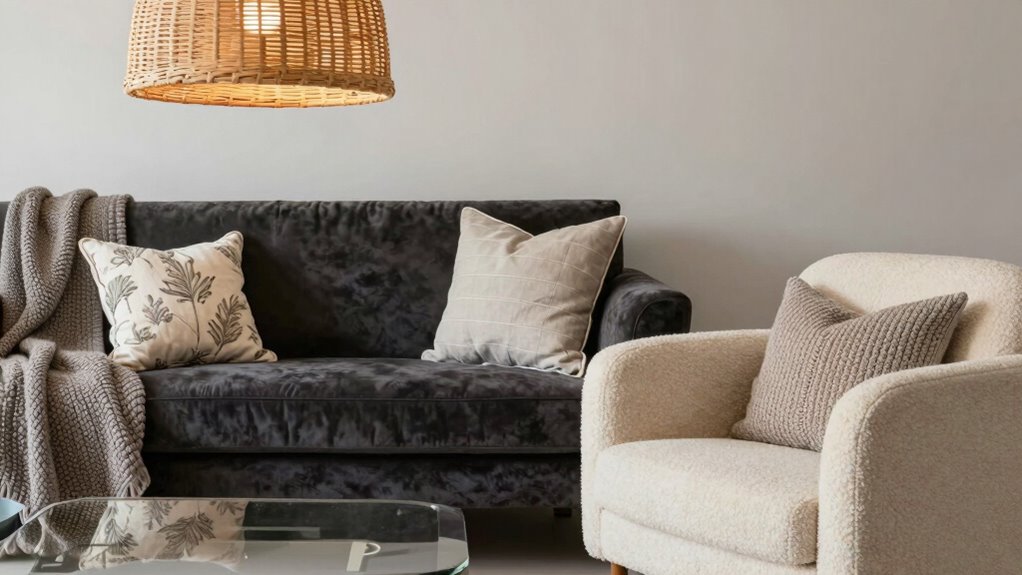
Choosing the right fabrics is essential for achieving a balanced look in your interior design because it influences the overall harmony and visual flow of the space. To do this, consider fabric weight—lighter fabrics like linens and silks create an airy feel, while heavier materials such as velvet or tapestry add depth. Pay attention to pattern scale; mixing large, bold patterns with smaller, subtle prints prevents overwhelming the eye. Incorporating fabric harmony and a variety of textures and sizes that complement each other without competing can significantly enhance the aesthetic. When selecting fabrics, think about how they’ll work together in terms of visual weight and pattern size. Additionally, integrating natural materials can help bring an organic, cohesive vibe to your design. This approach helps create a cohesive, balanced environment where textures enhance rather than clutter the space.
How to Mix Velvets, Linens, and Knits Without Clutter
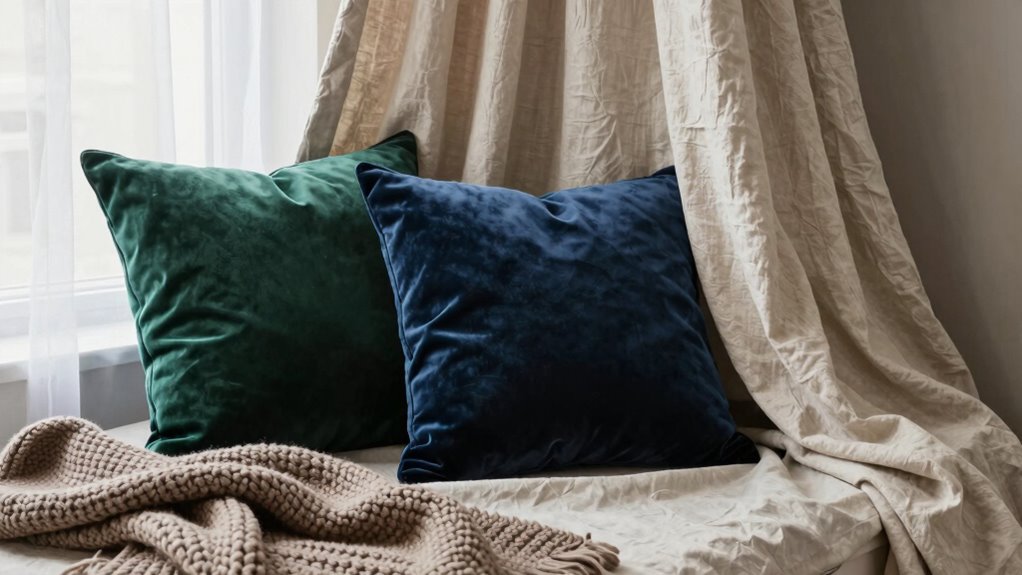
Mixing velvets, linens, and knits can add rich variety to your space, but it’s important to balance these textures to prevent clutter. Focus on contrasting fabric patterns and textures to create visual interest without overwhelming the room. For example, pair a smooth velvet with a textured knit to highlight their differences, and choose linens with subtle patterns to add depth without busying the look. Keep the color palette cohesive to unify the mix and avoid competing elements. Use solid colors or muted tones to anchor the space, and let the fabric pattern and texture contrast do the visual work. Incorporating textural balance helps ensure that the combination remains harmonious and inviting. By thoughtfully balancing these fabrics, you’ll achieve a layered, inviting look that feels curated rather than chaotic.
How to Make Colors and Patterns Work Together
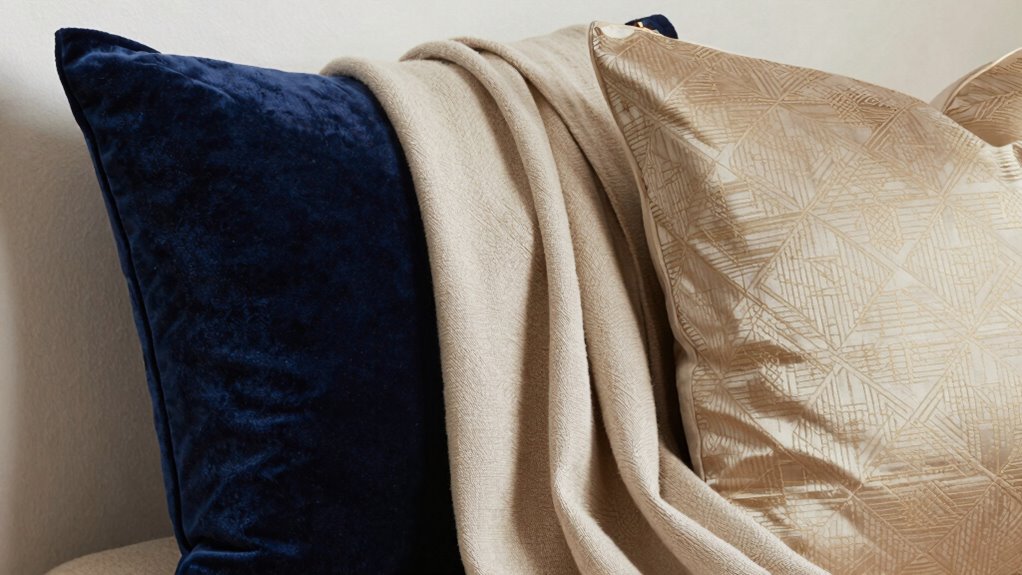
To make colors and patterns work together, you need to find the right balance between bold statements and neutral tones. Incorporate color anchors to ground your design and create harmony. This approach keeps your space lively without feeling overwhelming.
Balance Bold and Neutral
How can you create a balanced look when combining bold colors and patterns with neutral tones? The key is to focus on textural contrast and fabric harmony. Use neutral fabrics as a calming backdrop to let bold colors or patterns stand out without overwhelming the space. Incorporate different textures—like smooth silk next to rough linen—to add visual interest while maintaining cohesion. Keep the scale of patterns in check; pairing large, bold prints with subtle neutrals prevents the design from feeling chaotic. By balancing these elements thoughtfully, you create an environment that feels lively yet composed. Remember, the goal is to highlight the bold without losing the serenity of neutral tones. This approach ensures your space feels balanced, inviting, and visually engaging.
Use Color Anchors
Using color anchors is an effective way to unify bold fabric patterns and vibrant hues in your space. Choose a neutral or subdued color as your anchor—think soft beige, gray, or taupe—that appears in your main fabrics or accessories. This creates a visual connection among different textures and patterns, helping them feel cohesive rather than chaotic. When mixing fabric patterns, such as a floral with geometric or striped textures, rely on your color anchor to balance the texture contrast. It grounds the design and prevents the space from looking overly busy. Incorporating a consistent color anchor ensures that even with varied patterns and textures, your room maintains harmony and visual flow.
Layering Techniques to Add Depth and Avoid Overwhelm
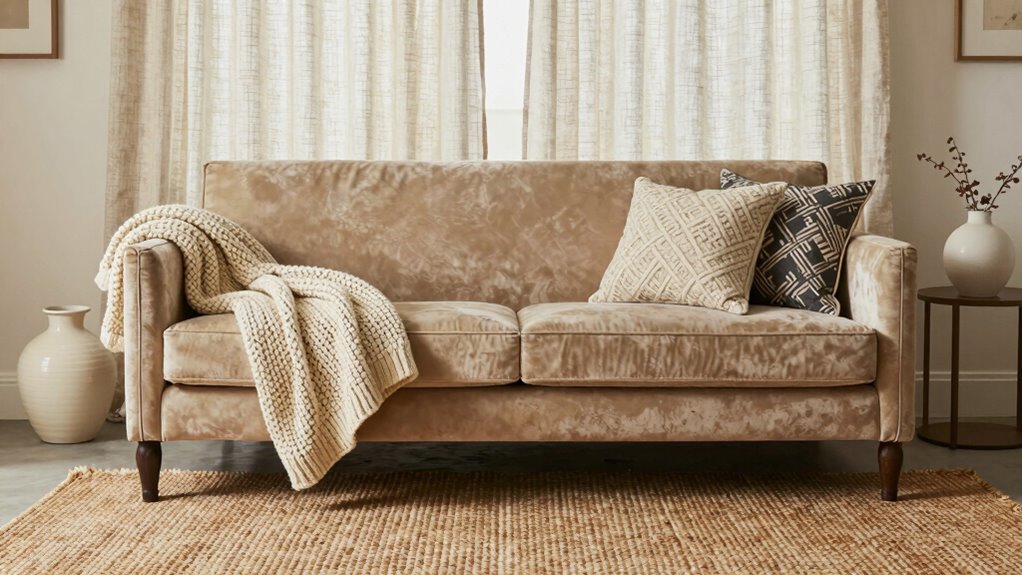
When layering textures in your design, maintaining a balance that adds visual interest without creating chaos is vital. Focus on fabric contrast to highlight individual textures while keeping tactile harmony in mind. Choose fabrics with varying textures—smooth, plush, rough—but make sure they complement each other rather than compete. Use a mix of matte and glossy finishes to create subtle depth. Keep larger textured pieces as foundational elements, then layer smaller accents to add dimension without overwhelming the space. By carefully balancing contrasting fabrics, you create a layered look that feels rich yet cohesive. This approach guides the eye smoothly across the space, preventing cluttered or busy appearances. The goal is to invite touch and visual intrigue without sacrificing serenity.
Practical Tips for Combining Textures in Living Rooms, Bedrooms, and More
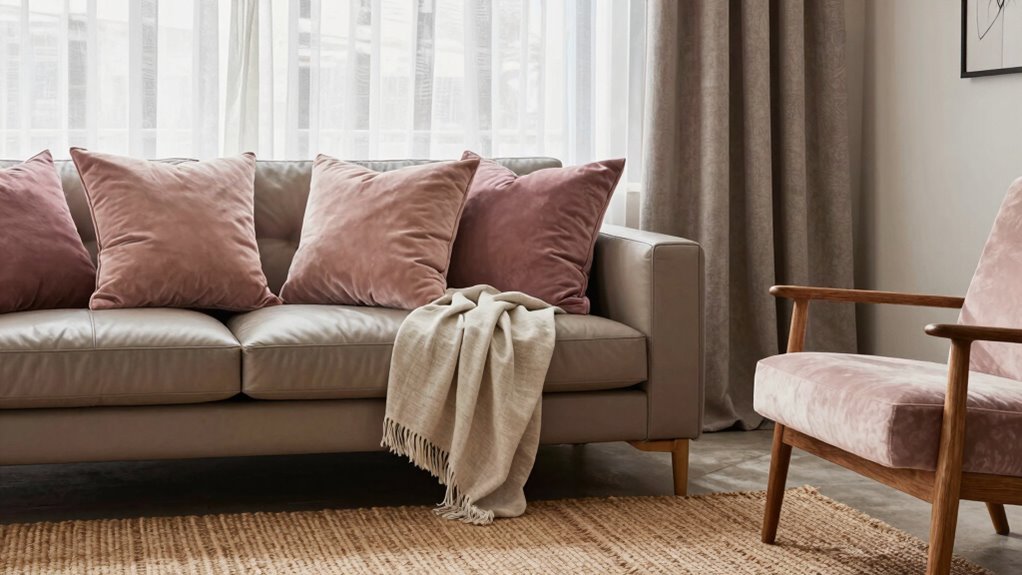
Combining textures effectively in living rooms, bedrooms, and other spaces starts with understanding the role each element plays. Your decor theme guides your texture choices—richer fabrics suit traditional styles, while sleek or natural textures complement modern furniture styles. Mix smooth materials like silk or leather with rougher ones like woven rugs or linen to add visual interest without clutter. Keep a balance by pairing bold textures with subtle ones, ensuring no single element dominates. Use a consistent color palette to unify varied textures, and layer different fabrics thoughtfully, considering scale and placement. This approach helps create inviting, harmonious spaces that reflect your style while avoiding chaos. Remember, the key is variety paired with cohesion to achieve an effortlessly stylish look. Incorporating curiosity about different fabric types can also inspire more creative and personalized combinations.
Common Mistakes When Mixing Fabrics and How to Avoid Them
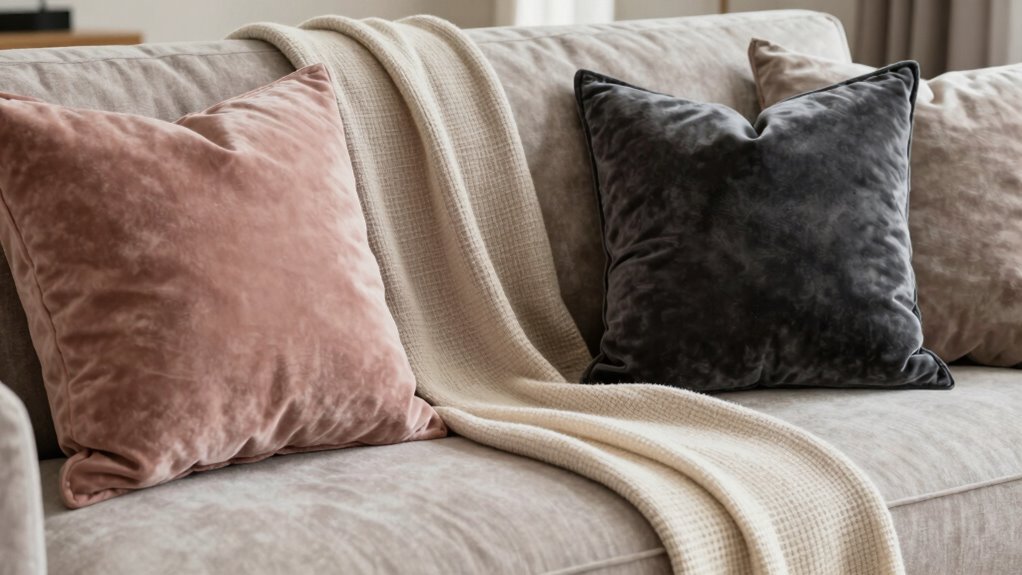
Mixing fabrics without careful planning can lead to a cluttered or disjointed look that undermines your overall design. One common mistake is combining too many fabric patterns without considering scale or color harmony, which can make the space feel chaotic. Another pitfall is neglecting fabric maintenance; choosing delicate fabrics that require constant upkeep can become frustrating and unsustainable. To avoid this, stick to a cohesive color palette, balancing bold patterns with solid textures. Limit the number of patterns you mix, and ensure they vary in scale for visual interest without overwhelming the eye. Also, select fabrics that suit your lifestyle and maintenance preferences, so your space stays beautiful and functional over time. Thoughtful coordination is key to a polished, inviting environment. Additionally, understanding fabric durability can help you select materials that will stand up to daily wear and tear, ensuring your design remains attractive long-term.
How to Incorporate Textures for a Cozy, Inviting Atmosphere

To create a cozy, inviting space, start by layering different textures like plush rugs, soft throws, and woven baskets. Mix soft fabrics with rougher surfaces to add visual interest and depth. Stick to warm, neutral colors to enhance the comforting atmosphere you want to achieve. Incorporating sustainability practices into your decor choices can also create a more eco-friendly and inviting environment. Selecting eco-friendly materials for your textiles and furnishings can further support your sustainability goals.
Layer Different Textures
Ever wondered how to create a space that feels warm and inviting? The key is in fabric layering, which adds depth and richness through tactile contrast. Start by mixing different textures, like a soft velvet pillow against a rough linen throw, to make each element stand out. Varying fabric weights and finishes creates visual interest without clutter. For example, combine a plush rug with sleek leather furniture or a chunky-knit blanket with smooth cotton sheets. This layering not only enhances the tactile experience but also makes your space feel more cozy. Remember, it’s about balancing textures so they complement rather than compete. Incorporating sound healing science principles can also add a soothing, healing dimension to your environment. With thoughtful fabric layering, you craft an inviting atmosphere that beckons you to relax and linger.
Mix Soft and Rough
Incorporating both soft and rough textures is a simple way to make your space feel cozy and inviting. By contrast textures, you create tactile layering that adds depth without overwhelming the eye. Combine a plush velvet cushion with a coarse woven throw, or pair a smooth leather sofa with a rugged jute rug. The key is balancing these elements so they complement rather than compete. Soft textures invite relaxation, while rough ones add visual interest and grounding. When you contrast textures thoughtfully, you craft a space that’s rich in tactile experience but still cohesive. This mix encourages comfort and warmth, making every corner feel intentionally designed and welcoming. Keep your palette simple to ensure the textures shine without cluttering the overall aesthetic.
Use Warm, Neutral Colors
Have you noticed how warm, neutral colors instantly make a space feel inviting? Using shades like beige, taupe, or soft greys creates a cozy foundation that pairs well with textured fabrics. These colors serve as a perfect backdrop for seasonal accents, allowing you to switch out accessories without overwhelming the room. Plus, neutral tones often enhance fabric durability, as they hide wear and stains better than brighter hues. When selecting textiles, opt for those in warm, neutral shades to maintain a calm, harmonious environment. This approach also helps in mixing various textures—like plush throws or woven rugs—without making the space look busy. Incorporating versatile fabric choices can further personalize your textiles and add subtle visual interest. Ultimately, warm, neutral colors foster a welcoming atmosphere that’s both stylish and comfortable.
Expert Tips for Creating a Cohesive, Stylish Space With Mixed Fabrics
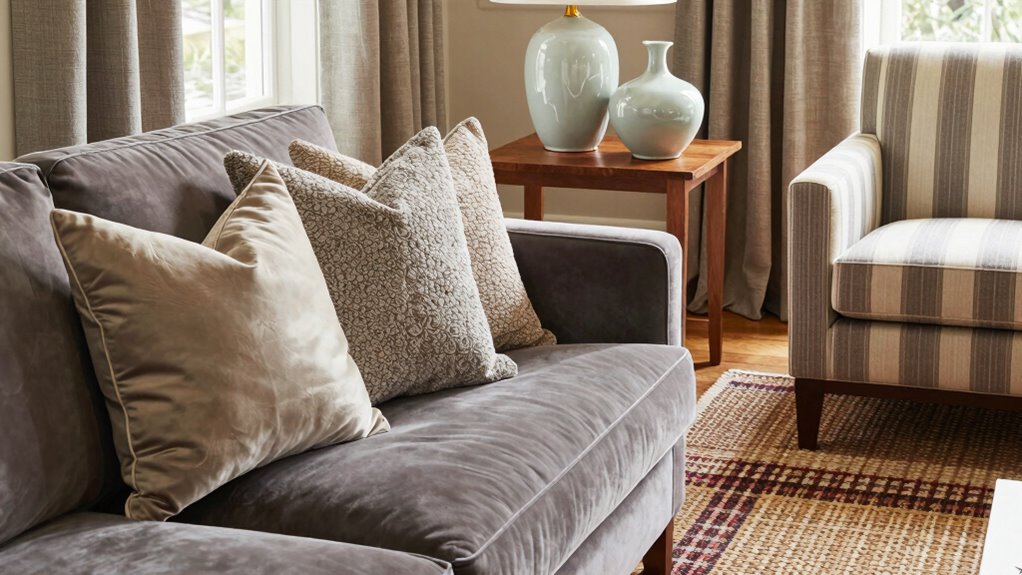
Mixing fabrics can elevate your space by adding depth and visual interest, but achieving a cohesive look requires some strategy. To master fabric combinations, start by selecting a unifying color palette that ties different textures together. Focus on texture contrasts, pairing smooth, sleek fabrics with plush, textured ones to create variety without chaos. Balance bold patterns with solid fabrics to avoid overwhelming the eye. Keep the scale of prints and textures varied but harmonious. When mixing fabrics, consider how they’ll interact under different lighting conditions and in different spaces. Using fabric durability considerations ensures your selections will stand the test of time and use. Additionally, paying attention to the material composition can help you choose fabrics that are easier to clean and maintain. Incorporating fabric care tips into your choices further prolongs the beauty of your fabric selections. With thoughtful fabric choices and a focus on contrast and cohesion, you’ll craft a stylish, inviting space that feels intentional and balanced.
Frequently Asked Questions
How Do I Prevent Fabrics From Clashing Visually?
To prevent fabrics from clashing visually, focus on fabric contrast and tactile harmony. Choose fabrics with complementary colors or subtle patterns, balancing bold textures with softer ones. Stick to a cohesive color palette to unify different fabrics, and vary textures thoughtfully to create interest without chaos. By blending contrasting fabrics thoughtfully, you’ll achieve a harmonious look that feels intentional and polished, avoiding a busy or chaotic appearance.
What Are the Best Fabric Combinations for Small Spaces?
You want to master fabric pattern mixing and color coordination tips for small spaces, right? Think of it as a delicate dance—pair small-scale prints with solid colors or subtle textures to avoid overwhelming your room. Use neutral tones to anchor bold patterns, and incorporate varied textures like velvet or linen to add depth without clutter. This way, your space feels sophisticated, cozy, and perfectly balanced, even in tight quarters.
How Can I Incorporate Textures Without Making a Room Feel Busy?
To incorporate textures without making your room look busy, focus on fabric layering and tactile contrast. Start with a neutral base and add varied textures like velvet, linen, or faux fur, ensuring they complement each other. Use different fabric weights and finishes to create depth without overwhelming the space. Keep accessories and furniture simple, allowing the tactile contrast to add interest without cluttering, so your room feels inviting rather than chaotic.
Are There Specific Textures That Work Better Together?
Think of your textures as a symphony—complementary textures like velvet and linen create harmony, while contrasting fabrics like leather and silk add excitement. Stick with a balanced mix, pairing soft with smooth, matte with shiny, to keep your space cohesive. By blending these textures thoughtfully, you’ll avoid a busy look and instead craft a room that feels rich, inviting, and visually engaging without overwhelming.
How Do I Balance Texture and Color for a Cohesive Look?
To balance texture and color for a cohesive look, use layering techniques to add depth without overwhelming your space. Stick to a harmonious color palette, choosing shades that complement each other, and introduce textured fabrics gradually. Mix different textures within the same color family to maintain visual interest while keeping everything unified. This approach guarantees your design feels intentional and balanced, without appearing busy or chaotic.
Conclusion
By understanding how to blend textures thoughtfully, you can create a space that feels balanced and inviting. Remember, it’s all about mixing different fabrics without making it look like a cluttered mess—think of it as weaving a beautiful tapestry. Trust your instincts, experiment with layers, and don’t be afraid to break the rules a bit. With patience and a keen eye, you’ll have a stylish, cozy space that’s truly your own.