To store fabric and patterns safely, keep them in a cool, dry, and dark space away from direct sunlight, humidity, and pests. Always wash and iron fabric before storing, then roll it to prevent creases, using breathable containers like cotton bags or bins. Store patterns flat in labeled folders or roll them around sturdy tubes to avoid damage. Proper organization and consistent habits help preserve quality; explore more tips to keep your materials in top condition.
Key Takeaways
- Store fabrics in a cool, dry, and dark environment using breathable containers like cotton bins or fabric bags.
- Wash and iron fabrics before storage to remove dirt and wrinkles, and handle them carefully to prevent damage.
- Roll fabrics around sturdy tubes to minimize creases and store patterns flat in labeled folders or rolls with protective sleeves.
- Keep stored fabrics and patterns away from direct sunlight, humidity, and heavy weights to prevent fading and permanent creases.
- Regularly inspect and maintain storage conditions to ensure fabrics and patterns remain in good condition for future use.
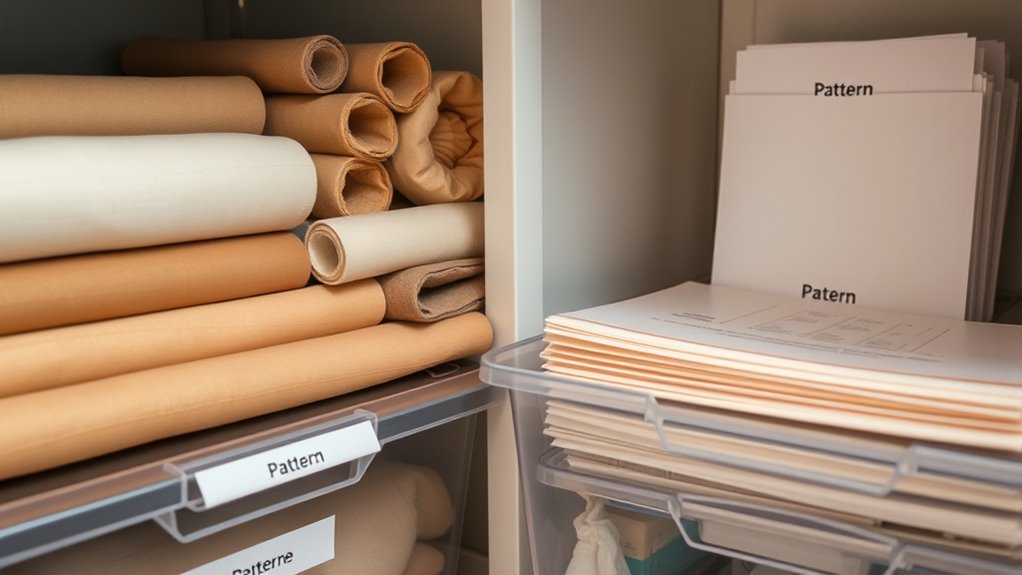
Ever wondered how to keep your fabric and patterns in top condition for future projects? Proper storage is key to maintaining their quality and ensuring they’re ready whenever inspiration strikes. When it comes to fabric care, how you store your fabric can make all the difference. Keep your fabrics clean, dry, and free from pests by storing them in a cool, dark, and dry environment. Avoid direct sunlight, which can fade colors over time, and steer clear of humid areas that promote mold and mildew. Rolling your fabric instead of folding minimizes creases and deep wrinkles that can be difficult to remove later. Use breathable storage options like cotton bins or fabric bags to allow air circulation, preventing mustiness and mold growth. For added protection, consider placing silica gel packs or cedar blocks nearby to deter pests and keep fabrics fresh. When handling your fabric, always wash and iron it before storage, especially if it’s been used or handled extensively, to remove oils, dirt, and residues that could attract insects or cause deterioration. Additionally, storing your fabric in temperature-controlled environments can help preserve it over time by preventing fluctuations that cause damage. Pattern organization is equally important to prevent damage and keep your designs accessible. Store patterns in flat, labeled folders or envelopes to avoid unnecessary creasing. Clear plastic sleeves help protect from dust and moisture while allowing you to see the pattern details at a glance. If space is limited, consider rolling your patterns around a sturdy cardboard tube or a pattern roll holder, then secure them with rubber bands or clips. Label each pattern clearly, including size, date, and any modifications you’ve made, so you can quickly locate what you need later. When stacking patterns, ensure they’re not compressed under heavy items, which can cause permanent creases. For digital patterns, organize your files into clearly labeled folders on your computer or cloud storage to keep everything neatly categorized and easy to access. Proper pattern storage not only preserves the integrity of your designs but also streamlines your workflow, saving you time and frustration when you’re ready to sew. Ultimately, both fabric care and pattern organization are about being deliberate and consistent in your storage habits. Taking a little extra time to store your materials properly now pays off by extending their lifespan and keeping them in prime condition for all your creative projects. By implementing these simple tips, you’ll find it easier to keep your fabric and patterns safe from damage, creases, and deterioration, allowing your sewing projects to flourish for years to come.
Frequently Asked Questions
How Do I Prevent Mold Growth on Stored Fabric?
To prevent mold growth on stored fabric, you should control moisture by keeping the storage area dry and well-ventilated. Use silica gel packs or dehumidifiers to absorb excess humidity, and make certain fabrics are completely clean and dry before storage. Regularly check your stored fabric for any signs of mold or dampness. Proper moisture control is key to mold prevention, helping your fabric stay fresh and undamaged over time.
What’s the Best Way to Store Delicate or Vintage Patterns?
To store delicate or vintage patterns, you should carefully fold them using gentle fabric folding techniques to prevent creases. Place the patterns in acid-free tissue paper to protect their paper quality, then store them flat in a sturdy, labeled storage box. This method guarantees vintage pattern preservation, keeps them free from damage, and maintains their quality over time. Avoid rolling or stuffing to prevent unnecessary stress.
How Often Should I Check My Stored Fabric for Damage?
You should check your stored fabric every 3 to 6 months to guarantee it remains in good condition. During these storage intervals, perform a thorough fabric inspection, looking for signs of damage, pests, or creases. If you notice any issues, take immediate steps to address them, like re-folding or re-wrapping the fabric. Regular inspections help prevent long-term damage and keep your fabric fresh and ready for use.
Can I Store Fabric in Plastic Containers Long-Term?
Yes, you can store fabric in plastic containers long-term, but choose airtight containers carefully. If you seal your fabric tightly, moisture gets trapped, risking mold or mildew. Instead, opt for breathable storage options or use breathable fabric bags inside the containers. This way, you protect your fabric from damage while allowing air circulation. Don’t underestimate the importance of proper storage—your fabric’s quality depends on it.
What Are Common Mistakes to Avoid When Storing Fabric?
When storing fabric, avoid common mistakes like improper fabric folding that causes creases or damage. Don’t forget to label your patterns clearly—this saves time and keeps things organized. Also, steer clear of storing fabric in direct sunlight or humid areas, which can harm the material. Instead, fold fabric gently, keep patterns labeled, and choose a cool, dry place to maintain quality and prevent unnecessary damage.
Conclusion
By following these simple tips, you’ll keep your fabrics and patterns in top shape and ready for your next project. Proper storage prevents damage, creases, and unnecessary wear, saving you time and money in the long run. Remember, a stitch in time saves nine—so take care of your materials now to avoid bigger problems later. With a little effort, your fabrics will stay pristine and your creative flow will stay uninterrupted.