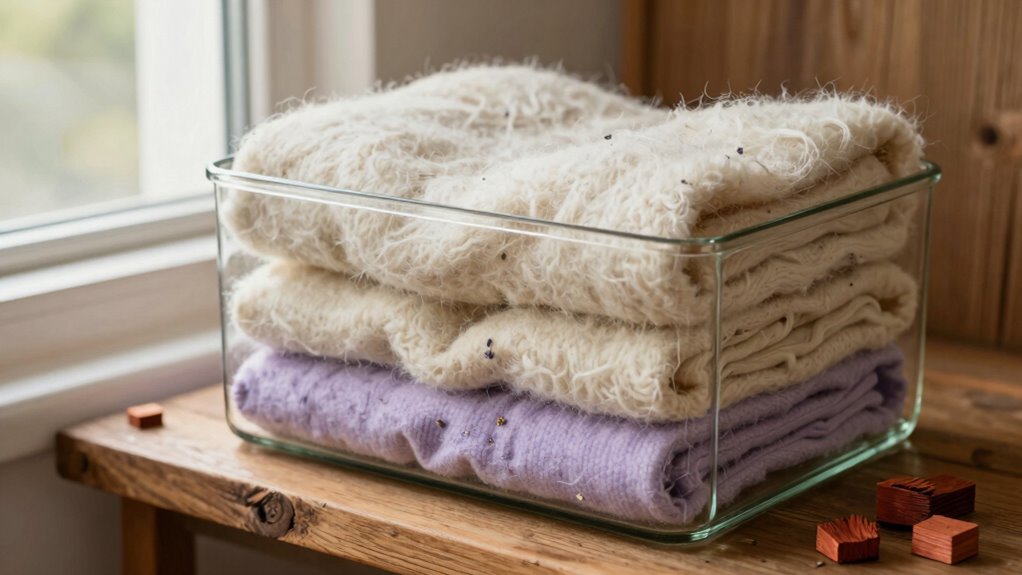

To store wool fabric so it doesn’t attract pests, choose a clean, dry, well-ventilated space away from direct sunlight and heat. Use breathable covers like cotton or linen, and avoid sealed plastic containers without ventilation. Incorporate natural pest repellents such as cedar chips, lavender, or rosemary, and replace them regularly. Inspect your stored wool periodically for signs of pests. Keep your storage environment eco-friendly—if you want to discover more tips, continue exploring effective wool preservation methods.

Get business pricing on tools and workshop supplies
- Business-only prices and quantity discounts
- Tax-exempt purchasing
- Multiple users, one account, clear invoices
Key Takeaways
- Store wool in a clean, dry, well-ventilated area away from direct sunlight and heat sources.
- Use breathable covers like cotton or linen, and punch ventilation holes if using plastic containers.
- Incorporate natural repellents such as cedar chips, lavender, or rosemary inside storage containers.
- Regularly inspect and air out wool items to detect pests early and prevent infestation.
- Keep storage space clean and clutter-free to reduce pest attraction and maintain fiber integrity.

Properly storing wool fabric is essential to keep it looking its best and prevent damage over time. Pests like moths and beetles are common threats that can ruin your wool items if you’re not careful. To protect your fabric, start by choosing a clean, dry storage area. Wool is sensitive to moisture, so ensure the space is well-ventilated. Good airflow helps keep humidity at bay, which is vital because dampness attracts pests and encourages mold growth. Avoid cramped closets or sealed plastic containers without ventilation, as these can trap moisture and create a perfect environment for pests.
Using natural repellents is a smart way to deter pests without relying on chemical treatments. Sachets filled with cedar chips, lavender, or rosemary work effectively because their scents disturb pests’ senses and make your wool less appealing. You can also place dried herbs or essential oil-infused cotton balls inside your storage containers or drawers. Be sure to replace or refresh these natural repellents regularly to maintain their effectiveness. Additionally, keeping your wool items clean before storing them is crucial—pests are attracted to dirt, sweat, and food residues, so wash or dry clean your wool garments thoroughly.
When storing wool, fold the fabric carefully to avoid creases and stress on the fibers, which can weaken the material over time. Wrap your wool items in breathable cotton or linen covers instead of plastic, allowing air circulation and preventing moisture buildup. If you prefer using plastic bags for long-term storage, punch small holes in them to enhance ventilation, but consider placing a natural repellent inside the bag for added protection. Proper storage techniques are key to maintaining wool’s integrity and preventing pest issues. Also, avoid storing wool near direct sunlight or heat sources, as these can dry out fibers and make them more vulnerable to pests. Regularly inspecting your stored wool is key to catching any signs of pests early. Every few months, open your storage and check for signs of moths, larvae, or holes. If you notice any issues, increase the use of natural repellents and consider airing out the items in a well-ventilated space. Maintaining a clean storage environment, combined with the use of natural repellents and proper ventilation, creates a hostile environment for pests and keeps your wool fabric safe, fresh, and in excellent condition for years to come.
Additionally, incorporating biodiversity and conservation principles can help create a more sustainable and eco-friendly approach to pest prevention, reducing reliance on chemical treatments.
cedar wood moth repellent sachets
As an affiliate, we earn on qualifying purchases.
As an affiliate, we earn on qualifying purchases.
Frequently Asked Questions
Can I Store Wool Fabric Outdoors Safely?
Storing wool fabric outdoors isn’t recommended unless you take proper precautions. Use outdoor storage options like sealed containers or waterproof bags to protect it from moisture. Incorporate pest proofing techniques, such as adding cedar blocks or lavender sachets, to deter pests. Make certain the storage area is elevated and sheltered from direct sunlight and rain. With these steps, you can safely store wool outdoors while minimizing damage and pest attraction.
How Often Should I Check Stored Wool for Pests?
You should check your stored wool every month, keeping a close eye on your storage containers for any signs of pests. Regular inspections are essential for pest prevention, catching issues early before they become a full-blown infestation. Carefully examine the fabric and container seals, ensuring nothing has breached your defenses. Staying vigilant not only protects your wool but also preserves its quality, giving you peace of mind in your storage practices.
Are Natural Repellents Better Than Chemical Ones?
Natural alternatives are generally better than chemical solutions when it comes to repelling pests from wool fabric. They’re safer for your health and the environment, and often smell better too. You might try using cedarwood or lavender, which naturally deter insects without harmful chemicals. Chemical solutions can be effective but may pose risks of toxicity or residue. So, for a safer, eco-friendly approach, stick with natural repellents whenever possible.
Does Washing Wool Before Storage Prevent Pests?
Washing wool before storage is like sweeping away the shadows before they settle. It removes dirt, oils, and potential pest attractants, making it less inviting for pests. Pre-storage cleaning is a crucial pest prevention method, reducing the risk of moths and other critters. By thoroughly washing your wool, you improve its chances of staying pest-free during storage, ensuring your fabric remains pristine and ready for future use.
What Temperature Is Ideal for Storing Wool Fabric?
You should store wool fabric in a cool, climate-controlled environment, ideally between 50-65°F (10-18°C), to prevent damage and pest attraction. Proper fabric preparation, such as cleaning and thoroughly drying the wool, is essential before storage. Maintaining consistent temperatures and humidity levels helps preserve the wool’s quality and deters pests. Avoid fluctuations that can cause wool to shrink or develop mold, ensuring your fabric stays in good condition.
Conclusion
By following these simple storage tips, you’ll turn your wool fabric into an impenetrable fortress, warding off pests like a knight guarding a treasure. Imagine your wool as an invincible fortress, resistant to even the sneakiest moths and bugs trying to invade. With airtight containers, cedar blocks, and proper cleaning, you’ll keep pests at bay so effectively that even the sneakiest critters will give up and look elsewhere. Your wool will stay pristine, protected, and pest-free forever!
Fall Picks
fall essentials
As an affiliate, we earn on qualifying purchases.