Don’t toss that old sweater—turn it into cozy mittens even if you hate patterns by choosing thick, stretchy fabrics like wool or knit. Simply trace around your hand or a basic glove, cut out two mirrored pieces, and sew them together, leaving the wrist open. Add your own style with patches, embroidery, or paint to make them unique. Want easy tips and tricks? Keep going to see how you can craft perfect, eco-friendly mittens with whatever you have on hand.
Key Takeaways
- Use thick, stretchy sweater fabric for easy, pattern-free mitten making that molds comfortably to your hands.
- Trace and cut two mirrored pieces directly from the sweater for a simple, no-pattern design.
- Sew the pieces together with basic stitches, leaving the wrist open, to create cozy, custom mittens.
- Personalize your mittens with embroidery, patches, or fabric paint to add style without patterns.
- Reusing sweaters reduces waste, saves money, and results in warm, eco-friendly mittens perfect for DIY reuse.
How to Prepare Your Sweater and Gather Supplies
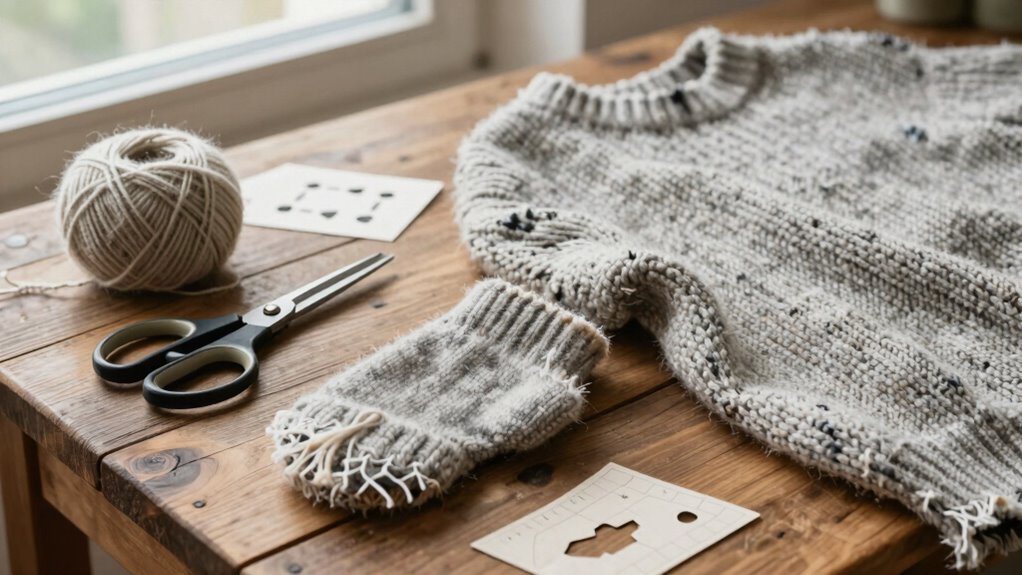
Before you start turning your old sweaters into cozy mittens, it’s important to prepare your materials. First, choose the right fabric selection—look for thick, stretchy wool or knit sweaters that will keep your hands warm. Avoid thin or heavily patterned fabrics if you prefer a simple look; solid-colored or textured sweaters work best. Next, gather your sewing tools: sharp scissors, a needle, matching thread, and perhaps a fabric marker for tracing patterns. Make sure your scissors are sharp enough to cut through the sweater’s thick material easily. Taking the time to select suitable fabric and ensure your sewing tools are in good condition helps you create sturdy, comfortable mittens with minimal hassle. Also, understanding basic kitchen fundamentals can help you approach your sewing project with patience and precision, ensuring a better final result. Proper fabric care can extend the life of your handmade mittens and keep them looking their best. Additionally, paying attention to material handling is essential to avoid damaging delicate fibers during cutting and sewing. Being mindful of sewing techniques will further improve the durability and appearance of your finished mittens.
Why Reusing Old Sweaters for Mittens Is Eco-Friendly and Cost-Effective
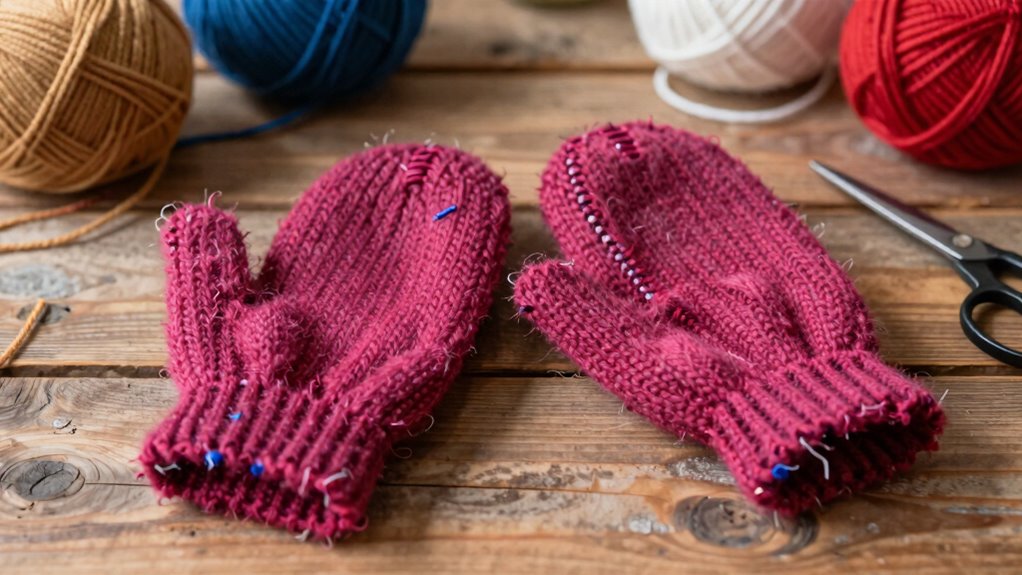
Reusing old sweaters for mittens is both eco-friendly and budget-conscious. By repurposing garments you already own, you reduce textile waste and lessen the environmental impact of fast fashion, supporting sustainable fashion goals. This approach aligns perfectly with DIY eco projects, allowing you to create something useful without buying new materials. Not only do you save money on new gloves, but you also extend the life of your sweaters, making your wardrobe more sustainable. Reusing old sweaters minimizes landfill contributions and cuts down on resource consumption involved in manufacturing new clothing. It’s a simple, effective way to embrace eco-conscious habits while crafting cozy mittens. Plus, it gives you a sense of satisfaction knowing you’re making a positive environmental difference with your DIY projects. Additionally, understanding the importance of material choice can help ensure your mittens are both durable and comfortable.
How to Make Mittens From Sweaters Without Patterns: a Step-By-Step Guide
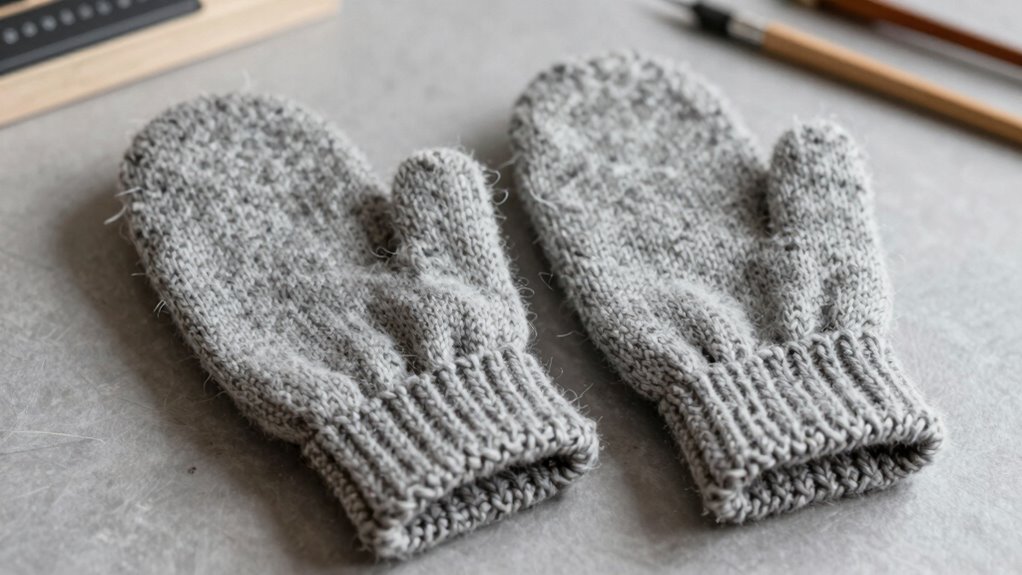
Creating mittens from old sweaters without patterns is simpler than you might think. Start by choosing a sweater with a sturdy, warm fabric like wool or thick cotton, which holds its shape well. Use your hand or a pair of gloves to trace around your fingers and palm, leaving a small seam allowance for sewing. When selecting fabric, confirm it’s comfortable and not too stretchy. For mitten sizing tips, measure your hand around the widest part of your palm and the length from wrist to fingertips. Cut out two mirrored pieces for the front and back of each mitten. Remember, it’s better to make them slightly larger than too tight. Sew the pieces together, leaving the wrist open, then finish the edges for a cozy, custom fit. Understanding fabric selection helps ensure your mittens will be both warm and durable. Additionally, paying attention to care instructions can extend the life of your homemade mittens. Proper fabric care can also help maintain their shape and insulating properties over time. Incorporating creative design techniques can make your mittens uniquely stylish and personalized. Exploring different sewing techniques can also improve the overall quality and durability of your finished mittens.
Tips to Customize and Style Your Recycled Sweater Mittens
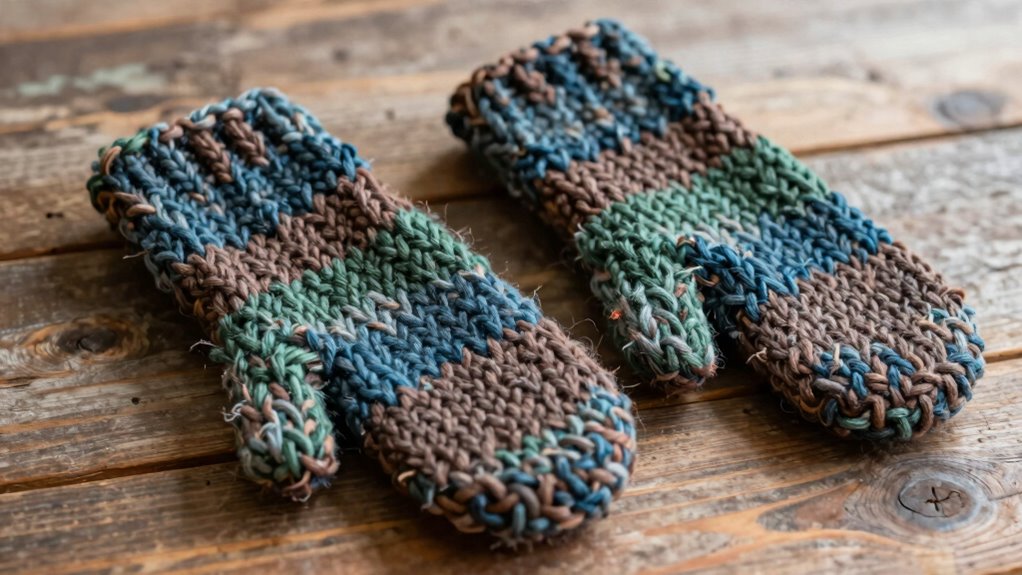
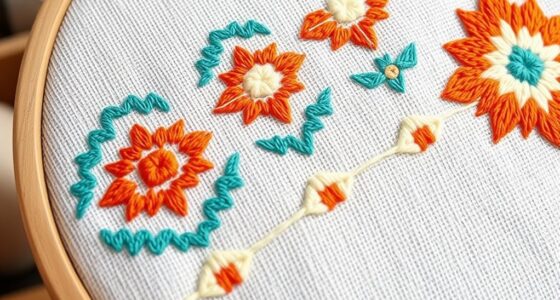
To make your recycled sweater mittens truly stand out, consider adding personalized touches like embroidery, patches, or fabric paint. These embellishment options let you showcase your style and make your mittens unique. When choosing embellishments, think about color coordination—select colors that complement or contrast your sweater for a cohesive look. For example, if your sweater is a neutral tone, bright patches or embroidery can add a pop of color. Conversely, matching thread or paint shades to your sweater’s hues create a subtle, sophisticated effect. Don’t be afraid to experiment with different textures or layering techniques to add depth. Exploring creative embellishment techniques can also personalize your mittens for fellow fans and players. Additionally, experimenting with fabric blending methods can help you achieve more dynamic and textured designs. Incorporating textile manipulation techniques can further enhance your creative possibilities. Paying attention to fiber content can ensure your embellishments hold up over time and maintain their visual appeal. These small details transform simple recycled mittens into fashionable accessories that reflect your personality and creativity.
Troubleshooting Common Sewing Issues and Finishing Your Mittens
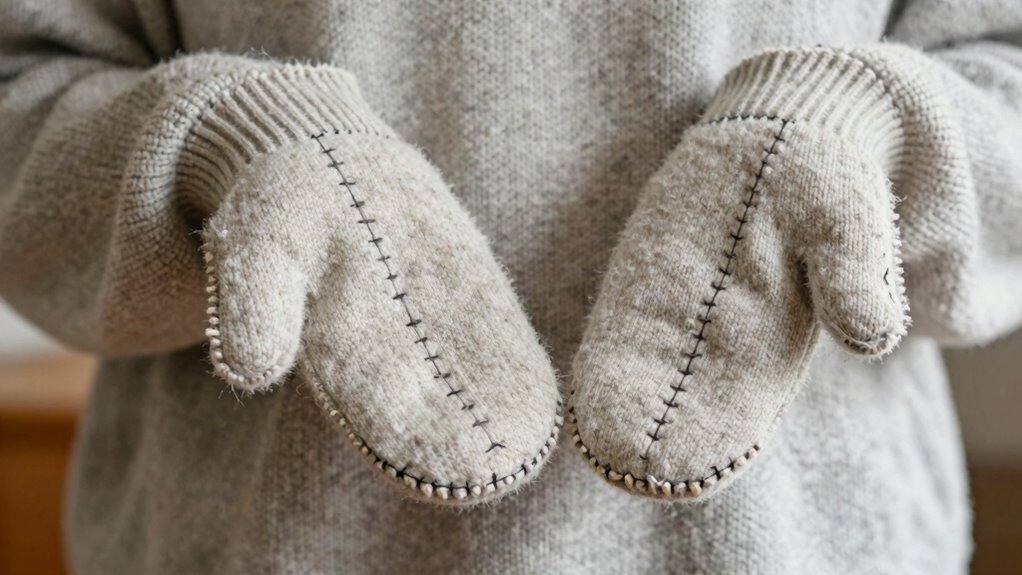
Sewing mittens from recycled sweaters can sometimes lead to common issues like uneven seams, puckering fabric, or gaps in the stitching. To fix these, start by checking your sewing machine maintenance—clean and oil it regularly to guarantee smooth operation. When finishing your mittens, choose the right thread; a polyester or all-purpose thread provides strength and flexibility. If seams pucker, try reducing the tension or using a smaller stitch length. For gaps or uneven stitching, double-check your needle placement and stitch consistency. Take your time, especially around curves, to prevent puckering. Proper machine maintenance can significantly improve your sewing results. Ensuring your sewing machine is properly set up and maintained helps achieve better stitching quality. You might also consider experimenting with different stitch types to find the most suitable for knit fabrics. Finishing touches like trimming excess thread and pressing seams with an iron will give your mittens a professional look. Troubleshooting these issues helps you create cozy, durable mittens that last.
Frequently Asked Questions
Can I Make Mittens From Any Type of Sweater?
You can make mittens from many types of sweaters, but sweater fiber types matter. Wool and wool blends are ideal for warmth and durability, while cotton or acrylic may be less insulating. Dyeing techniques can enhance your project’s look, especially if you want vibrant or unique patterns. Just guarantee the sweater is clean and in good condition. With the right fibers and dyeing techniques, any sweater can be transformed into cozy, functional mittens.
What Tools Are Essential for Sweater Mitten DIY Projects?
Did you know that over 60% of DIY crafters find sewing tools essential for their projects? For sweater mittens, you’ll need sharp fabric scissors, a sewing needle, and matching thread to handle fabric selection effectively. A seam ripper helps fix mistakes, while pins hold fabric in place. These sewing tools guarantee your DIY mittens come out perfect, even if you’re working with tricky or bulky sweater material.
How Do I Ensure My Mittens Fit Comfortably?
To make certain your mittens fit comfortably, start by measuring for fit around your hand and wrist accurately. Use a flexible measuring tape to get precise measurements. When sewing, adjust mitten size by adding or subtracting fabric at the seams if needed. Try on the mittens periodically during the process, making small adjustments to ensure they’re snug but not tight, so your hands stay warm and comfortable.
Are There Safety Tips for Sewing Without Patterns?
Imagine sewing without patterns as sailing a ship without a map—you need safety tips to stay afloat. For pattern-free sewing, always secure your fabric properly, use sharp scissors, and work in a well-lit area. Keep your needles and pins organized to prevent accidents, and take your time to measure accurately. Sewing safety is your compass, guiding you smoothly through your creative journey without the need for a pattern map.
How Do I Wash and Care for Recycled Sweater Mittens?
To wash and care for your recycled sweater mittens, always hand wash them in cold water to protect the fibers. Use a gentle detergent designed for wool or delicate fabrics, and avoid wringing. After washing, gently squeeze out excess water and lay the mittens flat to dry, away from direct heat or sunlight. Caring for wool this way keeps your mittens soft, cozy, and in great shape for longer.
Conclusion
So, next time you reach for that old sweater, remember, it’s more than just clutter—it’s a chance to create cozy mittens that reflect your style. As you stitch away, you might find yourself surprised by how much you enjoy customizing each pair. Sometimes, it’s the little coincidences—like discovering a hidden fabric or a perfect fit—that turn a simple project into a warm, personal touch you’ll cherish all winter long.