
TL;DR

Get business pricing on tools and workshop supplies
- Business-only prices and quantity discounts
- Tax-exempt purchasing
- Multiple users, one account, clear invoices
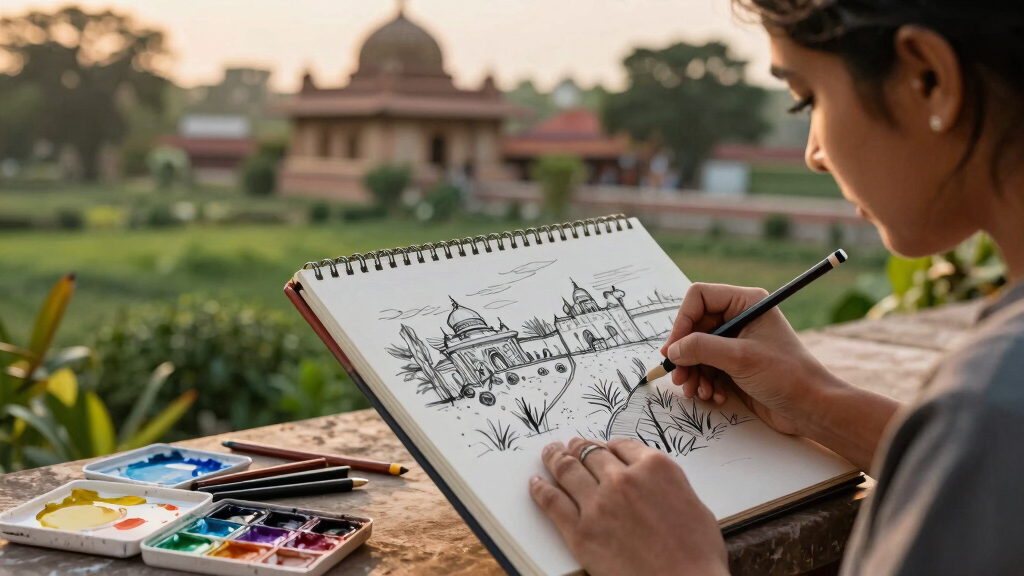
A collection of sketches by an Englishwoman from the mid-19th century has been uncovered, depicting India before photography was common. This discovery provides unique visual insights into colonial India and the artist’s perspective.
An Englishwoman’s sketches of India from the mid-1800s have been uncovered, predating widespread photography in the region. This discovery offers a rare visual record of colonial India from a personal perspective, providing valuable insights into the era’s landscape, architecture, and daily life.
The collection, believed to be created by Elizabeth Turner, a British expatriate, includes detailed drawings of Indian cities, rural scenes, and cultural practices. Researchers confirmed the sketches’ authenticity through provenance and stylistic analysis, dating them to approximately 1850-1860, before photography became the dominant visual medium in India.
The sketches were found in private archives and have been authenticated by experts in colonial history and art. They offer a unique, non-photographic visual record that complements existing written accounts of colonial India, providing a personal and artistic perspective not previously documented.
Historical and Cultural Impact of the Sketches
This discovery matters because it fills a gap in visual history, offering rare, pre-photography images of India from a Western observer’s perspective. It provides scholars and the public with a more nuanced understanding of colonial-era India, including urban landscapes, architecture, and traditional life, from an individual artist’s viewpoint. The sketches challenge or complement existing photographs and written records, enriching the historical narrative.
As an affiliate, we earn on qualifying purchases.
Pre-Photographic Visual Records of Colonial India
Before the advent of photography in India, visual documentation was limited to paintings, drawings, and sketches, often commissioned or created by travelers, officials, or artists. Photography was introduced in India in the 1840s but was not yet widespread until later decades. Most existing visual records from the period are photographs taken by early photographers or official artists.
Elizabeth Turner’s sketches represent one of the few personal, non-commercial visual documents from this period, offering a window into the everyday life and landscapes of colonial India through an individual’s artistic lens. The recent discovery adds a new dimension to the understanding of this era’s visual culture.
“These sketches are invaluable because they provide a rare, personal perspective on India during a transformative period, before the dominance of photography.”
— Dr. Sarah Mitchell, historian specializing in colonial art
Uncertainties About the Artist and Context
While the sketches have been authenticated as dating from the 1850s, details about Elizabeth Turner’s life, her motivations, and her full body of work remain unclear. It is not yet confirmed whether she traveled extensively across India or focused on specific regions. Further research is needed to contextualize her perspective within the broader colonial narrative.
Next Steps in Research and Exhibition Plans
Researchers plan to conduct further archival investigations to uncover more about Elizabeth Turner’s life and possibly locate additional works. There are also discussions about exhibiting the sketches publicly, either digitally or in museums, to share this rare visual record with a wider audience. Academic publications are expected to analyze the sketches’ significance in colonial art history.
Key Questions
Who was Elizabeth Turner?
Elizabeth Turner was an Englishwoman believed to have traveled in India during the 1850s, creating sketches of her surroundings. Her full biography remains largely unknown pending further research.
How were the sketches authenticated?
Experts used stylistic analysis, provenance research, and historical dating techniques to confirm the sketches’ origin in the mid-19th century, prior to widespread photography in India.
What do the sketches depict?
The sketches include cityscapes, rural scenes, architecture, and cultural practices, offering a detailed visual record of colonial India from a personal perspective.
Will the sketches be publicly displayed?
Plans are underway to exhibit the sketches digitally and possibly in museums, aiming to share this rare historical record with the public and researchers.
Why is this discovery important?
It provides rare, personal visual documentation of India before photography, enriching historical understanding and challenging existing narratives of colonial visual culture.
Source: hn
Fall Picks
fall essentials
As an affiliate, we earn on qualifying purchases.