
TL;DR

Get business pricing on tools and workshop supplies
- Business-only prices and quantity discounts
- Tax-exempt purchasing
- Multiple users, one account, clear invoices
A ToolGuyd writer reports making progress on a custom Halloween costume piece in 3D modeling software, but says its compound-angle sides have been difficult to design. The project is unfinished, and the writer says foam remains a backup if the printed design does not work out.
A ToolGuyd writer says a custom Halloween costume project has turned into a difficult exercise in 3D modeling, after the design’s compound-angle sides proved harder to build than its top and bottom pieces. The writer has found a workable approach for now, but the chest piece is still unfinished and may be made from insulation foam if the printed version does not come together.
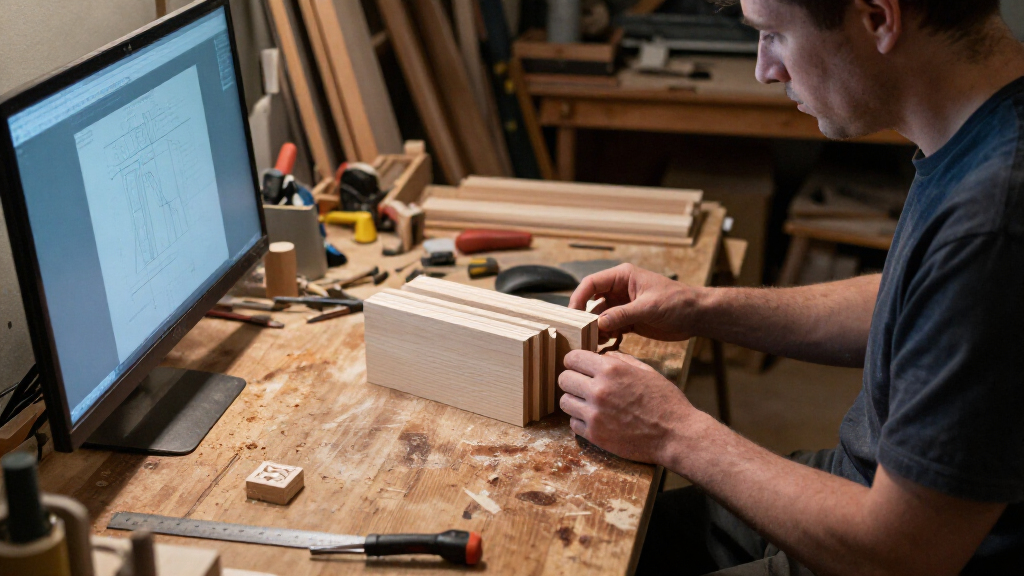
The project began with XPS foam prototyping for the writer’s son’s Halloween costume. After that effort went “alright,” the writer considered whether 3D printing could make the custom piece easier to produce. They report making good progress on separate top and bottom sections, with tabs for alignment and reinforcement so the pieces could be glued together.
The main obstacle came when the writer started modeling the sides. The design requires compound angles, including filling the spaces where angled planes meet. The writer tried building up features and cutting them away from solid bodies, and also experimented with modeling parts separately and working in an assembly view. They said some parts could be extended but not rotated as needed, while the process also produced low-memory alerts and overwritten equation files.
The writer says a method that works “okay for now” has emerged. The costume’s layered chest piece allows some visual tolerance, so the sections do not have to align perfectly. The writer remains proud of the progress but says the design is not finished; if it does not work, foam boards can still be cut, glued and painted.
A Costume Project Tests CAD Skills
The account offers a practical example of how a seemingly small custom-printing project can expose gaps in a beginner’s modeling skills. The writer had progressed enough to design basic sections, but the angled joins between parts required a different level of spatial planning and software control.
For readers considering 3D printing a one-off costume component, the report also highlights a useful distinction: modeling a part is only one stage of making it. The design must account for how components meet, how they will be aligned and glued, and whether the computer can handle the work. In this case, visual flexibility in the costume and a foam fallback give the project room to continue without requiring a perfect digital model.
Popular right now

Ninja CREAMi 7-in-1 Ice Cream Maker, NC301

KitchenAid Artisan Series 5-Quart Tilt-Head Stand Mixer, Dried Rose (KSM150PS)

Bose QuietComfort True Wireless Earbuds with Active Noise Cancellation, Black
As an affiliate, we earn on qualifying purchases.
From Foam Prototype to Digital Design
The ToolGuyd report describes a personal project rather than a product launch, formal test or measured comparison of fabrication methods. The writer initially worked with XPS insulation foam to make a custom piece for a Halloween costume, then turned to modeling software to explore 3D printing it instead.
The design is being split into top and bottom sections, with tabs intended to reinforce and align the join. The writer’s difficulty is concentrated in the side geometry, where beveled and mitered surfaces must meet. General online angle calculators were not a direct fit, the writer said, because the available tools they found were aimed at tasks such as crown molding and planter boxes, rather than this costume part.
The writer compares the learning process with practicing dovetail cuts or studying quantum physics, using those examples to describe skills that improve with repetition. They plan to keep learning after Halloween by practicing on more practical, mostly tool-related parts. The stated goal is to maintain momentum, not to master modeling immediately.
“The compound angles have been brutal.”
— The ToolGuyd writer
The Printed Chest Piece Is Unfinished
The report does not say whether the writer has printed or assembled the final chest piece, or whether the current model will fit the costume as intended. It also does not identify the modeling software, printer, material or exact dimensions, so readers cannot reproduce the design from the information provided.
The writer’s workaround is described as acceptable for now, not as a tested solution to the compound-angle problem. The outcome remains open: the printed piece may work, or the writer may return to the foam-board alternative. No specific reader advice or later project update is included in the source material.
Modeling Practice Continues After Halloween
The writer says they intend to finish the chest piece and hopes it turns out well, while keeping the option of cutting, gluing and painting insulation foam boards if the model fails. The source does not provide a completion date or say which fabrication method will be used in the end.
After Halloween, the writer plans to practice on more practical parts, mostly related to tools. The immediate next milestone is therefore whether the current design can be completed and made usable; longer term, the writer intends to build modeling experience through additional projects and is seeking suggestions for joining compound mitered and beveled parts.
Key Questions
What is the ToolGuyd writer making?
A custom chest piece for the writer’s son’s Halloween costume. The project began with an XPS foam prototype and may be 3D printed.
What part of the 3D model has been most difficult?
The writer says the compound-angle sides are the hardest part, especially shaping the spaces where angled planes meet.
Has the chest piece been completed or printed?
The source says the design is not finished. It does not confirm that a final print or assembly has taken place.
What is the backup plan if the model does not work?
The writer says it is still possible to cut, glue and paint insulation foam boards for the costume piece.
What does the writer plan to do after Halloween?
The writer says they plan to practice 3D modeling on more practical parts, mostly tool-related, and continue building skills through additional projects.
Source: toolguyd.com