TL;DR

Get business pricing on tools and workshop supplies
- Business-only prices and quantity discounts
- Tax-exempt purchasing
- Multiple users, one account, clear invoices
Hunker describes a DIY version of Magnolia’s checker-patterned wooden display riser, made by painting and joining two inexpensive cutting boards and adding small feet. The report estimates a small version at about $15 and a larger one at under $25, compared with Magnolia prices of $36 and $60; the finished piece is recommended for display, not food preparation.
Hunker has outlined a budget DIY for recreating Magnolia’s checker-patterned wooden display riser, using two low-cost cutting boards, paint and small decorative feet. The report estimates the project at about $15 for a smaller version or under $25 for a larger one, compared with Magnolia prices of $36 and $60, respectively.
The project is inspired by Magnolia’s Checkered Wood Riser, a square wooden platform intended to elevate kitchen items, baked goods or seasonal displays. Hunker says the smaller version measures 9.75 inches square. The DIY approach described by YouTuber The Daily DIYer joins two inexpensive cutting boards to create a thicker base, then adds four feet and paints a tone-on-tone checker pattern.
According to Hunker, Dollar Tree’s cutting-board options cost $1.25 for a smaller board and $5 for a larger one. The other listed supplies include brown craft paint, a foam brush, super glue, one-inch painter’s tape and four wooden knobs or similar feet. The report’s price estimates are about $15 in materials for the small project and under $25 for the larger version, though the exact cost can vary based on what the maker already owns and local availability.
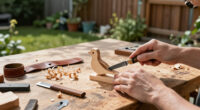
The process starts by gluing the boards together and holding them in place with clamps or heavy books while the adhesive cures. After smoothing any glue residue, the maker applies a thin brown coat and rubs the surface with baby wipes for a worn appearance. Tape is used to mark evenly spaced rows and columns; paint goes into the exposed squares, and the taping and painting process is repeated to form the pattern. The final step is attaching a foot at each corner.
A Lower-Cost Decorative Alternative
The reported price difference gives shoppers a way to approximate the look of a Magnolia display piece without paying its listed retail price. Hunker puts the small DIY at roughly $15 versus $36 for Magnolia’s smaller riser, and the larger DIY at under $25 versus $60 for the larger piece. Those figures are estimates, not a guaranteed checkout total, and depend on the chosen board size and the cost of supplies.
The instructions also make the project accessible to people with limited crafting experience: the checker pattern is created with painter’s tape and paint rather than specialized woodworking equipment. The result is a decorative riser, however, not necessarily a durable or food-safe cutting surface. That distinction matters because the project begins with cutting boards but adds paint and adhesive.
DIY checkerboard wooden display riser kit
As an affiliate, we earn on qualifying purchases.
As an affiliate, we earn on qualifying purchases.
From Magnolia Riser to DIY
Magnolia, the home and lifestyle brand associated with Joanna Gaines, sells the Checkered Wood Riser as a platform for displaying items. Hunker’s report presents the DIY as a way to reproduce its subdued, weathered checkerboard appearance at a lower material cost. It credits The Daily DIYer with demonstrating the method.
The source describes bamboo cutting boards as the inexpensive base and advises using acrylic paint rather than stain, saying the boards can be difficult to stain. It also suggests that makers can change the colors or select decorative wooden finials in place of basic cabinet knobs. Feet measuring one to two inches are suggested to keep the finished riser’s height close to the inspiration piece.
“The smaller version can be made for around $15 instead of $36 at Magnolia.”
— Hunker
Costs and Food Use Limits
The stated budgets are source estimates, not fixed prices. The report does not provide a full itemized total or clarify whether every supply is included in each estimate; costs may also depend on store stock, location and whether the maker already has paint, tape, glue or tools. It does not establish that the finished project will match Magnolia’s dimensions, finish or construction quality.
Food safety is another limitation. Hunker cautions that painted surfaces may wear under sharp knives, acidic foods and hand-washing, potentially allowing paint to flake. The report therefore recommends treating the finished riser as decorative, even if it is used in a kitchen. It does not present product testing or certification showing that the painted DIY is suitable for direct food contact.
Use the Finished Riser for Display
People following the instructions can choose a board size, gather the listed materials, paint and tape the checkerboard, then attach the feet after the joined boards are secure. Hunker describes a clear lacquer coating as an optional protective step against nicks and scratches; it does not say that lacquer makes the surface safe for cutting or food contact.
The practical next step is to use the completed piece for decorative display only, such as holding potted herbs or spice containers, rather than preparing food on it. The source does not announce a new Magnolia product or a change to its pricing; the development is a reported DIY alternative, and readers should check current store and retailer prices before budgeting.
Key Questions
How much does the DIY checkerboard riser cost?
Hunker estimates about $15 for the small version and under $25 for the larger version. Those totals may vary depending on local prices and which supplies the maker already owns.
What materials are needed?
The report lists two cutting boards, brown craft paint, a foam brush, super glue, one-inch painter’s tape and four wooden knobs or other feet. Clamps or heavy books can hold the boards together while the glue cures.
Can the finished riser be used as a cutting board?
Hunker advises using it for decorative purposes only. Paint can wear or flake with knife use, acidic ingredients or repeated washing, and the source does not establish that the finished surface is safe for direct food contact.
Can the color and feet be changed?
Yes. The report says makers can choose brighter paint colors and different decorative wooden feet. It suggests feet about one to two inches tall to keep the overall height close to the inspiration piece.
Source: rss
Halloween Picks
halloween
As an affiliate, we earn on qualifying purchases.