TL;DR

Get business pricing on tools and workshop supplies
- Business-only prices and quantity discounts
- Tax-exempt purchasing
- Multiple users, one account, clear invoices
A Hunker report describes repurposing old aluminum or silicone cake pans as molds for concrete pavers, offering an alternative to buying specialty molds. The method allows different shapes and decorations, but the report cautions that walking pavers need adequate size and thickness, and that loose or sharp embellishments can create hazards.
A Hunker home-and-garden report describes using old cake pans as molds for concrete pavers, giving DIYers a way to make custom stepping stones without buying specialty molds. The approach can reuse aluminum or silicone pans and accommodate decorative shapes, but the report says pavers intended for foot traffic need suitable dimensions and safe, firmly embedded decorations.
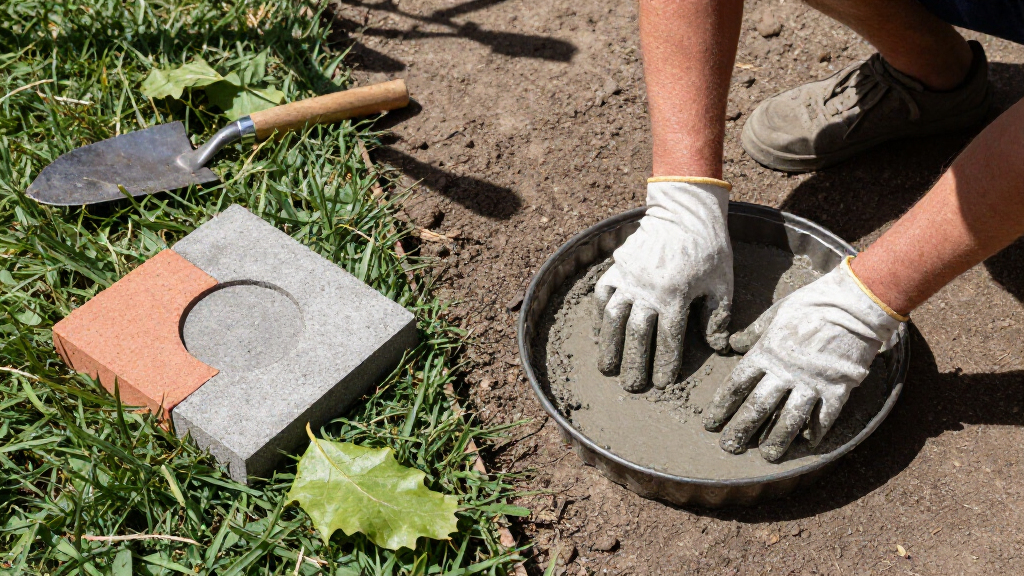
The basic method uses a cake pan as a form for all-purpose concrete or stepping-stone mix. The report recommends applying baking spray or petroleum jelly to the pan before filling it. Concrete should be mixed with water according to the product manufacturer’s instructions, poured into the pan, and leveled. Tapping the sides gently may help release air bubbles. The filled pan should sit on a level surface, protected while the concrete sets; once hardened, the edges can be loosened to remove the paver.
Common round or square pans can produce simple stepping stones, while scalloped or novelty-shaped pans can create less conventional outlines. The shape and depth of the pan affect the finished piece. For pavers people will walk on, Hunker advises making them large enough for a foot and thick enough to bear weight without cracking. It does not provide a universal size or thickness specification, so the mix instructions and intended use matter.
Decoration can be added by arranging gemstones, river rocks or seashells in the pan before pouring, or pressing them into the surface of wet concrete. The report also mentions concrete pigment as an option for changing the color. It warns that decorative pieces can pose a trip or injury risk if they are sharp, slippery, or raised above the paver surface. It lists work gloves, eye protection and a mask or respirator as precautions when handling dry concrete mix.
A Reuse Option for Small Paving Projects
The idea may appeal to people making a few stepping stones or garden accents, for whom buying purpose-made molds could add unnecessary cost. Reusing a pan already on hand can also make it easier to experiment with shapes than using basic square or faux-rock molds, according to Hunker. The benefit is practical rather than guaranteed: the report gives no cost comparison, and results depend on the pan, concrete mix and workmanship.
There are trade-offs. A cake pan may not be built for repeated contact with concrete, and intricate contours can make a hardened paver harder to remove without damaging the mold or the casting. For a path or other regularly used surface, strength, stability and a flush walking surface matter more than decoration. A paver that cracks, rocks underfoot or has exposed sharp objects may be unsuitable for that use.
Popular right now

Ninja CREAMi 7-in-1 Ice Cream Maker, NC301

Breville Barista Pro Espresso Machine with Grinder, Brushed Stainless Steel

Dyson Car+Boat Cordless Handheld Vacuum
As an affiliate, we earn on qualifying purchases.
From Baking Tin to Concrete Mold
The proposal is an example of repurposing a household item for a garden project. Hunker says both aluminum and silicone pans can be used and that mold choice is not limited to standard baking shapes. Its central comparison is with commercial concrete molds, which the report says can be costly, particularly when someone needs only a small number of pieces. No prices or product-by-product comparison are supplied.
The report names concrete products and release agents as examples, not as the only workable choices. It also notes that a light coating of spray or petroleum jelly may not release every casting easily; some DIYers, it says, try WD-40 or coconut oil. That is presented as a suggestion rather than a tested guarantee. Users should check their pan and concrete product guidance and test a small casting before committing a valued mold.
Durability and Release Need Testing
The source does not provide tested load limits, dimensions, curing times or long-term durability results for pavers made in cake pans. It also does not establish whether particular pans can be safely reused for food after contact with concrete or release products. The report’s instructions should be treated as a general DIY method, not engineering guidance for a structural or high-traffic surface.
How easily the paver releases may vary with the pan’s material and detailing. Hunker says intricate shapes can make removal harder and suggests experimentation, but it does not report comparative results for aluminum versus silicone or for different release agents. Decorative items can also behave differently once embedded, making the finished surface’s grip and safety uncertain until inspected.
Test a Small Casting First
For anyone trying the method, the next step is to select an expendable pan and make a small test paver before producing a full set. Follow the concrete mix label for water and handling, use gloves, eye protection and respiratory protection while managing dry mix, and let the casting set on a protected, level surface. Check that the finished piece releases cleanly and has no sharp or raised decoration before placing it where people walk.
Readers planning a larger path should assess whether the pavers are appropriate for the intended ground and foot traffic rather than assuming that a baking pan’s shape guarantees a durable result. The source provides no follow-up testing or schedule for further guidance; performance remains dependent on materials, dimensions and installation.
Key Questions
Can any old cake pan be used as a concrete paver mold?
Hunker says aluminum and silicone pans can be used and gives basic and novelty shapes as examples. It does not test every pan, so a small trial is sensible, particularly with intricate designs that may make removal difficult.
What materials are needed?
The report lists a cake pan, concrete or stepping-stone mix, water, a bucket and a mixing tool, plus baking spray or petroleum jelly as a release coating. It also recommends gloves, eye protection and a mask or respirator when handling dry concrete.
How can the pavers be decorated?
Small items such as river rocks, seashells or gemstones can be arranged before the concrete is poured or pressed into its wet surface. Pigment can also change the concrete’s color. Decorations should be embedded flush and checked for sharp or slippery surfaces.
Are cake-pan pavers suitable for a walking path?
They may be used as stepping stones, but the report says walking pavers need to be large enough for a person’s foot and thick enough to resist cracking. It provides no universal measurements or load testing, so suitability depends on the casting and intended use.
How long should the concrete cure?
The source does not give a fixed curing time. It says to follow the concrete manufacturer’s instructions and leave the filled pan level and protected while the concrete sets.
Source: hunker.com