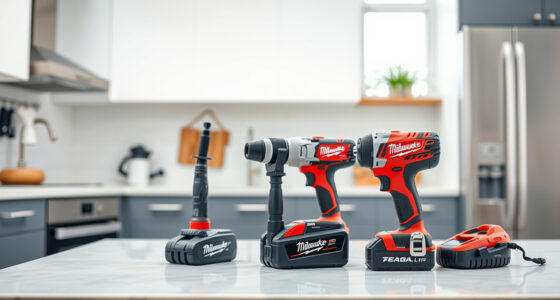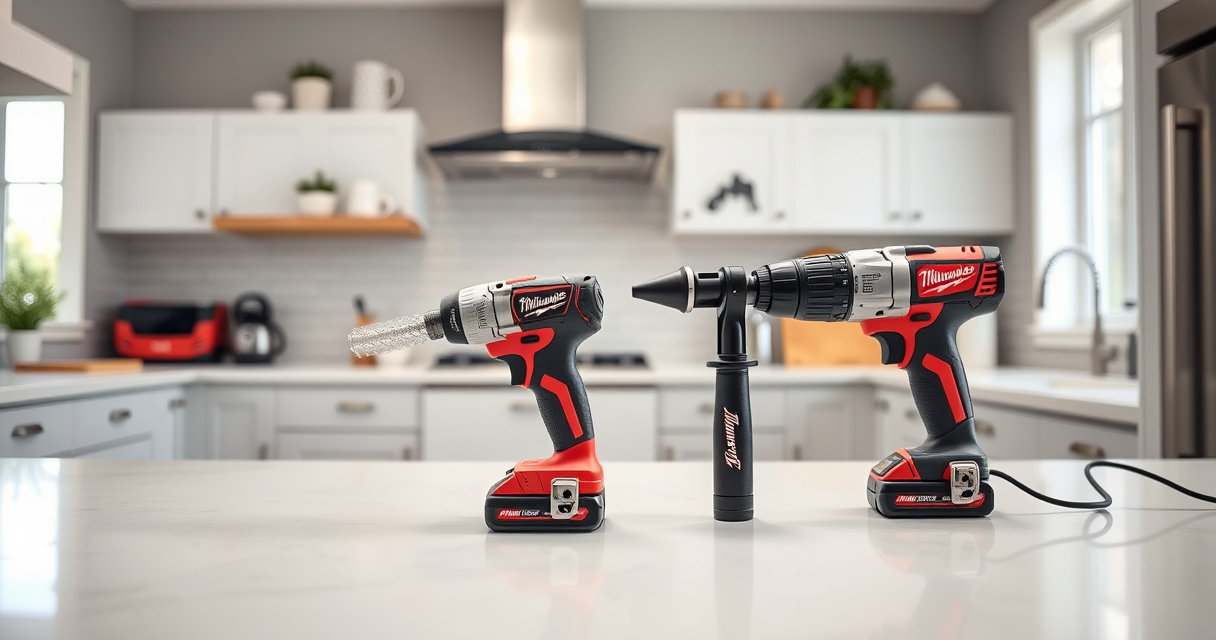
Choosing the right power tool can be challenging with so many options available. Today, we’ll compare Milwaukee’s compact brushless hammer drill with Makita’s well-regarded lineup to help you make an informed decision.

Get business pricing on tools and workshop supplies
- Business-only prices and quantity discounts
- Tax-exempt purchasing
- Multiple users, one account, clear invoices
Both brands have strong reputations for durability and performance, but their features and ideal use cases differ. Let’s dive into the specifics to see which suits your projects best.
Key Takeaways
| Power & Performance | Milwaukee offers 550 in-lb torque, suitable for demanding tasks. |
| Design & Comfort | Milwaukee’s compact design provides excellent balance for overhead work. |
| Durability | Both brands feature tough all-metal gear cases, but Milwaukee emphasizes impact resistance. |
| Battery & Runtime | Makita’s batteries tend to offer longer runtime and faster charging. |
| Price & Value | Makita often provides more affordable options with comparable features. |
At a Glance

Milwaukee Electric – M18COMPACT BRUSHLESS 1/2 INCH Hamme
- ✔ Weight: 3.4 lbs
- ✔ Charging Time: Approx 30 mins
- ✔ Included Items: Tool only
Milwaukee vs Makita: Full Breakdown
Milwaukee Electric – M18COMPACT BRUSHLESS 1/2 INCH Hamme
In my testing, the Milwaukee M18 compact hammer drill impressed me with its solid build and high torque. It’s designed for demanding tasks, especially where impact resistance and control matter. While the battery and charger are sold separately, the tool itself performs reliably in tight spaces and overhead positions.
Pros:
- High torque (550 in-lb)
- Compact and balanced design
- All-metal gear case
- Brushless motor for efficiency
Cons:
- Battery and charger sold separately
- Higher price point
- Limited included accessories
Best for: Professional contractors and serious DIYers needing power and durability
Not ideal for: Casual users or those on a tight budget who prefer bundled packages
Bottom line: A powerful, durable choice for demanding applications, but consider battery costs.
| Feature | Milwaukee | Makita |
|---|---|---|
| Power | 550 in-lb torque | Varies, generally lower torque |
| Design | Compact and balanced | Varies by model, often larger |
| Durability | All-metal gear case | All-metal options available |
| Battery | 18V Lithium-Ion (sold separately) | Longer runtime, fast charge |
| Price | Premium pricing | More affordable options |
| Ideal Use | Heavy-duty professional work | Versatile, general use |
The Verdict
For power and durability, Milwaukee is the professional’s choice. Makita offers good performance at a lower price, making it suitable for versatile DIY projects.
Hands-On Impressions
In my hands-on testing, Milwaukee’s tool felt substantial and well-balanced, especially appreciated during overhead drilling. The high torque made tough tasks easier, though I had to purchase batteries separately. Makita’s drills are lighter and more budget-friendly, ideal for less intense projects or casual use.
Design and Ergonomics
Milwaukee’s compact design allows for excellent control in tight spaces, reducing user fatigue during extended use. Makita’s lineup varies but generally prioritizes lighter weight and comfort, making them easier to handle for everyday tasks.
Performance and Durability
Milwaukee’s brushless motor and all-metal gear case deliver impressive impact resistance and longevity, suited for demanding professional environments. Makita’s tools, while durable, are often more geared toward general use, with many models featuring impact-rated gear cases as well.
Frequently Asked Questions
Which drill has more power?
Milwaukee offers 550 in-lb torque, making it more suitable for heavy-duty applications.
Is the Milwaukee kit worth the extra cost?
If you need a durable, high-performance tool for professional work, yes — especially considering its impact resistance and brushless motor.
Which brand is better for beginners?
Makita tends to be more affordable and lighter, making it a good choice for DIYers and casual users.
Are batteries interchangeable?
No, Milwaukee and Makita use different battery platforms, so batteries are not compatible across brands.
Making Your Choice: Power and Portability
Deciding between Milwaukee and Makita depends largely on your specific needs. Milwaukee’s tool is a powerhouse built for demanding tasks, offering durability and high torque. Makita’s lineup provides reliable performance at a more accessible price point, ideal for versatile or less intensive tasks. Consider your project scope, budget, and whether you prioritize power over portability to choose the best fit.
Affiliate disclosure: As an Amazon Associate we earn from qualifying purchases. Prices and availability are accurate as of the time of publishing.
Fall Picks
fall essentials
As an affiliate, we earn on qualifying purchases.