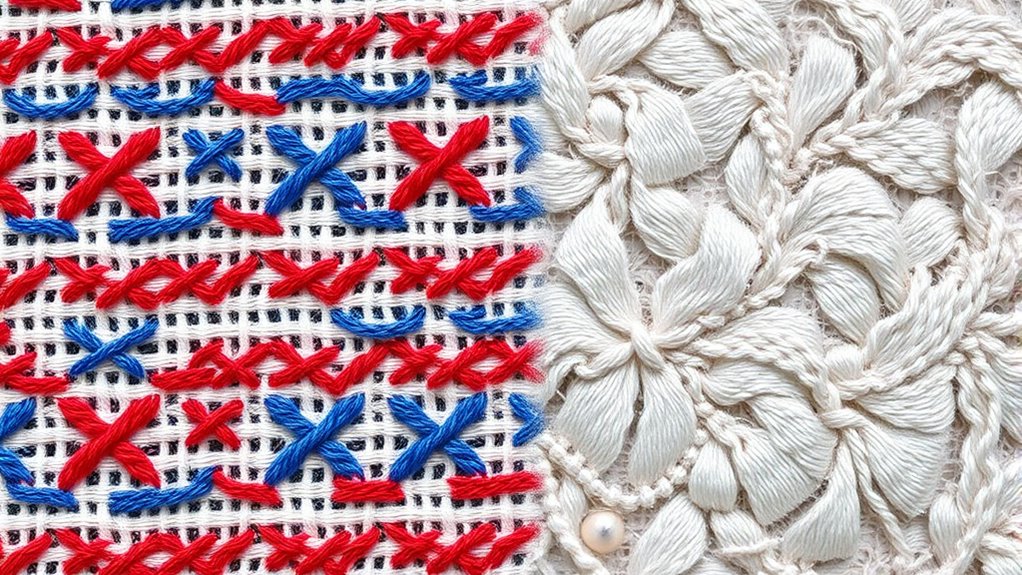
Cross-stitch and embroidery differ mainly in techniques and fabric choice. Cross-stitch uses small, uniform X-shaped stitches on evenweave fabrics like Aida or linen, creating a pixelated, precise look. Embroidery offers more variety, with different stitches and textures on diverse fabrics such as silk or denim. Needle types and thread quality also vary, affecting the final design. Keep exploring; you’ll discover more about how these methods create unique artistic effects.
Key Takeaways
- Cross-stitch uses uniform X-shaped stitches on evenweave fabrics for a pixelated, grid-based design.
- Embroidery employs a variety of stitches and textures, working on diverse fabrics like silk, cotton, or velvet.
- Cross-stitch requires small, blunt needles (sizes 24-26), while embroidery uses a broader range of needle types and sizes.
- Cross-stitch’s precise, consistent stitches create a uniform pattern, whereas embroidery allows for artistic variation and layered textures.
- Fabric choice and thread quality significantly influence the technique, appearance, and complexity of each craft.

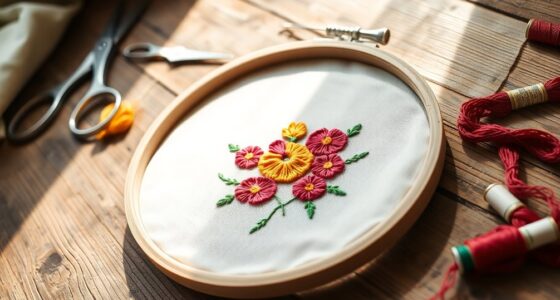
When choosing between cross-stitch and embroidery, understanding their differences can help you decide which technique best suits your project. Both crafts involve decorating fabric with needle and thread, but they differ considerably in approach, tools, and final appearance. One key aspect to contemplate is fabric types. Cross-stitch typically works best on evenweave fabrics like Aida cloth, linen, or other textiles with a consistent grid pattern. These fabrics make it easier to create uniform, precise stitches and achieve the characteristic pixelated look of cross-stitch designs. Embroidery, on the other hand, offers more flexibility regarding fabric choices. You can work on various materials such as cotton, silk, velvet, or even denim, depending on your project. The fabric’s texture and weave influence the style and complexity of embroidery stitches, allowing for more textured and layered designs.
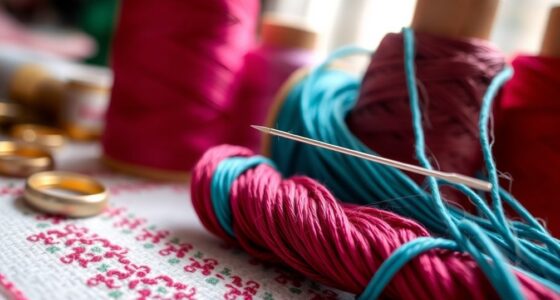
Needle sizes are another vital factor that varies between the two techniques. Cross-stitch requires small, blunt-tipped needles, often in sizes 24 to 26, which easily glide through evenweave fabrics without damaging the threads or fabric fibers. These needles are designed to make the precise X-shaped stitches that define cross-stitch work. Embroidery needles, however, come in a broader range of sizes and types, including sharp-tipped needles for piercing through dense or tightly woven fabrics, and tapestry needles for working on thick or textured textiles. The choice of needle size in embroidery depends on the complexity of the stitches and the fabric’s weave; larger needles are used for thicker threads or heavier fabrics, while smaller needles are suitable for delicate, intricate work.
The difference in needle types and fabric compatibility influences how you approach each craft. Cross-stitch’s uniform, grid-based pattern demands precision and consistency, making the choice of fabric and needle size vital for achieving a polished look. Embroidery allows for more artistic freedom, with varied stitches and textures, so selecting the right fabric and needle depends on the desired effect. As you explore both techniques, you’ll find that understanding the nuances of fabric types and needle sizes helps you make better choices, resulting in more satisfying results. Additionally, thread quality plays a crucial role in the durability and appearance of your finished piece, regardless of the technique you choose. Whether you prefer the methodical, pixelated style of cross-stitch or the textured, layered possibilities of embroidery, knowing these differences guarantees you’re well-equipped to create beautiful, durable projects tailored to your vision.
Frequently Asked Questions
Can Cross-Stitch and Embroidery Be Combined in One Project?
Yes, you can definitely combine cross-stitch and embroidery in one project. This mixed media approach allows you to create more intricate and decorative motifs, blending the precise geometry of cross-stitch with the textured details of embroidery. By mixing techniques, you add variety and depth to your design, making it uniquely yours. Just choose complementary threads and fabrics, and have fun experimenting with different stitches to bring your project to life.
Which Technique Is More Durable for Everyday Items?
You’ll find embroidery generally more durable for everyday items because it offers better fabric longevity and wear resistance. Its tighter stitches and varied techniques strengthen the fabric, making it better suited for items like clothing or accessories that face regular use. Cross-stitch, while charming, tends to be less resilient over time, especially on softer fabrics, so it’s best for decorative purposes rather than daily wear.
Are There Specific Fabrics Best Suited for Each Technique?
Think of fabrics as your project’s dance floor—choose wisely. For cross-stitch, you need evenweave or Aida cloth, which acts like a sturdy stage for precise stitches. Embroidery thrives on tightly woven fabrics like linen or cotton, offering a smooth surface for intricate designs. Your thread selection must complement the fabric’s texture, ensuring compatibility and durability. When you match fabric and thread perfectly, your craftsmanship becomes a seamless symphony.
How Long Does It Typically Take to Complete Each Craft?
You’ll find that cross-stitch typically takes longer, often requiring several hours to complete a detailed pattern, depending on your skill level. Embroidery varies more, from quick embellishments to intricate designs, so the time commitment can range from a few minutes to days. Your skill level influences both projects’ duration—beginners may finish faster with simpler designs, while advanced crafters might spend more time perfecting complex work.
What Tools Are Essential for Beginners in Both Techniques?
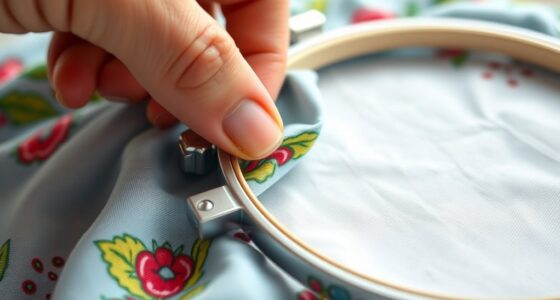
For beginners, essential tools include basic needles suited for both cross-stitch and embroidery, which make your stitching easier. You’ll also want a variety of thread types and colors to explore different effects and textures. Keep a hoop or frame handy to keep your fabric taut, and select a quality fabric to work on. These basics set a strong foundation, helping you enjoy the process and improve your skills quickly.
Conclusion
Ultimately, choosing between cross-stitch and embroidery is like picking your favorite song — it depends on what feels right to you. I remember trying cross-stitch first; it’s like painting with tiny, precise brushstrokes, creating a clear picture. Whether you prefer the structured beauty of cross-stitch or the free-flowing creativity of embroidery, both let you craft something uniquely yours. So immerse yourself, explore, and enjoy the process—your masterpiece awaits!