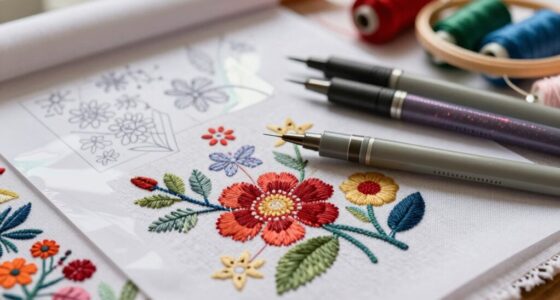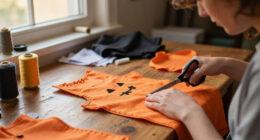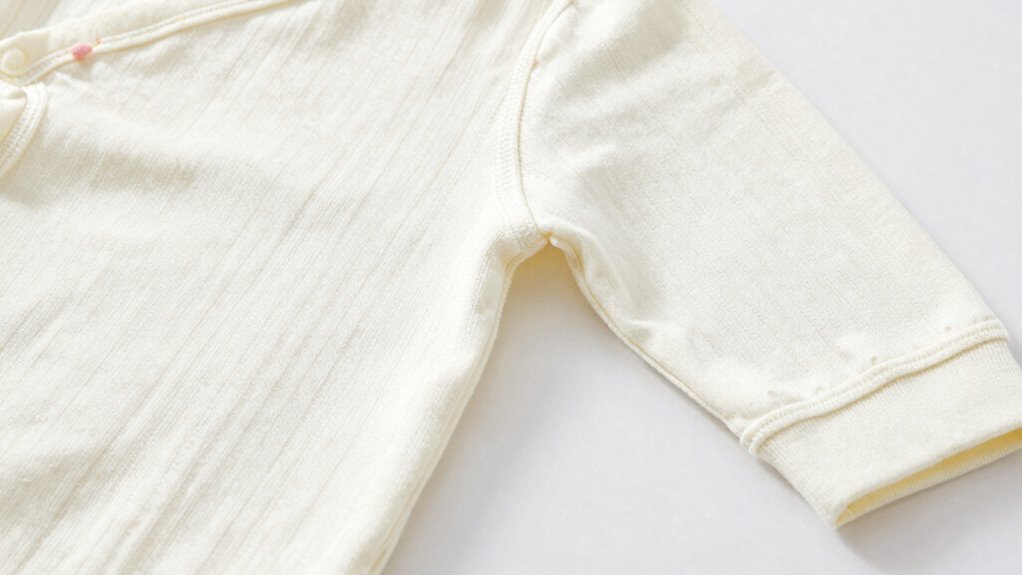
Before embroidering stretchy baby clothes, choose the right stabilizer, like tear-away or water-soluble, to prevent stiffness and puckering. Use a ballpoint or stretch needle and adjust your tension for flexibility. Test on scrap fabric first to see how the design reacts and avoid high-stretch areas. Keep your machine settings moderate to maintain softness and durability. If you want to learn more tips for perfect results, continue exploring this guide.

Get business pricing on tools and workshop supplies
- Business-only prices and quantity discounts
- Tax-exempt purchasing
- Multiple users, one account, clear invoices
Key Takeaways
- Use appropriate stabilizers like water-soluble or tear-away designed for stretch fabrics to prevent stiffness and puckering.
- Select a ballpoint or stretch needle to avoid snagging and maintain fabric elasticity.
- Adjust machine tension and reduce stitch length to prevent distortion and puckering on stretchy fabrics.
- Avoid embroidering over seams or high-stretch areas to prevent stitch breakage and fabric damage.
- Test settings and stabilizers on scrap fabric to ensure durability, flexibility, and proper placement.
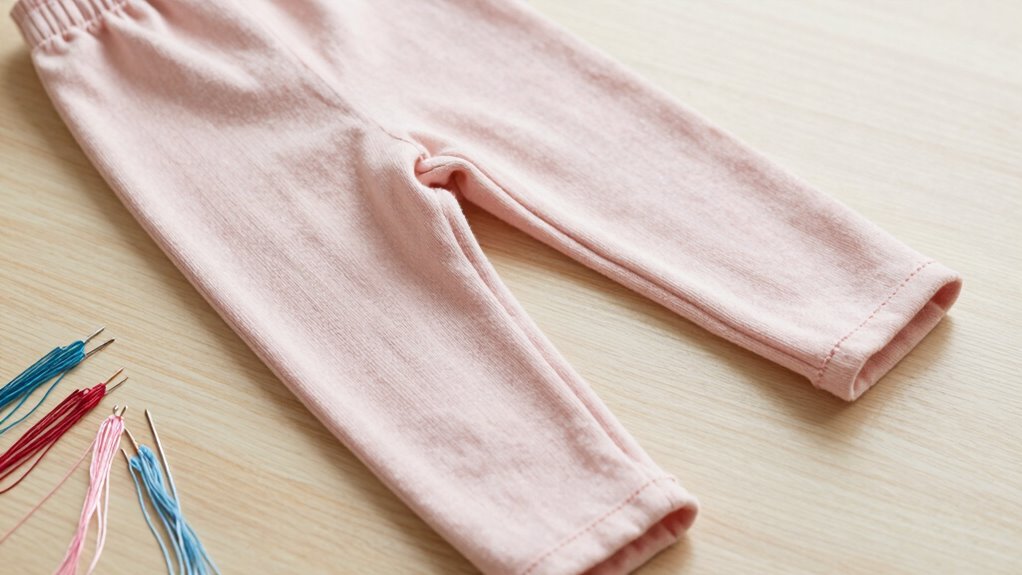
When it comes to embroidery techniques, you need to choose the right methods and stabilizers. Traditional embroidery stabilizers might not be suitable for stretchy fabrics because they can add stiffness or cause puckering. Instead, opt for a tear-away or water-soluble stabilizer designed specifically for knit or stretch fabrics. These stabilizers support your design without restricting the fabric’s elasticity. Also, use a ballpoint or stretch needle, which has a rounded tip, to prevent snagging or damaging the fabric. This needle helps glide through the fabric smoothly, minimizing puckering and ensuring your stitches are even. Additionally, choosing the appropriate embroidery stabilizer is essential for maintaining the fabric’s stretchiness and durability. Proper fabric tension adjustments are also crucial to prevent distortion during embroidery. Another key point is to adjust your embroidery machine settings. Reduce the tension slightly and lower the stitch length to prevent the thread from pulling the fabric out of shape. Test your design on a scrap piece of the same fabric before working on the actual garment. This test allows you to see how the fabric reacts and make necessary adjustments to your tension, stitch style, or stabilizer. Keeping the machine’s threading properly maintained can also help achieve consistent stitch quality on stretchy fabrics. Keep your embroidery speed moderate—going too fast can cause skipped stitches or uneven tension, especially on stretchy material. Proper fabric care is crucial to ensure your embroidered baby clothes stay soft and flexible after washing. Using stretch stitches can also help accommodate the fabric’s elasticity while maintaining the integrity of your design. Lastly, be mindful of your design placement. Avoid placing embroidery directly over seams or areas with a lot of stretch, as this can cause the stitches to break or the fabric to warp. When finished, carefully remove the stabilizer and gently press the embroidered area with a low heat setting, protecting the stitches from melting or distorting. With proper fabric care and the right embroidery techniques, you’ll create adorable, durable designs that stay beautiful through countless wears and washes.
embroidery stabilizer for stretch fabrics
As an affiliate, we earn on qualifying purchases.
As an affiliate, we earn on qualifying purchases.
Frequently Asked Questions
Can I Machine Wash Embroidered Stretchy Baby Clothes?
Yes, you can machine wash embroidered stretchy baby clothes, but you should follow proper fabric care. Use a gentle cycle and cold water to prevent embroidery damage and maintain the fabric’s stretch. Turn the garment inside out to protect the embroidery techniques from friction. Avoid harsh detergents, and air-dry or use a low heat setting. Proper care guarantees your embroidery stays beautiful and the fabric remains soft and stretchy.
What Type of Embroidery Thread Is Best for Stretch Fabrics?
Ever wonder what embroidery thread works best on stretch fabrics? You should choose polyester or rayon embroidery threads because they offer flexibility and durability. These threads handle embroidery techniques well on stretchy materials, and maintaining proper thread tension prevents puckering or damage. Using the right thread and adjusting tension ensures your design stays smooth and vibrant, even after washing. Isn’t it worth investing in quality thread for perfect, long-lasting results?
How Do I Prevent Puckering During Embroidery?
To prevent puckering during embroidery, you should focus on proper embroidery techniques and fabric stabilization. Start by using a stabilizer suited for stretchy fabrics, like an interfacing or tear-away stabilizer, to support the material. Keep your stitches even and not too tight, and use a ballpoint needle to glide smoothly through the fabric. These steps help maintain a smooth finish and prevent puckering on your baby clothes.
Is It Safe to Embroider Directly on Baby’s Skin?
Embroidery on baby’s skin is like walking a tightrope—you need balance for safety. Since baby skin is sensitive, it’s safest to embroider on the outside of clothing, not directly on skin. Always use gentle, non-irritating threads and test for allergies. Keep embroidery smooth and soft, avoiding stiff stitches. Prioritize embroidery safety considerations to protect delicate skin, ensuring your adorable design stays safe and comfortable for your little one.
How Durable Is Embroidery on Stretchy Fabric Over Time?
Embroidery on stretchy fabric can be quite durable over time if you choose the right stitches and thread. The embroidery aesthetics remain intact when you use compatible fabrics and proper techniques. However, frequent washing and stretching may cause some threads to loosen or fray. To guarantee longevity, opt for stabilizers and gentle washing methods, which help maintain both the embroidery’s appearance and the fabric’s flexibility.
Conclusion
Just like a delicate butterfly emerging from its cocoon, embroidering stretchy baby clothes requires patience and care. I once tried a simple design, only to see it distort after a wash—like a butterfly’s wings crumpled. Remember, understanding the fabric’s stretch and using the right techniques guarantees your embroidery stays beautiful and intact. With a little practice, you’ll create adorable, lasting pieces that both you and your little one will cherish.
Halloween Picks
halloween
As an affiliate, we earn on qualifying purchases.