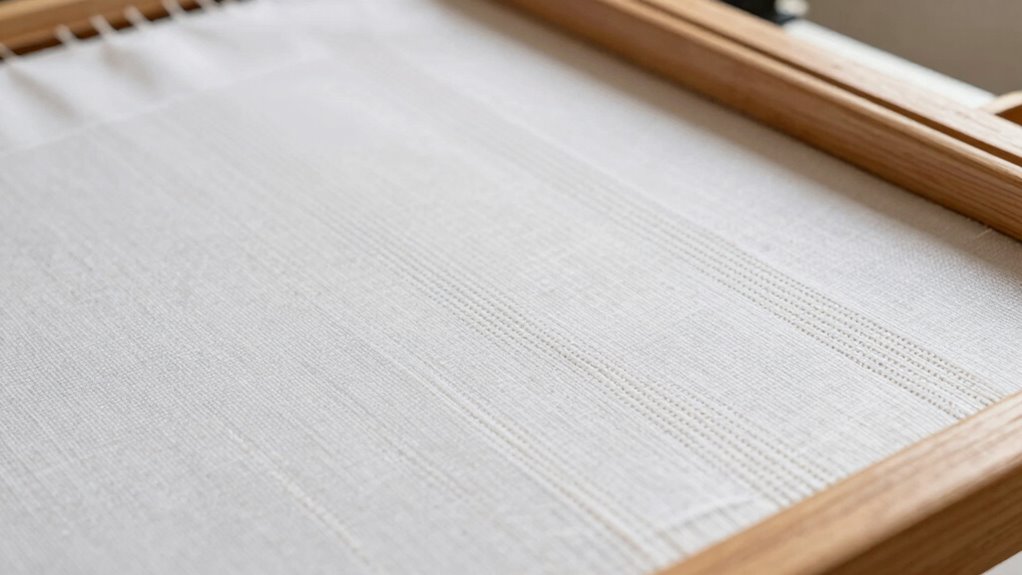

Proper fabric tension is more important than simply tightening the fabric because it guarantees your stitches stay even and your design looks professional. When you focus on the right tension, your fabric remains stable without puckering or puckering, which tightness alone can’t prevent. Over-tightening distorts your fabric and makes stitching uncomfortable, while slack fabric results in uneven stitches. Mastering the balance helps you achieve smooth, precise embroidery, so keep exploring ways to get it just right.

Get business pricing on tools and workshop supplies
- Business-only prices and quantity discounts
- Tax-exempt purchasing
- Multiple users, one account, clear invoices
Key Takeaways
- Proper tension ensures smooth stitches and prevents puckering, regardless of how tight the fabric is in the hoop.
- Balanced tension maintains fabric stability, reducing distortion and uneven stitching during embroidery.
- Over-tightening can cause fabric puckering and discomfort, while proper tension supports quality results.
- Consistent tension across the fabric improves stitch uniformity and design accuracy.
- Adjusting fabric tension for proper support is more crucial than simply tightening the hoop for achieving professional embroidery.

Have you ever wondered why your embroidery stitches turn out uneven or puckered? The answer often lies in fabric tension, which is essential for achieving smooth, professional-looking embroidery. While many beginners focus on tightening their fabric as much as possible, that’s not always the right approach. Instead, understanding the importance of proper tension can make all the difference. When you work with your embroidery hoop, you want to ensure the fabric is taut but not overly tight. If the fabric is stretched too tightly, it can distort the design, cause puckering, and make stitching uncomfortable. Conversely, if it’s too loose, your stitches will be uneven, and the design may look sloppy. The goal is to find that perfect balance where the fabric is taut enough to support even stitches but still flexible enough to move comfortably under your needle.
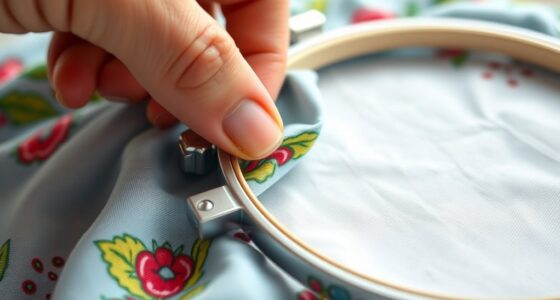
Your choice of thread color plays a role in how your tension appears, too. Bright or contrasting thread can highlight uneven tension, making puckers or loose stitches more noticeable. If your tension isn’t consistent, these issues become even more apparent, so paying attention to fabric tension is key to creating a polished look. When you use an embroidery hoop, make sure to tighten it properly, securing the fabric evenly between the inner and outer rings. The fabric should be stretched tight enough to eliminate wrinkles but not so tight that it warps. A good rule of thumb is to gently press down on the fabric—if it feels too tight or causes puckering, loosen the hoop slightly. If it feels slack or loose, tighten it a bit more. The tension should be firm but not strained. Achieving consistent tension across the fabric is also crucial for maintaining a uniform appearance in your stitches. Proper tension control helps prevent common issues like puckering and uneven stitches. Practicing how to adjust fabric tension effectively can lead to more consistent results and a more enjoyable embroidery experience. Additionally, experimenting with different fabrics and hoop tensions can help you develop a better embroidery tension feel over time, leading to improved craftsmanship.
Adjusting tension might take some trial and error, but once you get the hang of it, you’ll notice your stitches become more uniform and your designs more precise. Remember, the tension of your fabric influences how your thread interacts with the surface. Proper tension prevents puckering and keeps your stitches consistent, regardless of the thread color you choose. When you’re sewing, your focus shouldn’t just be on the tightness of the fabric but on how well it supports your stitches. Maintaining even tension across the entire hoop ensures that your embroidery remains smooth and professional-looking. With practice, you’ll develop a feel for the right tension that works for different fabrics and projects. It’s a small detail, but one that has a big impact on the quality of your finished work. Properly managing fabric tension can significantly improve the outcome of your embroidery projects.
Popular right now

Breville Bambino Espresso Machine, Brushed Stainless Steel

KitchenAid Classic Series 4.5-Quart Tilt-Head Stand Mixer, Onyx Black

Philips 4400 Series Fully Automatic Espresso Machine with LatteGo Milk System
As an affiliate, we earn on qualifying purchases.
Frequently Asked Questions
How Does Fabric Tension Affect Embroidery Durability?
If your fabric tension isn’t right, your embroidery’s durability suffers. Too tight, and fabric elasticity decreases, increasing the risk of puckering or tearing. Too loose, and material stretch causes uneven stitches and weak spots. Proper tension guarantees the fabric holds steady without restricting its stretch, resulting in more durable embroidery. Keeping the tension balanced maintains the fabric’s natural properties and prevents damage, so your design lasts longer.
Can Incorrect Tension Cause Fabric Puckering?
Yes, incorrect tension can cause fabric puckering. When your tension is too tight, it pulls the fabric unevenly, leading to fabric distortion and puckering. On the other hand, too loose tension can cause thread slippage, resulting in loose stitches and uneven embroidery. Maintaining proper fabric tension guarantees smooth stitches and prevents puckering, keeping your embroidery neat and professional-looking. Always adjust tension gradually to find the perfect balance for your fabric.
What Tools Help Measure Proper Embroidery Tension?
Measuring proper embroidery tension is like tuning a musical instrument—you need precision. You can use a tension gauge or a fabric tension tester to get accurate readings. These tools help you assess embroidery machine calibration and apply tension adjustment techniques effectively. By regularly checking tension, you prevent puckering and guarantee smooth stitching. Keep a close eye on your tension tools, and you’ll achieve beautifully consistent embroidery results every time.
Does Fabric Tension Impact Thread Color Visibility?
Yes, fabric tension impacts thread visibility. When tension is just right, the fabric’s quality helps keep the threads evenly distributed, making colors stand out clearly. If tension is too loose or tight, threads can bunch or sink, reducing visibility and causing uneven stitching. Proper tension guarantees the fabric supports your embroidery, highlighting vibrant thread colors and creating a polished look. Prioritizing fabric quality and tension helps achieve the best thread visibility.
How Often Should Tension Be Adjusted During a Project?
You should adjust tension as needed throughout your project, especially when changing thread compatibility or adjusting stitch density. Regularly check your stitches for evenness and quality, making small tweaks to maintain consistent tension. If you notice thread breakage or uneven stitches, it’s time to recheck and adjust. Keep an eye on fabric movement and thread visibility, adjusting tension accordingly to guarantee smooth, professional-looking embroidery without over-tightening.
Conclusion
Understanding why fabric tension matters more than just tightness changes how you approach embroidery. When you focus on proper tension, your stitches stay even, and your design remains crisp and professional-looking. Don’t you want your work to stand out for its quality, not just its tightness? By mastering fabric tension, you guarantee your embroidery is both beautiful and durable. So, next time you pick up your needle, ask yourself: am I prioritizing tension over mere tightness?