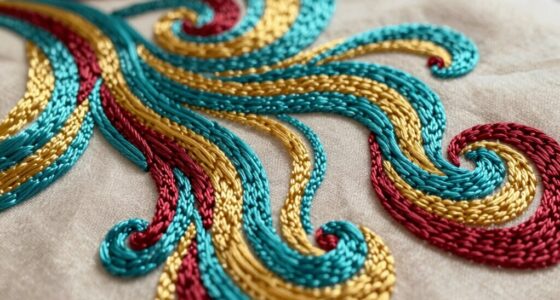
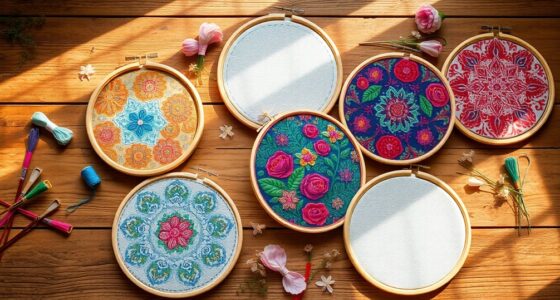
To use negative space effectively in hand embroidery, focus on creating balance and contrast by thoughtfully leaving open areas around your motifs. Use contrasting thread colors to make your design pop or soft hues for a subtle elegance. Distribute stitches evenly to prevent clutter, ensuring open spaces highlight shapes and details. Intentional placement of empty areas transforms negative space from mere gaps into active design elements, adding depth and sophistication. Keep exploring to reveal even more embroidery design secrets.

Get business pricing on tools and workshop supplies
- Business-only prices and quantity discounts
- Tax-exempt purchasing
- Multiple users, one account, clear invoices
Key Takeaways
- Balance positive motifs with open, unstitched areas to create harmony and visual interest.
- Use contrasting thread colors in negative space to enhance design impact.
- Distribute stitches evenly to prevent clutter and maintain pattern flow.
- Intentionally shape open spaces to highlight main motifs and add depth.
- Apply design principles by strategically combining open areas and contrasting elements for sophistication.

Negative space is a powerful tool in hand embroidery that can elevate your designs by creating balance, contrast, and visual interest. When you master the use of negative space, you allow your embroidery to breathe, making the main motifs stand out more vividly. To achieve this, focus on how you place your stitches in relation to the fabric and the empty areas around your design. This doesn’t mean leaving large gaps haphazardly; instead, it’s about intentionally designing with open spaces that complement your embroidery rather than clutter it.
Master negative space to create balance, contrast, and visual interest in your embroidery designs.
One of the most effective ways to utilize negative space is through careful consideration of color contrast. By choosing contrasting thread colors against the fabric, you can make your embroidery pop, even within areas of negative space. For example, a bold, dark thread on a light background creates a striking visual effect, drawing the eye directly to your embroidery. Conversely, subtle thread hues against similar backgrounds can produce a soft, elegant look, emphasizing the delicate use of negative space. The key is to balance the color contrast so that the empty areas are intentional and enhance the overall composition rather than distract from it. Additionally, understanding the visual hierarchy can help you decide where to place your stitches for maximum impact.
Pattern balance is equally important when working with negative space. You want your design to feel harmonious, with the positive and negative areas working together seamlessly. Avoid overloading one side of your design with dense stitches, which can make the piece feel heavy or cluttered. Instead, distribute your embroidery evenly, leaving enough open space to give your design room to breathe. For instance, if you’re creating a floral motif, stitch the flowers with ample gaps between them, allowing the fabric to serve as part of the pattern. This approach highlights the shapes and details of your embroidery while maintaining a pleasing pattern balance. Recognizing the power of open space can help you create more dynamic compositions. Understanding the importance of visual hierarchy can help you decide where to place your stitches for maximum impact.
Ultimately, using negative space in hand embroidery is about intentionality. It’s not just about leaving empty areas but about shaping those spaces to serve your overall design. Play with contrasting colors for maximum impact and carefully consider the pattern balance to create a composition that’s both lively and balanced. When you do this thoughtfully, negative space becomes an active element rather than a void, adding sophistication, depth, and visual intrigue to your embroidery projects. Remember that incorporating design principles like negative space can elevate your work from simple to extraordinary.
As an affiliate, we earn on qualifying purchases.
Frequently Asked Questions
Can Negative Space Be Used to Create Optical Illusions?
Yes, you can use negative space to create optical illusions in your hand embroidery. By cleverly arranging stitches and leaving certain areas unstitched, you introduce visual tricks that make your design appear more dynamic or three-dimensional. Negative space emphasizes the contrast, drawing the viewer’s eye and creating illusions of depth or movement. Experimenting with these techniques adds an intriguing element to your embroidery, making your artwork more mesmerizing and visually engaging.
How Does Negative Space Affect the Overall Balance of a Design?
Imagine you’re a modern-day Da Vinci, blending art and craft effortlessly. Negative space influences your embroidery design by creating visual balance and harmony. It guides the viewer’s eye, emphasizing focal points while maintaining overall stability. Using effective embroidery techniques and understanding design principles, you can manipulate negative space to enhance composition, prevent clutter, and achieve a cohesive, balanced look. This balance makes your embroidery both enchanting and refined.
Are There Specific Stitches Best Suited for Negative Space Areas?
You should choose embroidery techniques that create open or airy textures for negative space areas, like satin stitch or backstitch, which leave gaps or light-filled spaces. Selecting a fabric with a smooth, even surface enhances this effect and prevents unwanted bunching. These techniques emphasize the negative space, making your design more balanced and visually appealing, allowing the background fabric or surrounding stitches to complement the overall composition.
How Do Color Choices Influence Negative Space Perception?
Your color choices dramatically shape how negative space is perceived, wielding an emotional impact like a painter’s brushstroke. High contrast colors make negative space stand out boldly, creating visual excitement and clarity. Soft, harmonious hues evoke calmness and subtlety, blending negative space into the design seamlessly. By understanding color contrast, you control the emotional tone, ensuring your embroidery conveys the intended mood and draws viewers into the interplay of positive and negative space.
What Are Common Mistakes to Avoid When Incorporating Negative Space?
When incorporating negative space, avoid overcrowding your embroidery design, which can clutter the negative space and dilute its impact. Be mindful of negative space techniques, ensuring they complement your overall design rather than overpower it. Follow embroidery design tips like maintaining balanced proportions and clear outlines. Keep your focus on creating intentional gaps that enhance the visual flow, and steer clear of inconsistent stitching that can disrupt the negative space’s clarity.
Conclusion
By mastering negative space, you reveal a world where your embroidery design breathes and dances like a wild, untamed forest, leaving your viewers breathless in awe. It’s like giving your stitches the power to whisper secrets and shout bold statements all at once. Embrace this technique, and watch your creations explode into vibrant, mesmerizing masterpieces that captivate hearts and ignite imaginations—truly a game-changer in hand embroidery!
Columbus Day / Indigenous Peoples' Day Picks
long weekend sales
As an affiliate, we earn on qualifying purchases.