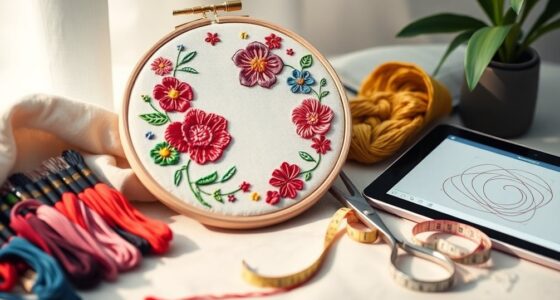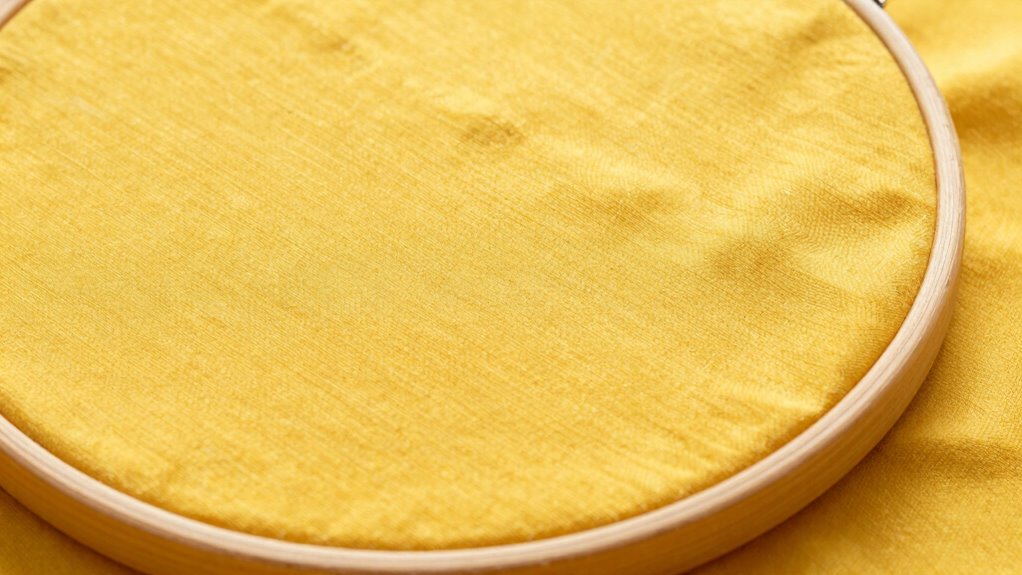
To prevent embroidery hoops from leaving marks, start by choosing the right hoop size and material, like a padded wooden or fabric-lined hoop, especially for delicate fabrics. Make sure your fabric is taut but not overstretched before tightening the hoop evenly, working gradually to avoid indentations. Loosen the hoop slightly between sewing sessions to reduce continuous pressure. Proper tension and hoop handling can keep your fabric smooth and mark-free—continue to explore these tips for flawless results.

Get business pricing on tools and workshop supplies
- Business-only prices and quantity discounts
- Tax-exempt purchasing
- Multiple users, one account, clear invoices
Key Takeaways
- Use padded or soft-lined hoops to cushion delicate fabrics and distribute pressure evenly.
- Adjust fabric tension before tightening, ensuring it’s taut but not overstretched.
- Tighten the hoop gradually and evenly on all sides to prevent indentations.
- Loosen the hoop slightly between embroidery sessions to reduce continuous pressure.
- Remove the hoop carefully after finishing to avoid pulling or stretching the fabric.
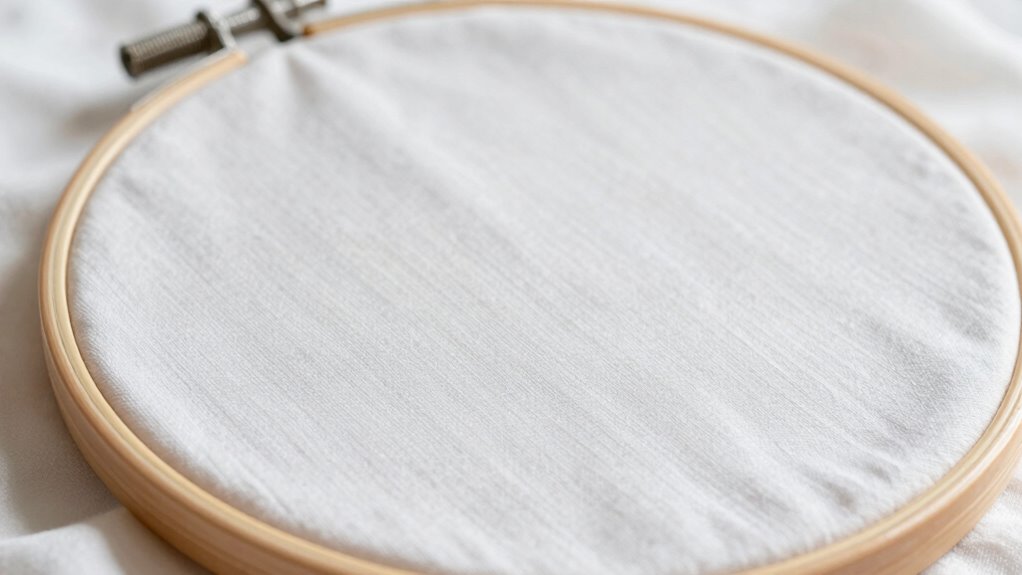
Embroidery hoops can be essential for keeping your fabric taut, but they often leave unsightly marks if you’re not careful. The key to avoiding these indentations lies in understanding fabric tension and choosing the right hoop. When your fabric is stretched too tightly, the pressure from the hoop can create permanent impressions, especially if you’re working on delicate materials. Conversely, if it’s too loose, your stitches won’t be even, making your finished piece look uneven. Finding the perfect balance is *important*.
Achieve flawless embroidery by balancing fabric tension and selecting the right hoop to prevent marks.
Start by selecting a hoop that suits your project and fabric type. Not all hoops are created equal, so consider the material and size that best matches your embroidery. Wooden hoops tend to be gentler than metal ones, which can sometimes exert more pressure. For delicate fabrics, opt for a hoop with a padded inner ring or add a soft lining to cushion the fabric. The right hoop selection helps distribute pressure evenly, reducing the risk of marks. Additionally, using proper fabric tension techniques can significantly improve your results.
Adjusting fabric tension before tightening the hoop is *essential*. You want the fabric to be taut but not stretched to its limit. To test this, gently lift the fabric at the center—if it moves freely without sagging or feeling overly tight, you’ve achieved the right tension. When tightening the hoop, do it gradually and evenly, tightening a little at each side rather than all at once. This ensures even pressure distribution, preventing excess indentation. It’s also helpful to stretch and smooth the fabric beforehand to avoid tension inconsistencies.
Another tip for avoiding marks is to loosen the hoop slightly between embroidery sessions. This reduces continuous pressure on the fabric, especially if you’re working on a project that takes multiple sessions. When you’re done, carefully remove the hoop and avoid pulling or stretching the fabric further. If you notice faint marks after removing the hoop, don’t worry—they often fade with time or gentle steaming. Additionally, understanding how the fabric tension impacts the marks can help you better manage your project and avoid damage. Regularly checking your fabric tension and adjusting your hoop selection accordingly will help you create beautiful, mark-free embroidery pieces. With practice, you’ll develop an intuitive sense of how tight your fabric should be, *guaranteeing* your embroidery looks flawless without those annoying indentations.
As an affiliate, we earn on qualifying purchases.
Frequently Asked Questions
Can Alternative Materials Prevent Hoop Marks?
Yes, using alternative materials like fabric padding or hoop liners can effectively prevent hoop marks. These materials act as a cushioning layer between the hoop and your fabric, distributing pressure evenly. You should place hoop liners or soft fabric padding inside the embroidery hoop before tightening it. This way, you protect your fabric and reduce the risk of marks, keeping your embroidery neat and damage-free.
How Often Should I Adjust Hoop Tension?
Think of your hoop as a steady heartbeat—it needs regular checks. You should adjust tension whenever you notice fabric stretch or uneven tension, ensuring consistency. Typically, once a project is underway, check every 20-30 minutes to prevent marks and maintain tension harmony. This keeps your fabric snug without pinching, allowing your stitches to flow smoothly and your embroidery to shine without leaving marks or causing fabric distortion.
Are There Specific Fabrics More Prone to Marks?
Certain fabric types, like delicate silk or lightweight linen, are more prone to marks from embroidery hoops. To prevent marks, choose fabrics with a bit more stability and avoid stretching them too tightly. Using a fabric stabilizer can also help distribute pressure evenly, reducing the risk of marks. Always test on a small section first, and adjust your hoop tension to make certain secure but gentle hold, enhancing mark prevention.
Does Hoop Size Affect Mark Formation?
Yes, hoop size does influence mark formation. Larger hoops distribute pressure more evenly, reducing the chances of marks, especially on delicate fabrics. The hoop material also plays a role; softer or padded hoops cause fewer impressions. Additionally, maintaining proper embroidery tension prevents excessive pressure, which minimizes marks. Choosing the right hoop size, material, and adjusting tension helps protect your fabric from unwanted indentations during embroidery.
Can Using a Hoopless Method Eliminate Marks Entirely?
Yes, using hoopless techniques can eliminate marks entirely. By avoiding traditional hoops, you reduce direct pressure on the fabric, preventing indentation. Instead, you can stretch the fabric manually or use adhesive stabilizers that secure the fabric without squeezing it tightly. This method allows you to keep the fabric taut and smooth, reducing the risk of marks, and gives you more control over your embroidery, resulting in a cleaner finish.
Conclusion
To keep embroidery hoops from leaving marks, always guarantee your fabric is taut but not overly tight, and consider using a layer of protective material like muslin or felt between the hoop and your fabric. Regularly check your tension and adjust as needed. Remember, a stitch in time saves nine—taking small steps now prevents bigger issues later. With patience and care, your projects will stay beautiful and mark-free.
Fall yard work Picks
leaf blowers
As an affiliate, we earn on qualifying purchases.