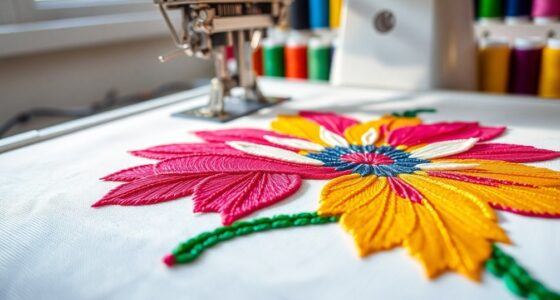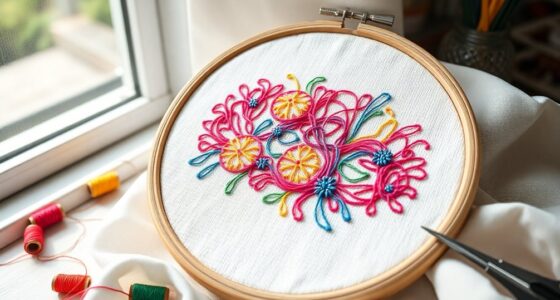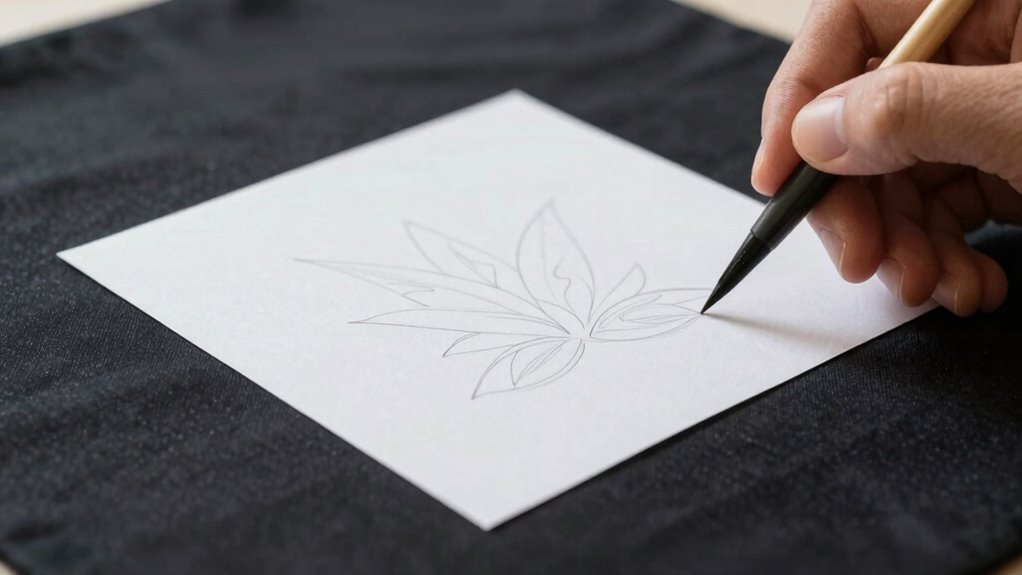

To transfer designs onto dark fabric cleanly, start by thoroughly preparing your fabric—wash, dry, and iron it to remove wrinkles and chemicals. Use light-colored or metallic transfer pencils to trace your design with steady pressure, securing everything with tape for accuracy. For precise transfer, place carbon or transfer paper underneath and trace over the lines. For best results, choose durable markers or paint pens that withstand washing. If you’re curious about more detailed tips, keep exploring the process below.

Get business pricing on tools and workshop supplies
- Business-only prices and quantity discounts
- Tax-exempt purchasing
- Multiple users, one account, clear invoices
Key Takeaways
- Use light-colored or metallic transfer pencils for clear, visible outlines on dark fabric.
- Secure the fabric and design with tape to prevent shifting during tracing.
- Employ carbon or transfer paper with a stylus for precise, clean design transfer.
- Trace designs carefully with consistent pressure to maintain accuracy and detail.
- Finish with fabric markers or paint pens for permanent, vibrant outlines that withstand washing.
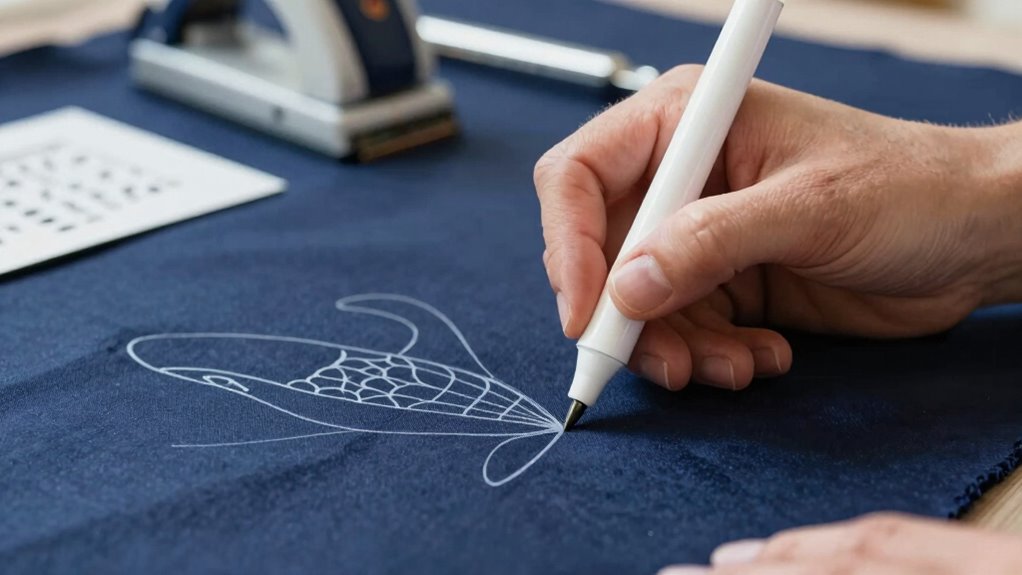
Transferring designs onto dark fabric can seem challenging, but with the right techniques, you can create vibrant, professional-looking results. The key starts with proper fabric preparation. Before you begin, wash your dark fabric to remove any sizing or chemicals that could interfere with the transfer process. Dry it thoroughly to guarantee it’s smooth and free of wrinkles, as these can distort your design. Iron the fabric on a high heat setting to create a flat, even surface, which makes tracing and transferring much easier. Using a clean, lint-free cloth underneath the fabric can also prevent it from shifting during the process. When it comes to design tracing methods, your goal is to get a clear, precise outline onto the fabric without damaging it.
One effective approach is to use light-colored or metallic transfer pencils or pens that are compatible with dark fabrics. These tools allow you to trace your design directly onto the fabric’s surface, providing a guide for your painting, embroidery, or heat transfer application. To do this efficiently, place your design onto the fabric with a lightbox or tape it to a window with good light behind it. Secure the fabric and design with tape to prevent movement. Carefully trace over every line, applying consistent pressure. The trace will be visible enough to serve as a guide but subtle enough not to overpower the fabric’s surface. Proper fabric preparation is essential for achieving a clean and durable transfer, ensuring that your design stays intact through multiple washes. Additionally, choosing the right transfer method can significantly impact the longevity and appearance of your design on dark fabrics.
Another popular method involves creating a transfer using carbon paper or transfer paper designed for dark fabrics. To do this, place the carbon paper underneath your printed or drawn design, then trace over the lines with a stylus or ballpoint pen. The pressure will transfer the design onto your fabric cleanly. For more intricate designs, using a lightbox or window helps you see through multiple layers and trace accurately. If you prefer a more permanent option, consider using fabric markers or paint pens to directly outline your design after tracing with a light-colored pencil. These tools are ideal for detailed work and assure your design stays vibrant after washing.
metallic fabric transfer pencils for dark fabric
As an affiliate, we earn on qualifying purchases.
As an affiliate, we earn on qualifying purchases.
Frequently Asked Questions
Can I Use Regular Transfer Paper on Dark Fabrics?
You can’t use regular transfer paper on dark fabrics because it’s designed for light-colored surfaces. Regular transfer paper won’t show up well, and your design might not transfer clearly. Instead, look for special transfer paper made specifically for dark fabrics, which has a white or opaque backing to guarantee your design appears vibrant and clean. Always follow the instructions on the transfer paper to get the best results for your dark fabrics.
How Long Does a Transferred Design Last?
Did you know that properly transferred designs can last through hundreds of washes? In general, the transfer’s durability depends on fabric longevity and the method used. If you follow instructions carefully, your design can stay vibrant for 20-50 washes. To maximize transfer durability, use heat and pressure correctly, and wash the fabric inside out. With proper care, your design can remain sharp and colorful for a long time.
Is Heat Setting Necessary After Transferring?
Yes, heat setting is necessary after transferring. It helps secure the design and guarantees it lasts through washes. Before applying heat, make certain you prepare the fabric properly by washing and drying it to remove any residues or wrinkles. Use a heat press or iron at the recommended temperature, and apply firm pressure for the specified time. This step is essential to make your design durable and vibrant on dark fabric.
Can I Transfer Complex Images Onto Dark Fabric?
Yes, you can transfer complex images onto dark fabric, but proper fabric preparation and transfer techniques are essential. Start by washing and ironing your fabric to remove wrinkles and oils, ensuring a smooth surface. Use high-quality transfer paper suited for dark fabrics, and consider layering or outlining details for clarity. Carefully follow the transfer instructions, applying even pressure and heat, to achieve a clean, detailed design without smudging or fading.
What Tools Are Best for Detailed Designs?
For detailed designs on dark fabric, you’ll want fine-tipped transfer pens or high-quality transfer paper suited for dark materials. Consider tools that work well with your fabric’s texture, like smooth or slightly textured surfaces, to guarantee precision. Transfer paper suitability is vital—look for products specifically designed for dark fabrics to prevent smudging or fading. These tools help you achieve crisp, intricate details without damaging the fabric.
Conclusion
Transferring designs onto dark fabric might seem tricky, but with the right techniques, you can achieve professional-looking results every time. Remember, over 60% of DIY crafters say that experimenting with different transfer methods boosted their confidence and creativity. So don’t be afraid to try new approaches and practice. Keep your workspace organized, and soon you’ll be creating stunning, clean designs that stand out on dark backgrounds. Happy crafting!
Halloween Picks
halloween
As an affiliate, we earn on qualifying purchases.