
To align fabric like industry pros, always check the grainline arrow on your pattern, ensuring it runs parallel to the selvage edge. Pay close attention to fabric directionality and pattern matching, especially with prints or stripes, to achieve a polished look. Use pattern weights or pins to secure pieces and prevent shifting during cutting. Maintaining the proper grainline during sewing guarantees your garment drapes correctly and lasts longer—continue for tips on perfecting this essential skill.
Key Takeaways
- Always align pattern pieces along the fabric’s selvage, following the grainline arrow for proper orientation.
- Check the fabric’s natural grain by gently pulling to ensure it’s straight before cutting.
- Use pattern weights or sharp pins to secure fabric, preventing shifting that can misalign the grain.
- Match pattern motifs or stripes along the grainline to achieve a professional, seamless appearance.
- Confirm the fabric’s directional fibers are consistent throughout the project to maintain drape and fit.
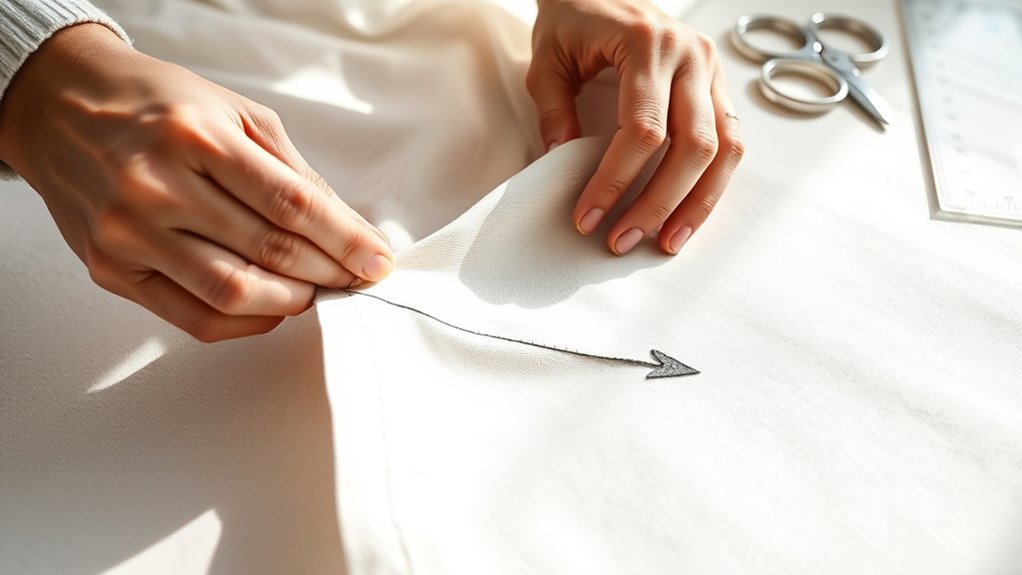
Mastering grainlines is essential for creating professional-looking garments, as they guarantee your fabric pieces align correctly and hang smoothly. When working with fabric, understanding the fabric directional and how it interacts with your pattern is vital. Fabric directional refers to the way the fabric’s fibers run, which affects how the finished garment will look and behave. If you ignore grainlines, you risk mismatched seams, uneven drapes, and a less polished final product. Properly identifying the grainline ensures your fabric pieces are cut correctly and that pattern matching is seamless, especially when working with prints, stripes, or nap fabrics.
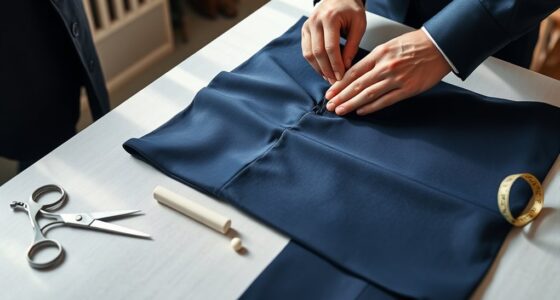
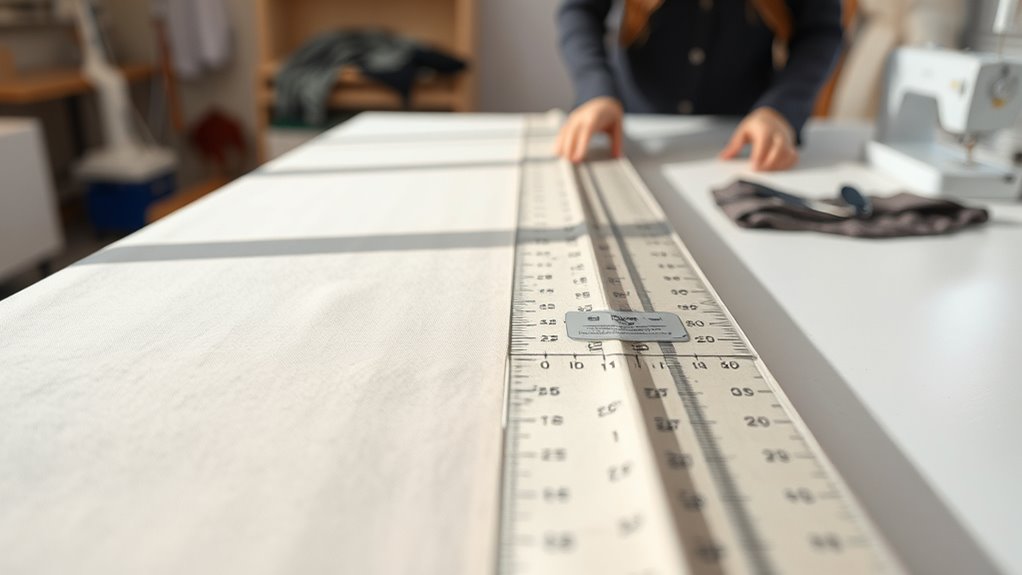
To begin, always check the pattern instructions for grainline indicators. Most patterns include a grainline arrow that shows the direction in which you should lay your pattern piece on the fabric. This arrow is typically parallel to the selvage, which is the finished edge of the fabric. Lining up your pattern along the selvage guarantees that your piece aligns with the fabric’s grain, reducing distortion and ensuring that the garment drapes as intended. When you cut along the grainline, you’re preserving the fabric’s natural structure, which helps the finished item hang correctly and resist twisting or skewing over time.
Pattern matching is another key aspect connected to understanding grainlines. When working with patterned fabric, aligning motifs along the grainline becomes crucial for a professional finish. Not matching stripes, plaids, or prints along seams can make even well-constructed garments look amateurish. Before cutting, carefully lay out your pattern pieces, paying close attention to how the fabric’s pattern aligns across different sections. This often means adjusting the pattern piece’s position on the fabric to ensure continuous design elements and consistent pattern flow. By doing so, you avoid jarring mismatches and create a polished appearance.
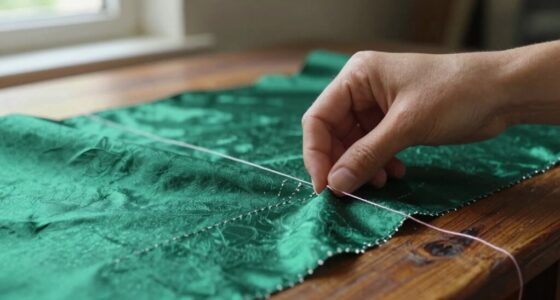
Always double-check your fabric’s grain before cutting. Gently pull on the fabric to see if it stretches or distorts; if it does, you may need to realign your pattern piece. Use pattern weights or pins to secure your pattern, ensuring it stays aligned with the grainline as you cut. This prevents shifting and guarantees each piece will fit together perfectly during assembly. Additionally, understanding fabric directional is fundamental for achieving a professional finish, as it influences how the fabric drapes and behaves in the final garment. When you sew, maintaining the correct fabric directional and matching patterns along the grainline results in a garment that not only looks better but also wears more comfortably and lasts longer.
fabric pattern weights for sewing
As an affiliate, we earn on qualifying purchases.
As an affiliate, we earn on qualifying purchases.
Frequently Asked Questions
How Do I Identify the Grainline on Different Fabric Types?
To identify the grainline on different fabric types, start by examining the fabric weave. Look for the selvage edge, which runs parallel to the grainline, making it your guide. Use pattern matching techniques by aligning the pattern’s lines with the fabric’s grain for accuracy. Gently tear or cut a small section to see how the weave behaves—this helps guarantee you’re cutting along the correct grain for a professional finish.
What Tools Are Essential for Accurate Fabric Alignment?
To accurately align fabric, you need essential tools like marking tools and effective pinning strategies. Use a fabric chalk or washable marker to trace grainlines precisely, ensuring your fabric stays aligned during cutting. Pins should be placed carefully along the grainline to secure layers without distortion. These tools and strategies help you maintain perfect alignment, leading to professional-looking seams and finished garments. Proper preparation makes all the difference in sewing precision.
How Can I Correct Misaligned Fabric Before Sewing?
Ever feel like your fabric’s playing a game of tug-of-war? To correct misalignment before sewing, first stop and assess your thread tension—adjust it to guarantee smooth stitches. Then, gently realign your fabric, pinning along the seam allowance to hold it steady. Take your time, smoothing out wrinkles, and double-check the alignment. This careful approach keeps your fabric straight, making sewing easier and producing professional-looking results.
Does Fabric Grain Affect the Durability of the Finished Garment?
Yes, fabric grain affects your garment’s durability. When your fabric is on grain, it drapes properly and the seams stay stable over time. If it’s misaligned, your garment might sag or warp, reducing its lifespan. Properly aligning the grain during cutting guarantees your fabric drape looks natural and your seams stay stable, making your finished piece more durable and professional-looking.
Are There Differences in Grainline Techniques for Stretch Fabrics?
When working with stretch fabric, you should pay close attention to the grain direction, as it greatly impacts the garment’s fit and stretch recovery. Unlike woven fabrics, stretch fabrics require aligning the grainline precisely to guarantee proper stretch and durability. You’ll want to follow specific grainline techniques that emphasize maintaining the correct grain direction, so the fabric stretches evenly and resists distortion, resulting in a professional-looking, long-lasting finished piece.
Conclusion
Mastering your grainline transforms your sewing from chaotic to precise. Think of it as guiding your fabric’s heartbeat, aligning each thread like a seasoned pro. When you follow these principles, your projects come together like a well-orchestrated dance—fluid and flawless. It’s the difference between a garment that drapes loosely and one that fits perfectly. With every accurate cut, you’re building confidence—turning fabric into art, and sewing into mastery.