To pattern cut like a professional, focus on choosing high-quality fabrics suited to your design, considering their weight and stretch. Take precise measurements—double-check and record them carefully to make certain of accuracy. Pre-wash fabrics to prevent shrinkage later, and always account for fabric properties during pattern adjustments. By honing your measurement skills and selecting the right fabric, you’ll create better-fitting garments. Keep exploring these techniques to master pattern cutting and achieve professional results every time.
Key Takeaways
- Use a flexible, snug tape measure to take accurate, relaxed body measurements, double-checking for precision.
- Select quality, appropriate fabric considering weight, stretch, and drape to ensure pattern accuracy and better fit.
- Pre-wash fabric to account for shrinkage, and choose fabrics with suitable fiber content for your pattern and design.
- Incorporate seam allowances into measurements and pattern markings, adjusting for fabric properties during cutting.
- Develop an intuitive understanding of fabric behavior over time to make better pattern choices and achieve precise, professional results.
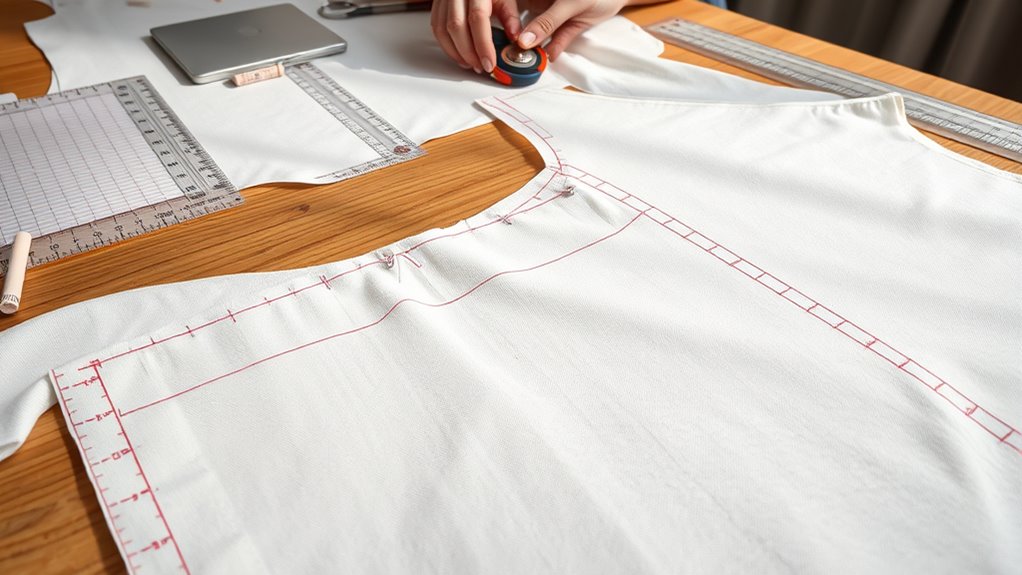
Ever wondered how professional pattern makers achieve perfectly fitting garments? It all comes down to a combination of precise fabric selection and accurate measurement techniques. When you’re starting out, choosing the right fabric is essential. Think about the garment’s purpose, drape, and stretch. For instance, if you’re making a fitted dress, a fabric with some stretch might be more forgiving, while a stiffer fabric might be better for structured pieces. Always consider the weight and fiber content—it influences how the fabric behaves once cut and sewn. Opting for quality fabric ensures your pattern translates well into the final garment, reducing the need for costly adjustments later. Take your time selecting fabric; it’s a step that can’t be rushed if you want professional results.
Once you’ve picked your fabric, mastering measurement techniques is your next priority. Accurate measurements are the backbone of pattern making, ensuring your pieces will fit like a glove. When measuring, use a flexible tape measure and keep it snug but not tight, maintaining consistency across all measurements. Measure key areas such as bust, waist, hips, and length, but don’t forget details like shoulder width or armhole circumference. Always take measurements while the person is standing straight and relaxed to capture their natural body shape. It’s helpful to write down each measurement immediately to avoid confusion later. Remember, precision here is essential—small errors can lead to significant fitting issues once your pattern is cut. You can even double-check measurements by comparing them to a well-fitting garment to confirm accuracy. Additionally, understanding the significance of butter making and its traditional techniques can inspire creative ways to approach fabric handling and preparation in your projects.
Incorporating correct measurement techniques early on saves you time and frustration during pattern drafting. Measure twice, cut once—this old adage holds true in pattern cutting. When selecting fabric and measuring, always account for seam allowances and fabric properties. For example, some fabrics shrink after washing, so you might want to add extra allowance or pre-wash your fabric beforehand. As you gain experience, you’ll develop a more intuitive sense of which fabrics work best for different patterns and how to measure efficiently. This foundational step influences the entire process, allowing you to create garments that fit beautifully and look professional. So, invest time in fabric selection and measurement techniques now, and you’ll set yourself up for pattern cutting success every time.
Frequently Asked Questions
What Tools Are Essential for Professional Pattern Cutting?
You need essential tools like sharp scissors for fabric stabilization and a rotary cutter for precision. A clear ruler and French curves help with accurate pattern notation, ensuring your pieces align perfectly. Use pattern weights to keep fabric steady and tracing paper to transfer markings smoothly. Marking tools like fabric chalk or pens are crucial for noting seam allowances and darts. These tools help you cut accurately and create professional-looking garments.
How Do I Choose the Right Fabric for Pattern Accuracy?
Imagine creating a sleek evening gown, but choosing lightweight fabric results in poor pattern draping and inaccurate fit. To guarantee pattern accuracy, select fabric with the appropriate weight—heavier fabrics offer stability, while lighter ones provide fluid drape. Test your fabric by draping small pieces on your dress form, observing how it flows and holds shape. This helps you pick the perfect fabric to bring your pattern to life with precision.
What Are Common Mistakes to Avoid in Pattern Drafting?
You should avoid rushing your fitting adjustments and neglecting seam allowances, as these are common drafting mistakes. Always double-check your measurements and guarantee seam allowances are consistent throughout your pattern. Don’t skip fitting trials—these help catch errors early. Keep your lines precise and avoid overlapping or uneven edges, which can throw off your pattern’s accuracy. Paying attention to these details ensures your final garment fits perfectly.
How Can I Modify Patterns for Different Body Types?
To modify patterns for different body types, focus on body shape adaptation and sizing adjustments. You should measure your body accurately, then adjust darts, seams, and allowances to fit your unique curves. For broader shoulders, add width; for a fuller bust, reshape the princess seams. Always make a muslin first to test fit, then refine your pattern accordingly, ensuring your finished garment fits comfortably and looks tailored to your body.
What Techniques Ensure Precise Pattern Transfer Onto Fabric?
To guarantee precise pattern transfer onto fabric, start with accurate fabric marking and pattern tracing. Use fabric chalk or a fabric pen to clearly mark seam lines, darts, and notches. Trace your pattern carefully, staying close to the lines, and double-check measurements before cutting. Pin the pattern securely to prevent shifting. These techniques help you achieve clean, professional results with minimal errors and a perfect fit.
Conclusion
Now that you’ve mastered these expert pattern cutting tips, your projects will never be the same. But remember, even the tiniest detail can make or break your design. Are you ready to push your skills further and discover the secret techniques that seasoned dressmakers swear by? Keep practicing, stay curious, and the perfect fit could be just a cut away. Your journey into flawless craftsmanship has only just begun—are you prepared for what’s next?