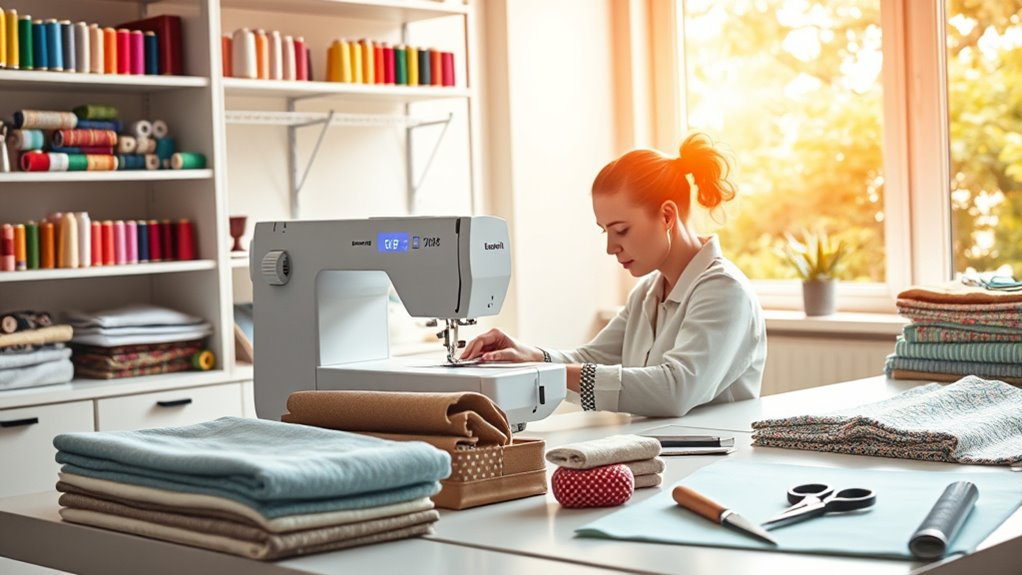
To sew faster and smarter, choose easy-to-handle fabrics like cotton or linen that reduce adjustments, and make pattern tweaks early with muslin tests to avoid reworks. Keep your workspace organized with pattern weights and sharp tools, and plan your project around equipment availability. Regularly maintain your sewing machine to prevent delays. Small, strategic tweaks, plus staying prepared, can boost your efficiency—if you want to learn even more tips, keep exploring these essential hacks.
Key Takeaways
- Prepare and organize your workspace with pattern pieces, tools, and notions within easy reach to streamline the sewing process.
- Use pattern weights and cut multiple fabric layers simultaneously to save time during cutting.
- Make pattern adjustments and muslin fittings early to reduce multiple fitting sessions later.
- Maintain your sewing machines and tools regularly to prevent unexpected delays.
- Choose easy-to-work fabrics like cotton or linen to minimize shifting and sewing adjustments.
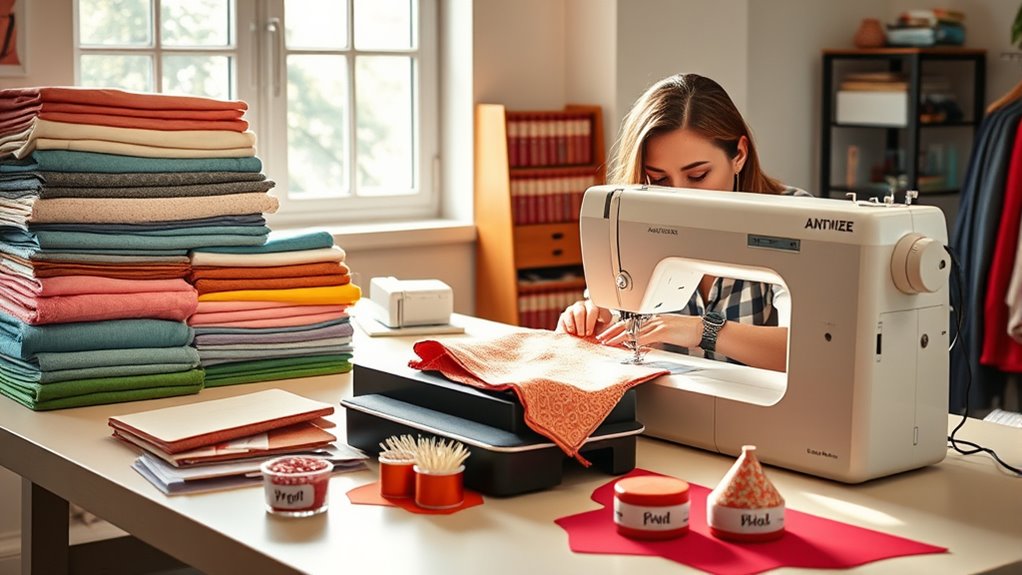
Whether you’re a beginner or an experienced sewist, finding ways to work more efficiently can save you time and frustration. One of the most effective strategies is paying close attention to fabric selection. Choosing the right fabric from the start can considerably streamline your project. Opt for fabrics that are easy to work with, like cotton or linen, especially when you’re just starting out. These fabrics tend to be more stable, less prone to shifting, and sew up smoothly, reducing the need for constant adjustments. When selecting fabric, also consider its width and cutability; pre-washed, well-pressed fabric can save you hours of trimming and fixing mistakes later. Having a clear idea of what fabric works best for your pattern and project will prevent you from wasting time on trial and error, allowing you to focus on the sewing rather than troubleshooting. Additionally, knowing the support hours of your sewing machine or equipment can help you plan maintenance or troubleshoot issues promptly, minimizing project delays.
Choosing easy-to-work-with fabrics like cotton or linen streamlines sewing and reduces adjustments.
Another time-saving tip revolves around pattern adjustments. Instead of making multiple fitting sessions or trial runs, spend some time fine-tuning your pattern before cutting into your fabric. This can mean adding seam allowances, grading the pattern for your size, or modifying darts and princess seams for a better fit. When you make pattern adjustments early, you avoid wasting fabric on ill-fitting pieces and reduce the need for later alterations. It’s a smart move to make a muslin or test garment first, especially for complex designs. This preliminary step helps you identify necessary adjustments in fit and style, which you can then transfer to your final pattern. As a result, your finished garment will fit better and require fewer tweaks after sewing.
Efficiency also comes from organizing your workspace and cutting process. Keep your pattern pieces, notions, and tools within easy reach. Use pattern weights instead of pins to speed up cutting, and cut multiple layers at once if your fabric allows. When you’re working with pattern adjustments, mark modifications clearly and systematically, so you don’t have to revisit or redo them later. This upfront diligence minimizes mistakes and saves time during assembly. Additionally, investing in drafting software or pattern-making tools can streamline your adjustments, especially for complex designs or custom fits.
Incorporating these tips—careful fabric selection and thoughtful pattern adjustments—sets a foundation for a more efficient sewing process. It’s about being prepared, organized, and proactive, so you spend less time fixing mistakes and more time enjoying the creative process. When you understand your materials and refine your patterns early on, you’ll sew faster, smarter, and with more confidence. These small but impactful changes will transform your workflow, making each project more enjoyable and less stressful.
Top picks for "faster smarter efficiency"
Open Amazon search results for this keyword.
As an affiliate, we earn on qualifying purchases.
Frequently Asked Questions
How Do I Choose the Best Sewing Machine for Efficiency?
To select the best sewing machine for efficiency, focus on machine features like automatic thread cutters, speed control, and multiple stitch options that streamline your work. Consider brands with a solid reputation for durability and customer support, as quality guarantees fewer breakdowns and quicker repairs. Research reviews, test machines in-store if possible, and pick one that fits your sewing needs and budget. A reliable, feature-rich machine boosts your productivity and makes sewing more enjoyable.
What Are Common Mistakes That Slow Down Sewing Projects?
You often slow down your sewing projects by neglecting proper thread tension and fabric choice. If your thread tension isn’t set correctly, stitches become uneven, causing frustration and rework. Choosing the wrong fabric can also hinder progress, as some materials require different needles or tension adjustments. Always check your thread tension before starting, and select fabrics suited to your machine’s capabilities to keep your projects running smoothly and efficiently.
How Can I Organize My Sewing Space for Maximum Productivity?
Imagine your sewing space as a well-tended garden. To keep it thriving, use clever storage solutions like clear bins and labeled drawers to organize tools and fabrics. Enhance lighting with bright, adjustable fixtures so you see every detail clearly. Keep frequently-used items within arm’s reach, and create dedicated zones for cutting, sewing, and pressing. This setup boosts your productivity and makes sewing more enjoyable and efficient.
What Tools Can Help Me Sew Faster Without Sacrificing Quality?
You can sew faster without sacrificing quality by using thread organizers to keep your threads neat and accessible, saving you time searching. Additionally, investing in ergonomic seating reduces fatigue and keeps you comfortable during long sewing sessions. These tools streamline your workflow, allowing you to focus on your craft, improve precision, and maintain high-quality results while boosting your efficiency.
How Do Experienced Sewists Stay Motivated During Long Projects?
Think of your motivation as a flame that needs constant tending. You stay inspired by practicing strong mindset strategies and setting clear, achievable goals. Break big projects into smaller, manageable steps, celebrating each milestone. Visualize the finished piece and remind yourself of the joy sewing brings. With each stitch, you’re one step closer to your goal, keeping your passion alive even through the longest projects.
Conclusion
Now that you’ve learned these efficiency hacks, it’s time to sew faster, smarter, and with more confidence. Organize your workspace, plan your projects, and keep your tools within reach. Stay focused, stay prepared, and stay inspired. By adopting these tips, you’ll boost your productivity, reduce frustration, and enjoy every stitch you make. Remember, efficiency isn’t just about speed — it’s about enjoying the craft and creating your best work every time.