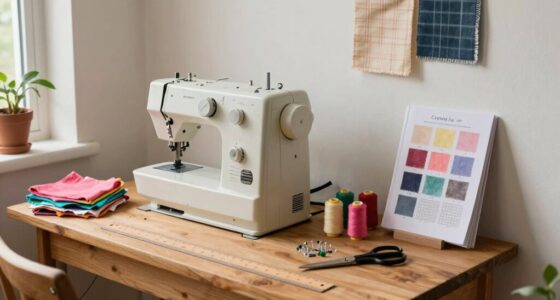
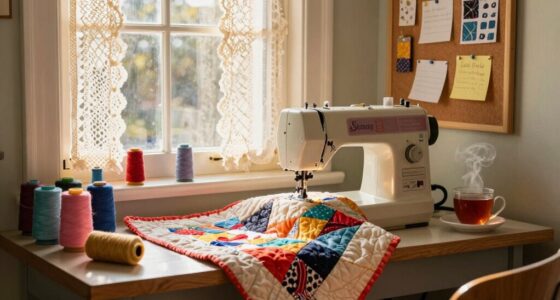
To build a handmade wardrobe without duplicating pieces, choose versatile fabrics like cotton, linen, or wool that suit different styles and seasons. Organize your storage with labeled bins, hangers, and shelves to keep everything accessible and prevent damage. Focus on creating adaptable, multi-purpose designs that complement each other, helping you avoid repetition. If you want to explore effective strategies for varied, intentional wardrobe building, there’s plenty more to discover.

Get tools and workshop supplies delivered free — and shop member deals
- Fast, free delivery on millions of items
- Access to Prime Big Deal Days deals on October 6–7
- Prime Video, Amazon Music and more included
Key Takeaways
- Focus on versatile fabrics and designs that can be styled in multiple ways to avoid repeats.
- Organize and label your fabrics and patterns to plan unique pieces intentionally.
- Prioritize different garment types and silhouettes to diversify your wardrobe.
- Use a cohesive color palette and patterns to mix and match without duplication.
- Plan your sewing projects with variation in style and function to create a well-rounded wardrobe.

Creating a versatile handmade wardrobe begins with careful planning to avoid duplicates and maximize your wardrobe’s potential. When starting this process, your first focus should be on fabric selection. Choosing the right fabrics is vital because it influences the style, durability, and versatility of your pieces. Opt for classic, high-quality materials like cotton, linen, wool, or blends that can be styled in multiple ways. Think about colors and patterns that complement each other, so your handmade garments can be mixed and matched easily. This thoughtful approach guarantees you won’t need to create similar items repeatedly, saving you time and resources. By selecting fabrics that suit different seasons and occasions, you also extend the usefulness of each piece, reducing the temptation to duplicate items just for variety.
Once you’ve settled on your fabric choices, you need to think about storage solutions that keep your handmade wardrobe organized and accessible. Proper storage prevents clothes from getting wrinkled, stained, or damaged, which is especially important for handmade garments that often carry sentimental value. Use a combination of drawers, hangers, and shelves to maintain the integrity of your pieces. For example, delicate fabrics like silk or wool should be stored flat or hung carefully to avoid stretching or creasing. Invest in storage bins or baskets for fabric scraps and sewing supplies, so you can easily find what you need without rummaging through clutter. Label storage containers to streamline your workflow, especially if you’re creating multiple designs or batches of similar items. When your wardrobe is well-organized, you can see at a glance what you have, making it easier to plan new projects that complement your existing pieces without creating unnecessary duplicates. Additionally, understanding your fabric types and their care requirements can help you select appropriate storage methods, ensuring your garments stay in top condition longer.
Furthermore, effective storage solutions help you stay disciplined in your sewing projects, encouraging you to focus on creating unique items rather than reproducing the same piece repeatedly. As you build your wardrobe, prioritize versatility by choosing adaptable designs and multi-functional garments. Keep in mind that fabric selection plays a vital role in this, as fabrics that can serve multiple purposes or styles will maximize your wardrobe’s potential. When your storage is efficient and your fabric choices are intentional, you’ll find it easier to develop a cohesive wardrobe that reflects your personal style without falling into the trap of duplication. Remember, the goal isn’t just to fill your closet but to curate a collection of handmade pieces that work well together, giving you more variety and satisfaction in your wardrobe.
versatile fabric sewing patterns
As an affiliate, we earn on qualifying purchases.
As an affiliate, we earn on qualifying purchases.
Frequently Asked Questions
How Do I Choose Versatile Pieces for My Handmade Wardrobe?
You should pick versatile pieces that mix and match easily, like neutral-colored tops and bottoms, to maximize your wardrobe. Focus on color coordination to create cohesive outfits, choosing staple colors like black, white, or navy. Opt for classic styles that can be dressed up or down. This way, each piece complements others, allowing you to create numerous looks without duplication, making your handmade wardrobe both functional and stylish.
What Materials Are Best for Durable Handmade Clothing?
For durable handmade clothing, opt for high-quality fabrics like denim, canvas, or wool, which stand the test of time. Focus on fabric sourcing from trusted suppliers to guarantee material integrity. Use strong sewing techniques such as reinforced seams and double stitching to boost durability. These choices will help your garments last longer, maintain their shape, and resist wear, making your handmade wardrobe both stylish and resilient.
How Can I Customize Pieces to Reflect My Personal Style?
You can truly make each piece yours by experimenting with embellishment techniques like embroidery, patches, or unique buttons, which add a personal touch. Focus on color coordination to guarantee your wardrobe reflects your style — mix bold hues with neutrals or stick to a specific palette. Research shows personalized fashion boosts confidence by 60%. So, play with details and color schemes to create wardrobe pieces that mirror your personality effortlessly.
What Are Cost-Effective Ways to Build a Handmade Wardrobe?
To build a cost-effective handmade wardrobe, use sustainable fabrics like organic cotton or linen, which last longer and are eco-friendly. Incorporate upcycling techniques by repurposing old clothing or textiles into new pieces, saving money and reducing waste. Shop at thrift stores or online marketplaces for affordable materials. Focus on versatile patterns and simple designs to minimize waste and maximize your wardrobe’s functionality, making your pieces both budget-friendly and sustainable.
How Do I Maintain and Care for Handmade Garments?
Think of your handmade garments as delicate treasures; they require gentle care. You should focus on proper garment washing, using mild detergents and cold water to preserve fabric integrity. For stain removal, act quickly with gentle spot treatments, avoiding harsh chemicals. Store your pieces properly, folding or hanging as needed. Regularly inspect and mend small tears to prolong their life. This attentive care keeps your wardrobe looking fresh and unique for years.
Conclusion
By carefully choosing unique pieces and customizing each part, you can build a handmade wardrobe that truly reflects your style without repeats. Did you know that 85% of people prefer personalized furniture that stands out? Embrace creativity and craftsmanship to create a wardrobe that’s both functional and one-of-a-kind. With thoughtful planning, you’ll enjoy a space that feels entirely yours, showing that building something handmade can be both rewarding and uniquely tailored to your needs.
Halloween Picks
halloween
As an affiliate, we earn on qualifying purchases.