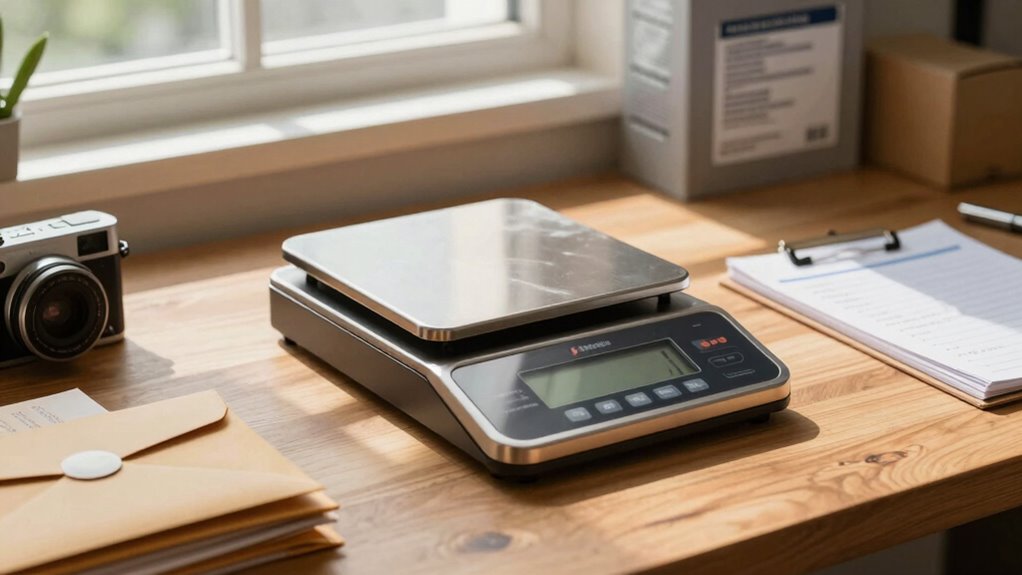

To pick a postage scale that fits your workflow, choose one with accurate, consistent readings and easy calibration to avoid overpaying or delays. Prioritize ergonomic features like a stable platform and user-friendly controls to reduce strain and frustration. Make certain it has the right size and capacity for your typical parcels, and consider connectivity options like Bluetooth or Wi-Fi to streamline your process. Keep these points in mind, and you’ll find the perfect match for your mailing needs.
Key Takeaways
- Match the scale’s capacity and platform size to your typical parcel weights and shapes for efficient handling.
- Prioritize digital accuracy and quick response times to ensure precise postage calculations and save time.
- Choose an ergonomic design with a stable platform and easy-to-use interface to reduce user fatigue and operational errors.
- Ensure reliable performance and regular calibration to maintain long-term accuracy and minimize costly mistakes.
- Opt for connectivity features like Bluetooth or Wi-Fi to streamline data management and integrate smoothly into your workflow.
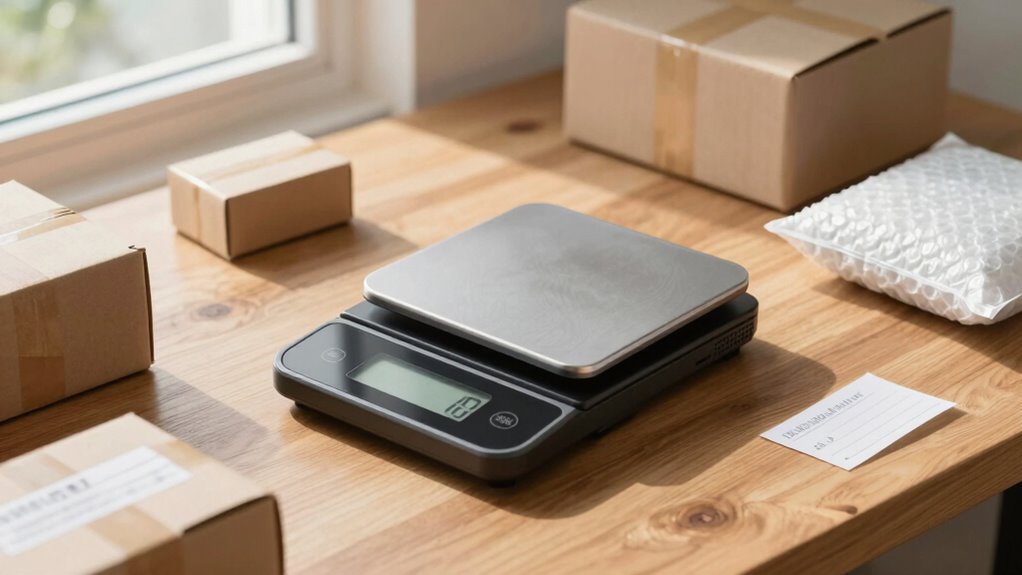
Are you unsure how to choose the right postage scale for your mailing needs? The first step is understanding what features matter most for your workflow. Digital accuracy is critical because it guarantees your postage calculations are precise, saving you money and preventing delays caused by incorrect weights. When you select a digital scale, look for models that offer consistent readings, quick response times, and easy calibration. This will help you avoid overpaying on postage or underpaying, which can lead to fines or inconvenience.
Prioritize digital accuracy and quick calibration to ensure precise postage and avoid costly errors.
Equally important is ergonomic design. You’ll want a scale that’s comfortable to use regularly, especially if you handle large volumes of mailing. An ergonomic design typically includes a stable platform, a user-friendly interface, and a height that minimizes strain on your wrists and back. If you’re packaging items frequently, a well-designed scale can make your workflow more efficient and less tiring. Avoid scales with small displays or awkward buttons, as these can slow you down and cause frustration.
When selecting a postage scale, think about the size and weight capacity. If you mostly send small parcels, a compact model with a lower weight limit might suffice. However, if you handle heavier packages, look for a scale that can accommodate higher weights without sacrificing digital accuracy or stability. Also, consider the size of the platform—larger platforms give you more space to weigh irregularly shaped items comfortably, reducing the risk of errors and making your process smoother. Additionally, choosing a scale with reliable performance can help you maintain accuracy over time and prevent costly mistakes. Regular maintenance and proper calibration are essential to sustain this reliability. To ensure long-term functionality, it’s helpful to select a model that has durable construction and offers good after-sales support.
Another factor to keep in mind is connectivity. Some scales come with Bluetooth or Wi-Fi capabilities, allowing you to sync data with your mailing or inventory software. This integration can streamline your operations, especially if you process large volumes or need to keep detailed records. Additionally, check if the scale has features like tare functions, which let you subtract packaging weight easily, and unit conversions, so you can switch between pounds, ounces, or grams effortlessly. Digital scale features are essential to consider for ensuring your workflow remains smooth and accurate.

Accuteck 8250 High Accuracy Digital Shipping Scale and Postal Scale, 0.1oz Precision, 50Lb
- High Precision: Accurate to 0.1oz for precise measurements
- High Capacity: Supports weights up to 50 lbs
- Smart Tare & Hold: Subtract container weight and lock readings
As an affiliate, we earn on qualifying purchases.
As an affiliate, we earn on qualifying purchases.
Frequently Asked Questions
Can I Use a Postage Scale Internationally?
Yes, you can use a postage scale for international shipping, but make certain it’s compatible with international standards. Check if the scale supports the weight units and measurement systems used worldwide. Some scales are versatile and can handle different currencies and international shipping labels. Always verify the scale’s specifications to guarantee it fits your international shipping needs, so you avoid errors and delays in your shipments.
How Do I Calibrate My Postage Scale?
Think of calibration procedures as tuning a musical instrument—you want perfect harmony. To calibrate your postage scale, start by turning it on and zeroing it out. Place a known, accurately weighted object on the scale, then adjust the calibration knob or settings as per the manufacturer’s instructions until the scale reads correctly. This guarantees scale accuracy, so your postage calculations stay precise and reliable every time you weigh a package.
Are Digital Scales More Accurate Than Mechanical Ones?
Digital scales generally offer better weight accuracy than mechanical ones, making them more precise for postage needs. They quickly display exact measurements, reducing errors. Mechanical scales are known for mechanical reliability but can be less precise and more prone to wear over time. If you prioritize consistent, accurate weight readings, especially for small or delicate items, a digital scale is often the better choice for your workflow.
What’s the Best Power Source for a Postage Scale?
Think of your postage scale’s power source as its heartbeat—steady and reliable. Battery power offers portability, but watch for short battery life that leaves you stranded. AC power keeps it humming continuously, ideal for busy workflows, yet may tie you down. For the best balance, choose a power source with high power efficiency, ensuring longer battery life, fewer interruptions, and a smooth rhythm in your mailing routine.
Can I Connect My Scale to Shipping Software?
Yes, you can connect your scale to shipping software if it offers wireless connectivity. Look for scales with Wi-Fi or Bluetooth features, which allow seamless integration with your shipping platform. Keep in mind, battery life matters—choose a scale with good battery performance to avoid interruptions. Wireless connectivity streamlines your workflow, making it easier to weigh packages and print labels directly from your shipping software.
Conclusion
Choosing the right postage scale might seem overwhelming, but it’s worth the effort to find one that fits your workflow perfectly. Don’t let concerns about cost or complexity hold you back—there are user-friendly options available for every budget. Investing in a reliable, accurate scale saves you time and prevents costly mistakes. Once you find the right fit, mailing will become quicker, easier, and more efficient—so go ahead, make that upgrade today!