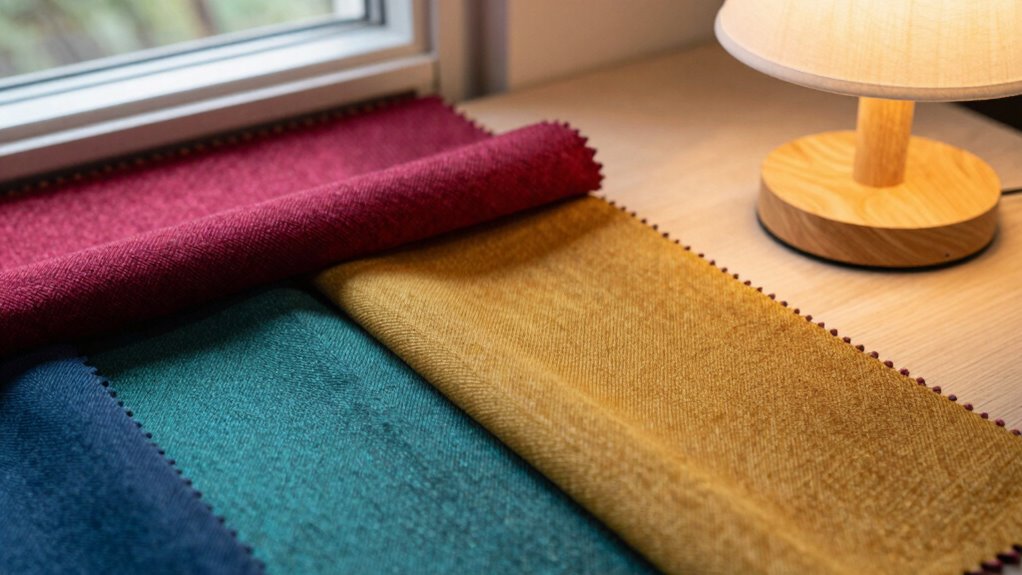

To photograph fabric colors more honestly, calibrate your camera and monitor to match real hues, ensuring consistent color accuracy. Use natural light during early morning or late afternoon for soft, diffuse lighting, and avoid harsh midday sun. In artificial settings, choose daylight-balanced bulbs. Keep lighting steady, control reflections, and use neutral backgrounds to prevent color shifts. Subtle editing helps preserve true fabric tones. Following these steps will help you achieve more authentic photos—there’s more to explore for perfect results.

Get business pricing on tools and workshop supplies
- Business-only prices and quantity discounts
- Tax-exempt purchasing
- Multiple users, one account, clear invoices
Key Takeaways
- Calibrate your camera and monitor to ensure accurate color capture and display before photographing fabrics.
- Use consistent, soft natural light during early morning or late afternoon, or employ daylight-balanced artificial lighting.
- Maintain a steady environment with neutral backgrounds and uniform lighting to prevent color shifts.
- Avoid excessive editing; make subtle adjustments to preserve the fabric’s true hues.
- Photograph fabrics under the same conditions repeatedly to ensure consistent and honest color representation.
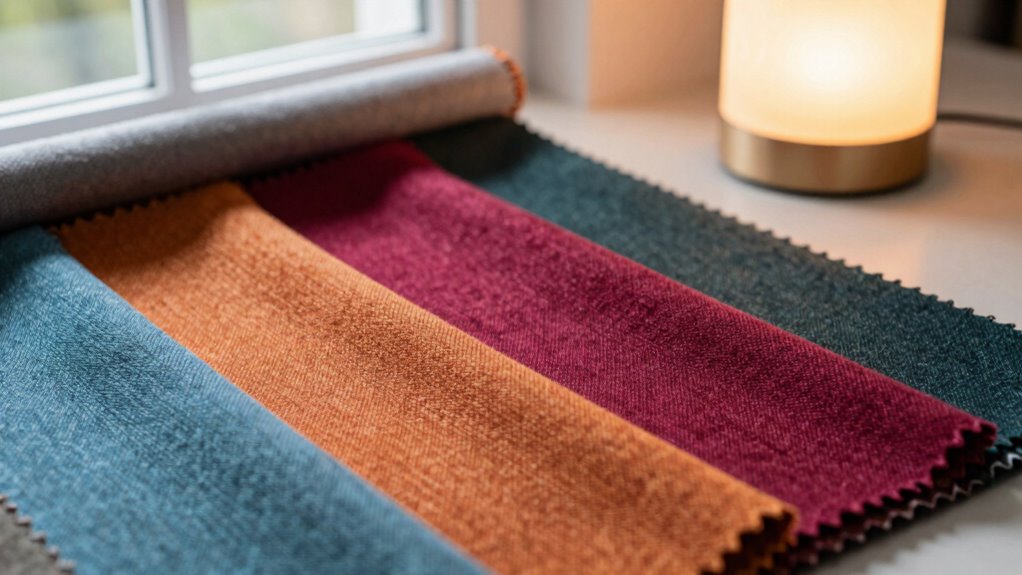
Capturing fabric colors accurately can be challenging, especially when digital images often distort the true hues. To get the most honest representation, you need to focus on color calibration and lighting consistency. Color calibration involves adjusting your camera or editing tools so that the colors in your photos match the real fabric as closely as possible. This means calibrating your monitor before editing and using color profiles compatible with your camera. When your equipment is properly calibrated, you minimize discrepancies caused by device differences, ensuring that what you see on your screen aligns with the actual fabric color.
Calibrate your camera and monitor to ensure true fabric colors in every photo.
Lighting consistency is equally crucial. Natural and artificial light sources produce different color temperatures, which can greatly alter how fabric colors appear in photos. When shooting in natural light, aim for a time of day when the light is soft and diffuse, like early morning or late afternoon. Avoid harsh midday sun, which can create strong shadows and wash out colors. If you’re photographing indoors, try to set up near large windows with consistent sunlight and avoid moving your setup around during the shoot. When using artificial lighting, opt for daylight-balanced bulbs or LEDs that mimic natural daylight, and ensure your light source remains steady throughout the shoot. Changing light conditions mid-session can cause color shifts that make your fabrics look different from the actual items.
To maintain lighting consistency, you should also control your environment as much as possible. Use a neutral background to prevent color reflections that could influence the fabric’s appearance. If you’re working with multiple fabrics, photograph them under the same lighting conditions and camera settings to keep color accuracy uniform. When editing, avoid overly adjusting the brightness, contrast, or saturation, which can distort the true colors. Instead, stick to subtle tweaks, keeping the integrity of the fabric’s hues intact. Additionally, understanding color temperature helps you select the right lighting to match the fabric’s tones more precisely. Paying attention to the color rendering index of your light sources can also improve how accurately colors are reproduced in your images. Being aware of light spectrum variations can further enhance your ability to capture true fabric colors. Proper color calibration not only ensures your camera and monitor are aligned but also helps in achieving consistent results across different devices and environments. Ultimately, honest fabric photography hinges on your attention to detail. Proper color calibration ensures your camera and monitor are aligned, while consistent lighting conditions prevent color shifts. Using proper lighting techniques helps you achieve reliable results that reflect the fabrics’ true shades. Combining these practices allows you to take photos that truly reflect the fabric’s real colors, giving viewers an accurate impression of the textures and shades you see in person. This approach not only elevates the quality of your images but also builds trust with your audience, who will appreciate the honesty in your representation of fabric colors.
As an affiliate, we earn on qualifying purchases.
Frequently Asked Questions
How Does Fabric Texture Affect Color Accuracy in Photos?
Fabric texture, like the weave and surface reflectivity, substantially affects color accuracy in photos. A tight weave reflects light differently than a looser one, altering how colors appear. Shiny or glossy surfaces reflect more light, often creating glare or color distortions, while matte textures absorb light, maintaining true colors. To get accurate photos, you need to take into account these texture factors and adjust your lighting and angles accordingly.
What Camera Settings Best Capture True Fabric Colors?
Forget magic—your best bet for true fabric colors is setting your camera with consistent lighting and proper white balance. Use manual mode to control exposure and avoid color shifts. Keep lighting steady to prevent color inconsistencies, and set white balance to match your environment—daylight for natural, tungsten for artificial. This way, your photos will accurately reflect the fabric’s true hues, no illusions needed.
How Do Different Light Sources Influence Fabric Color Perception?
Different light sources influence fabric color perception through their color temperature and light reflection. Warm light with a lower color temperature enhances reds and yellows, making fabrics appear warmer. Cooler light with a higher temperature emphasizes blues and greens. Light reflection from surfaces can also alter perceived color, so shooting in diffused light reduces harsh reflections. Understanding these factors helps you capture fabric colors more accurately, regardless of whether you’re using natural or artificial lighting.
Can Editing Software Correct Color Inaccuracies in Fabric Photos?
Yes, editing software can correct color inaccuracies in fabric photos. You should use color calibration tools to guarantee your monitor displays true colors, making your adjustments more precise. Additionally, adjust the white balance to match the lighting conditions when you took the photo. These steps help you make accurate color corrections, ensuring the fabric’s hues are represented honestly and consistently across different images.
What Post-Processing Tips Improve Color Honesty in Fabric Photography?
Did you know that 93% of consumers prefer images that accurately represent products? To improve color honesty, focus on post-processing with proper color calibration, ensuring your monitor displays true colors. Use subtle color grading to correct any discrepancies without oversaturating. This approach helps your fabric photos stay true to life, building trust with viewers and accurately showcasing the fabric’s shades and textures.
Conclusion
So, next time you’re trying to capture fabric colors, remember: your camera’s not a magic wand. It’s more like that overly optimistic friend who promises to keep it real but ends up hyping everything up. Be patient, tweak your settings, and accept that even the best shots might still be a little off. After all, if you wanted perfect color reproduction, you’d just buy a shirt in the store—oh wait, you already did that.
Fall yard work Picks
leaf blowers
As an affiliate, we earn on qualifying purchases.