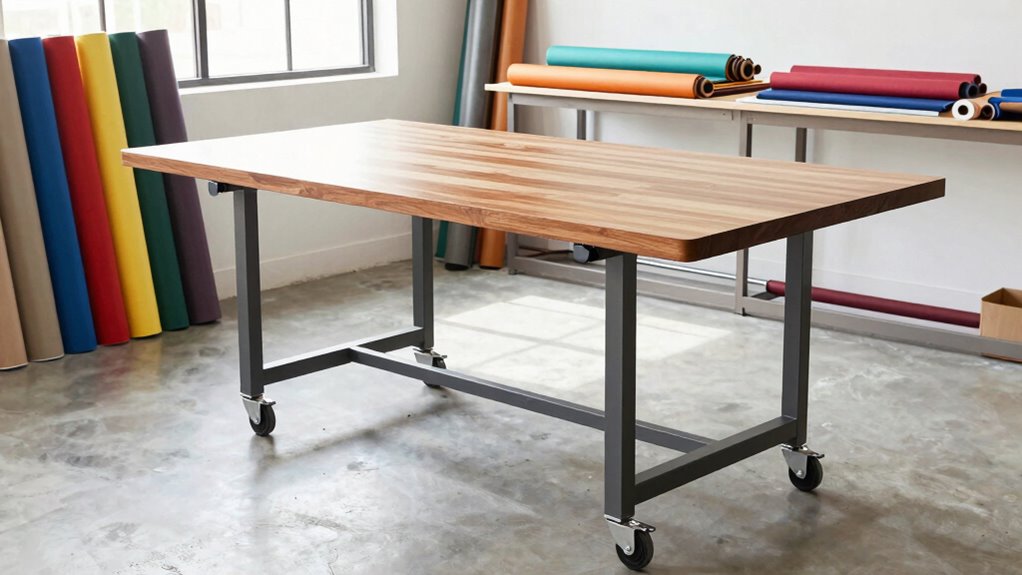

A rolling cutting table transforms your small studio by boosting workspace flexibility and efficiency. It minimizes the need to walk back and forth, making fabric handling quicker. With adjustable height and easy mobility, you can reconfigure your workspace for different projects and save space. Built-in storage keeps tools organized and within reach, reducing clutter. This ergonomic setup enhances comfort and reduces fatigue during long cutting sessions. Keep exploring to discover even more ways it can improve your sewing environment.

Get business pricing on tools and workshop supplies
- Business-only prices and quantity discounts
- Tax-exempt purchasing
- Multiple users, one account, clear invoices
Key Takeaways
- Enhances workflow efficiency by reducing movement and streamlining fabric handling processes.
- Optimizes space use and allows quick workspace reconfiguration for various projects.
- Improves ergonomic comfort with adjustable height, minimizing physical strain during cutting.
- Keeps tools and materials organized with built-in storage, reducing clutter and saving time.
- Supports creative flexibility through easy workspace adjustments, boosting overall productivity.
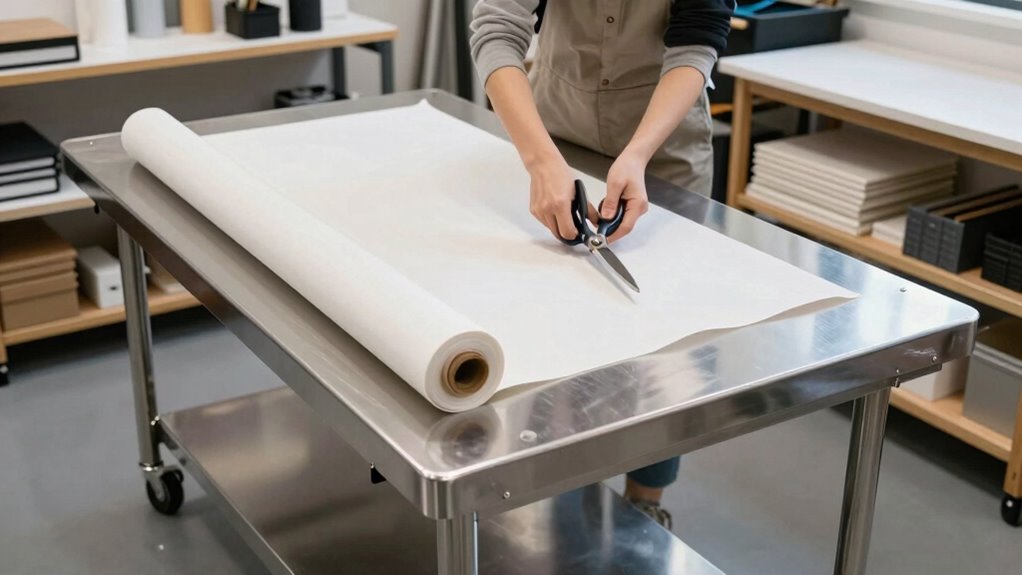
In small studios, optimizing workflow is essential for efficiency and productivity, and a rolling cutting table can be a game-changer. You’ll find that it streamlines your entire process, making fabric handling and cutting much more manageable. With limited space, every inch counts, and a rolling table offers the flexibility to move your workspace exactly where you need it. This mobility means you can set up your cutting station close to your fabric storage, reducing the need to carry heavy rolls across the room. Instead of wasting time walking back and forth, you can keep your fabric nearby and just roll your cutting table into position. This not only speeds up your workflow but also minimizes fatigue, especially during long sewing sessions.
One of the key benefits of a rolling cutting table is its ergonomic design. With adjustable height options, you can customize the table to match your height, which helps maintain good posture and reduces strain. When you’re working on large projects or cutting multiple layers of fabric, comfort is critical. An ergonomic table prevents you from hunching over or reaching awkwardly, keeping your body in a healthier position and decreasing the risk of injury. Plus, the smooth-rolling casters make repositioning effortless, so you can adjust your workspace without interrupting your flow. This adaptability is invaluable in small studios, where space is tight, and every movement needs to be efficient. Additionally, mobility allows you to easily reconfigure your workspace for different projects or team members, further enhancing your workflow. Incorporating space optimization strategies with your rolling table can maximize your limited area even more. The ability to adapt your workspace easily can also support creative flexibility, enabling you to take on diverse projects comfortably. Moreover, a well-designed rolling table can enhance your workflow efficiency by reducing unnecessary steps and optimizing task sequences.
Furthermore, a rolling cutting table often features built-in storage options that enhance your fabric organization. You can keep your scissors, rulers, rotary cutters, and other tools close at hand, which minimizes clutter and saves you time searching for supplies. Some tables even have designated compartments or drawers for fabric scraps and small notions, helping you stay organized during complex projects. When you combine this storage with the ease of mobility, it creates a seamless workflow where everything you need is within reach, and you can reconfigure your setup as your work evolves. Properly designed storage solutions can also improve your task organization, making your work more streamlined and less stressful.
In essence, a rolling cutting table transforms your small studio into a more functional and ergonomic space. It simplifies fabric management, improves comfort, and allows dynamic workspace adjustments, all of which contribute to a smoother, more productive sewing environment. By investing in this versatile piece of furniture, you ensure that your limited space works for you, not against you, helping you create more efficiently and comfortably.
Popular right now

De'Longhi Linea Classic Espresso Machine with Adjustable Milk Frother

Samsung 42-Inch Class OLED S90F 4K Smart TV (2025)

KitchenAid Artisan Series 5-Quart Tilt-Head Stand Mixer, Dried Rose (KSM150PS)
As an affiliate, we earn on qualifying purchases.
Frequently Asked Questions
What Sizes of Rolling Cutting Tables Are Available?
Rolling cutting tables come in various sizes, typically ranging from small 4×4-foot options to larger 8×10-foot models. The table’s mobility allows you to easily move and position it according to your workspace needs. You’ll also find different cutting surface options, like smooth or textured surfaces, to suit various materials. Choosing the right size depends on your project scope, available space, and the types of materials you frequently work with.
How Much Space Does a Rolling Cutting Table Require?
Ever wonder how much space you need for a rolling cutting table? Typically, these tables require about 4 to 6 feet of width and 3 to 5 feet of length, depending on size. Their table mobility allows you to easily move them around, making fabric storage more flexible. This means you can optimize your workspace, reduce clutter, and adapt your studio setup quickly without sacrificing valuable floor space.
Are Rolling Cutting Tables Suitable for All Fabric Types?
Rolling cutting tables are suitable for most fabric types, thanks to their versatility and material flexibility. They accommodate various fabric weights and textures, making your workflow more efficient. However, for very delicate or specialty fabrics like leather or heavy upholstery, you might need to contemplate additional supports or specific setups. Overall, their fabric compatibility makes them a practical choice for diverse projects in small studios.
What Safety Features Should I Look For?
You should definitely look for safety lock mechanisms and anti-slip wheels. Ironically, the very features that keep your workspace secure often go unnoticed until an accident sparks awareness. Safety lock mechanisms prevent unwanted movement, and anti-slip wheels keep your table steady during cuts. Prioritize these features to avoid mishaps, ensuring your focus stays on your craft, not on fixing preventable injuries. Safety first keeps your workflow smooth and your studio safer.
How Do I Maintain and Clean a Rolling Cutting Table?
To maintain and clean your rolling cutting table, start by regularly wiping down the surface with a damp cloth to remove fabric scraps and dust. Keep fabric storage organized to prevent clutter, which can affect durability. Check that the wheels move smoothly and tighten any loose parts. An ergonomic design helps reduce strain, so make certain the height and mobility features are properly maintained for safe, efficient use.
Conclusion
Imagine your studio as a busy river, constantly flowing and shifting. A rolling cutting table is like a sturdy boat, guiding you smoothly through the currents of your projects. It keeps your workflow steady, nimble, and ready for any turn. With this tool, you’re not just drifting aimlessly—you’re steering with purpose, carving a clear path through chaos. Embrace the change, and let your studio sail confidently toward success.