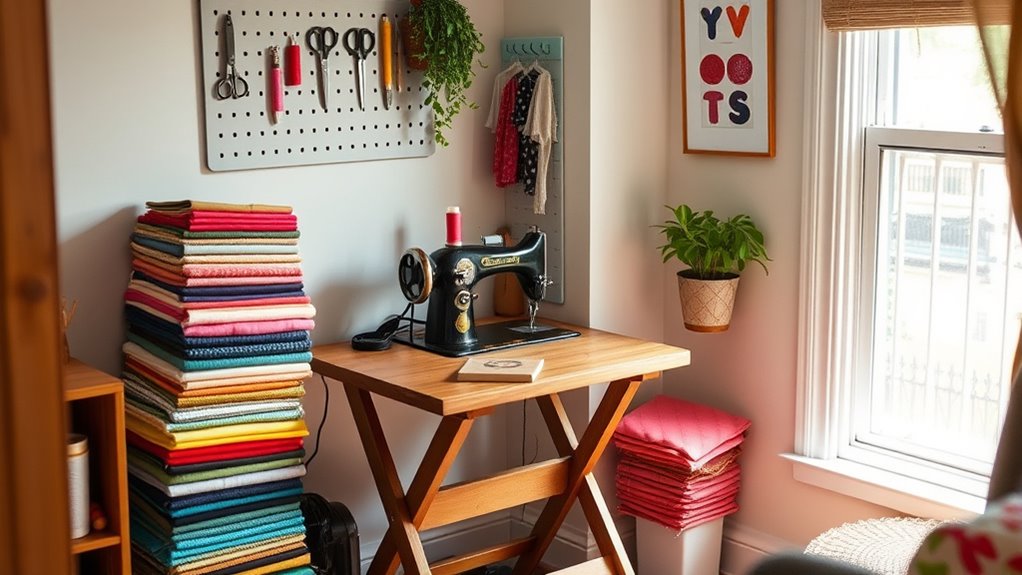

To set up a sewing space in your small apartment, maximize vertical storage with wall-mounted shelves and hooks for tools, and use stackable or clear containers to keep supplies organized. Choose multi-purpose furniture like fold-away tables and storage ottomans to save space. Incorporate fold-down work surfaces and rolling carts for versatility. Keep clutter to a minimum and opt for unobtrusive furniture to create a practical, inspiring sewing corner within limited space. Discover more creative solutions ahead.
Key Takeaways
- Maximize vertical space with wall-mounted shelves, pegboards, and hooks for tools and supplies.
- Use multi-purpose, fold-away furniture and storage ottomans to save floor space.
- Incorporate rolling carts and fold-down work surfaces for flexible, compact workstations.
- Organize supplies with clear containers and tailored storage solutions for quick access.
- Choose sleek, multi-functional furniture that balances style and practicality in small spaces.

Creating a sewing space in a small apartment can seem challenging, but with some smart planning, it’s entirely doable. The key is to maximize your limited space by using compact storage solutions and multi-purpose furniture that serve dual functions. You want to keep your sewing area organized without sacrificing valuable living space, so think vertically and creatively. For instance, invest in stackable storage bins or wall-mounted shelves to hold your fabric, patterns, and tools. These options keep everything within reach and off your work surfaces, reducing clutter and making your space feel more open.
Multi-purpose furniture is your best friend in a small apartment. Look for a fold-away table that can double as a dining area when you’re not sewing. A sturdy, yet compact, piece of furniture with built-in storage can serve as a sewing station and a side table or workspace. For example, a storage ottoman or a small desk with drawers provides a place to sit and store your supplies while also functioning as a surface for sewing projects. These pieces help you optimize your square footage without sacrificing style or function.
When choosing your sewing station, prioritize furniture that can be easily tucked away or folded when not in use. A wall-mounted fold-down work surface can be folded up against the wall, freeing up space when you’re not sewing. A rolling cart can also be a versatile addition; it can hold your sewing machine, scissors, and other essentials, and can be moved out of the way when you’re done. This flexibility allows you to create a dedicated sewing nook without permanently taking up space.
Incorporating compact storage solutions means you can keep your supplies neatly organized and accessible. Use clear containers so you can quickly find what you need, and install hooks or pegboards on the wall for hanging tools like scissors, rulers, and bobbins. This keeps your workspace tidy and leaves more room for your projects. Additionally, affiliate partnerships can help you find tailored storage options that fit your space and budget.
Remember, in a small apartment, every inch counts, so choose furniture and storage options that are not only functional but also visually unobtrusive. Ultimately, setting up a sewing space in your small apartment requires thoughtful choices that combine efficiency and style. By integrating compact storage and multi-purpose furniture, you’ll create a functional, organized, and inspiring sewing corner that doesn’t encroach on your living area. With a little ingenuity, your small space can become a creative haven where your sewing projects thrive.
Frequently Asked Questions
How Can I Prevent Noise From Sewing Machine Disturbing Neighbors?
To prevent your sewing machine from disturbing neighbors, you should use soundproofing techniques like placing a dense mat or foam under your machine to absorb vibrations. Add noise reduction materials such as acoustic panels or blankets around your sewing area. Keep your machine on a sturdy, vibration-dampening surface, and run it during reasonable hours. These steps effectively reduce noise transmission and keep your sewing quiet for everyone nearby.
What Are Space-Saving Storage Options for Sewing Supplies?
You can maximize space by using vertical storage for your sewing supplies, like tall, narrow shelves that go up to the ceiling. Modular shelving units are also great because they’re customizable and can fit into tight corners or small spaces. Use clear containers or labeled bins within these shelves to keep everything organized and easily accessible. This way, you save space and keep your sewing area tidy and functional.
How Do I Ensure Proper Lighting in a Small Sewing Area?
To guarantee proper lighting in your small sewing area, prioritize natural daylight by placing your workspace near a window, which provides bright, even illumination. Supplement this with adjustable lamps, so you can direct light exactly where you need it. Combining natural daylight and adjustable lamps creates ideal lighting conditions, reducing eye strain and helping you see your stitches clearly. This setup makes sewing more comfortable and enjoyable in your small apartment.
Can I Incorporate Sewing Into Multifunctional Furniture?
Absolutely, you can turn your furniture into a sewing haven—who needs a dedicated room? Opt for multi-purpose furniture with hidden storage, like an ottoman or fold-out desk, that doubles as a sewing station. This way, your fabric stash stays out of sight and your living room remains chic. Just beware the temptation to store more fabric than your sewing machine can handle—you might end up with a fabric avalanche!
What Safety Considerations Are Important in a Compact Sewing Space?
You should prioritize fire hazard prevention by keeping flammable materials away from your sewing machine and unplugging it when not in use. Guarantee proper ventilation safety by opening windows or using a fan to reduce dust and fumes, especially in small spaces. Always keep a fire extinguisher nearby, and check electrical cords regularly to avoid short circuits. These steps help keep your compact sewing space safe and enjoyable.
Conclusion
Creating a sewing space in your small apartment is totally doable with some creative planning. Did you know that nearly 60% of city dwellers manage to carve out dedicated craft areas? With smart storage solutions and multifunctional furniture, you can turn even the tiniest corner into your personal sewing haven. So, don’t let limited space hold you back—your next project awaits, and your cozy setup will inspire endless creativity!