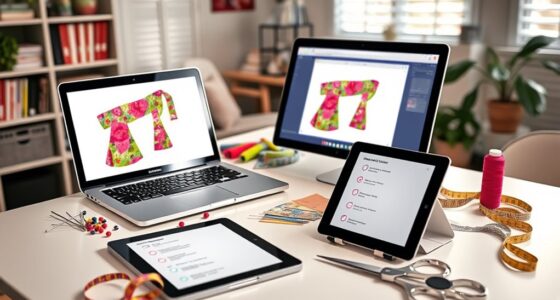
To track your sewing projects and progress effectively, keep a dedicated journal with details like fabric choices, pattern info, and modifications. Record the steps you take, note successes and challenges, and include photos or swatches for visual reference. Staying organized helps you avoid repeating mistakes and see your growth over time. By maintaining consistent entries, you’ll build a valuable resource for future projects—and there’s much more to discover as you continue.
Key Takeaways
- Record detailed project information including fabric choices, pattern details, modifications, and photos for easy reference.
- Use dedicated sections for tracking progress, deadlines, and completed steps to monitor your sewing journey.
- Keep an inventory of your fabric and pattern stash to manage resources and plan future projects efficiently.
- Document successful techniques and adjustments to replicate or improve on future projects.
- Regularly update your journal with new projects and reflections to stay organized and motivated.

A sewing journal is a practical tool that helps you stay organized and improve your craft. When you start a new project, your journal becomes the go-to resource for tracking every detail, from fabric choices to pattern organization. One of the first steps is recording your fabric selection. You’ll want to note the type, color, texture, and yardage you’re using for each project. This not only helps you keep track of what you have in stock but also guarantees consistency across multiple projects or when you revisit a pattern later. You might include a small fabric swatch or attach a photo to your journal entry, giving you a visual reminder of your choices. This can be especially helpful if you’re working with multiple shades or patterns, so you don’t forget which fabric you picked for each project.
Pattern organization is another essential aspect of your sewing journal. Before you begin cutting, you should document the pattern you’re using—its name, size, and any modifications you plan to make. If you’re working with printed patterns, note the pattern number and the source where you bought it. For digital patterns, include download links or file names. As you progress, record any adjustments you make to the pattern, such as altering seam allowances or changing lengths. This helps you replicate successful modifications in future projects and prevents you from repeating mistakes. When you finish a project, you can attach a photo of the final piece along with notes on what worked well and what could be improved. This pattern organization strategy turns your sewing journal into a personalized style archive, making future projects smoother. Additionally, understanding the importance of resources and tools can further enhance your sewing experience by providing you with the necessary support and guidance.
In addition, your journal can serve as a reference for organizing your pattern stash and fabric inventory. By keeping detailed records of what patterns you own and what fabrics you’ve used, you’ll quickly identify what you have available for upcoming projects. You might also create a project wishlist, noting ideas for future sewing adventures. The act of documenting these details encourages mindful planning and saves time when you’re ready to start your next project. Over time, your sewing journal becomes a valuable resource that not only tracks your projects but also helps you refine your skills and build a cohesive sewing collection. Whether you’re a beginner or an experienced sewist, maintaining detailed notes on fabric selection and pattern organization keeps your sewing journey focused, enjoyable, and steadily progressing.
Frequently Asked Questions
How Often Should I Update My Sewing Journal?
You should update your sewing journal after each session or project completion to stay on top of your work. Regular updates help you track project deadlines and manage your fabric inventory efficiently. Whenever you start a new project, jot down details, and note progress as you go. This way, you’ll always have an accurate record, making it easier to plan future projects and avoid missing deadlines.
What Tools Are Best for Documenting Sewing Projects?
You should use a combination of tools like a dedicated sewing journal, digital apps, and photo logs. Include fabric swatches and color palettes to capture your choices visually. A sketchbook or app like Evernote helps organize notes and progress, while a camera or smartphone documents fabric and design details. These tools keep your sewing projects well-documented, making it easy to track progress and replicate successful designs.
Can a Sewing Journal Improve My Sewing Skills?
A sewing journal is like a personal coach, helping you improve your skills. It tracks your sewing goals and lets you organize fabric swatches, making it easier to see your progress. By reflecting on past projects and noting what worked or didn’t, you develop better techniques. Over time, this consistent practice boosts your confidence and skills, turning sewing from a hobby into a craft you master.
How Do I Organize My Sewing Journal Entries?
You should organize your sewing journal entries by using color coding for different project types, like garments or accessories, to quickly identify them. Additionally, categorize projects by stages such as planning, sewing, and finishing. Make sure to include dates, fabric details, and notes for each entry. This system keeps your journal tidy, helps track progress easily, and makes future projects more manageable and inspiring.
Should I Include Photos in My Sewing Journal?
Yes, you should include photos in your sewing journal. Photos serve as great visual reminders and help you track your progress. Use photo tips like clear, well-lit images, and consider journal layouts that combine photos with notes for easy reference. Incorporating photos makes your journal more engaging, inspiring, and useful when revisiting past projects or planning new ones. They’re a simple way to boost your sewing organization and motivation.
Conclusion
Keeping a sewing journal keeps your creativity current and your craft enthralling. By documenting details, deadlines, and discoveries, you stay motivated and manage your projects more effectively. A well-worn journal becomes a wonderful witness to your sewing successes and setbacks, sparking your spirit to stitch, sew, and succeed. So, start scribbling your stories, savor your sewing journey, and see how your skills soar with every page you fill. Happy journaling and happy sewing!