To save money on fabric and supplies, try upcycling thrifted fabrics from stores or garage sales, transforming old textiles into new projects. Measure your needs beforehand and look for high-quality, undamaged items that you can wash and reuse. Take advantage of discounts, sales, or store donations to find valuable materials at lower prices. Dye or customize thrifted fabrics to create unique styles. Keep exploring these tips for more budget-friendly sewing ideas that stretch your supplies further.
Key Takeaways
- Shop at thrift stores, flea markets, or garage sales for affordable, unique fabrics suitable for sewing projects.
- Repurpose old textiles like sheets, curtains, or clothing into fabric to cut costs and add personal touches.
- Measure project dimensions beforehand and focus on quality, clean fabrics to avoid waste and ensure good results.
- Use discounts, clearance sections, and ask store staff about donations or upcoming sales to maximize savings.
- Dye, paint, or customize thrifted fabrics to enhance their appearance and create one-of-a-kind sewing projects.
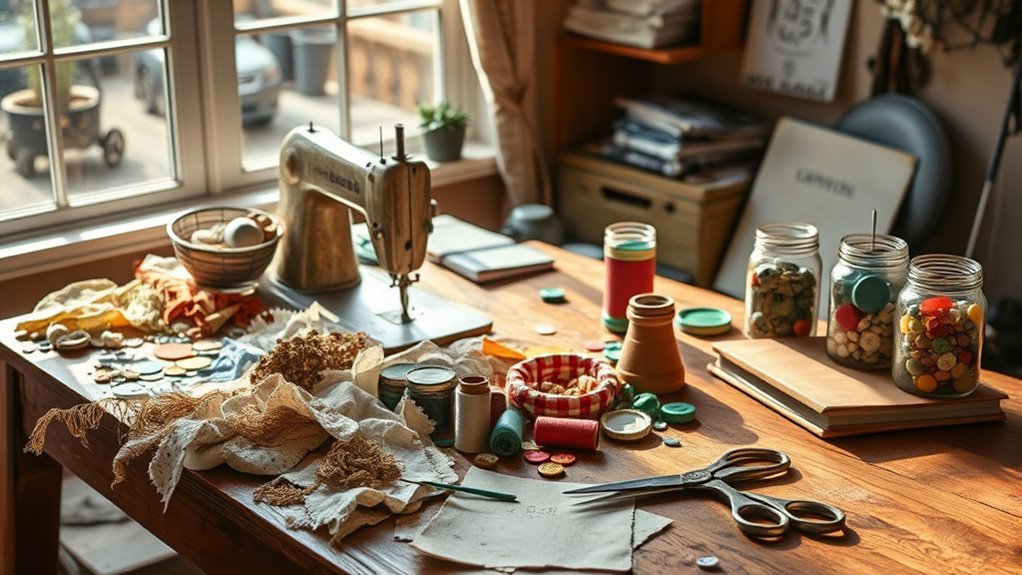
Sewing on a budget is completely doable if you know where to look and how to make smart choices. One of the best ways to save money on fabric and supplies is by upcycling thrift shopping. Instead of buying new materials, you can hunt for hidden treasures in thrift stores, flea markets, or garage sales. Old sheets, curtains, or clothing can be transformed into unique fabrics for your sewing projects. For example, a vintage duvet cover might be perfect for a quilt, or an old pair of jeans can become sturdy denim for a bag or patchwork. Thrift shopping not only cuts costs but also sparks your creativity by encouraging you to think outside the box. Plus, it’s eco-friendly, giving new life to items that might otherwise be discarded.
When you go thrift shopping, come prepared with a clear idea of what you need. Measure your projects beforehand so you can focus on finding fabrics that fit your specifications. Keep an open mind—sometimes the best finds are the ones you least expect. Look for high-quality fabrics that are in good condition, with minimal stains or tears. Wash and iron everything before use to guarantee it’s clean and ready for your sewing projects. Thrift stores often have discounted or clearance sections where prices are even lower, so don’t hesitate to explore those areas. Also, consider asking store staff if they have fabric donations or upcoming sales, which can help you score even better deals. Incorporating quality sourcing practices can further ensure you’re getting good value and authentic materials for your projects.
Beyond thrift shopping, consider repurposing old clothing or textiles. T-shirts, for example, can be cut into strips for quilting or rag rugs, while worn-out shirts can become fabric for other projects. This approach not only saves money but also adds a personal touch to your sewing. If you’re willing to invest a little more time, you can even dye or paint thrifted fabrics to match your project’s color scheme, making each piece completely unique.
Frequently Asked Questions
How Can I Find Free Sewing Patterns Online?
You can find free sewing patterns online by exploring digital pattern sources like websites offering free downloads. Many sewing blogs and craft communities share free sewing tutorials and patterns, making it easy to start without extra costs. Check out platforms like Pinterest, where users share links to free patterns, and social media groups dedicated to sewing. These resources help you save money while honing your skills with accessible, free sewing patterns.
What Are the Best Places to Buy Discounted Fabric?
Oh, you must love the thrill of treasure hunting! Your best bets for discounted fabric are thrift stores and online marketplaces, where prices are often laughably low. Plunge into thrift stores for fabric gems hiding in plain sight, or scour online sites where sellers slash prices to clear out inventory. Both options let you score quality material without draining your wallet—so go ahead, indulge in some budget-friendly fabric hunting!
How Do I Identify Quality Fabric on a Budget?
You can identify quality fabric on a budget by checking its fabric weight and fiber content. Look for a consistent weight that feels suitable for your project—heavier for durability, lighter for delicate designs. Examine the fiber content, favoring natural fibers like cotton or wool, which tend to be more durable and easier to work with. Feel the fabric for softness and flexibility, avoiding fabrics that feel stiff or flimsy.
Are There Any Eco-Friendly Ways to Save Money on Supplies?
Yes, you can save money sustainably by choosing eco-friendly practices. Opt for sustainable materials like organic cotton or recycled fabrics, which often cost less over time. Look for thrifted or upcycled textiles, and reuse scraps for smaller projects. Supporting local suppliers reduces shipping costs and environmental impact. By prioritizing eco-friendly practices, you not only save money but also contribute to a healthier planet while creating beautiful, sustainable garments.
How Can I Repurpose Old Clothing for Sewing Projects?
You can upcycle old garments by carefully selecting pieces with interesting textures or colors for your projects. Use creative fabric recycling to turn shirts into tote bags, jeans into patches, or dresses into quilting squares. Think outside the box—darn, dye, or embellish fabric from old clothes to give them new life. This approach not only saves money but also helps reduce waste, making your sewing more sustainable.
Conclusion
Now that you know how to stretch your dollars and craft with care, sewing on a budget becomes a voyage of discovery. Think of your supplies as treasures waiting to be uncovered, turning each project into a sparkling gem. With creativity as your compass and thriftiness as your map, you’ll weave beautiful stories without breaking the bank. So, grab your needle and thread—adventure awaits in every stitch you make!