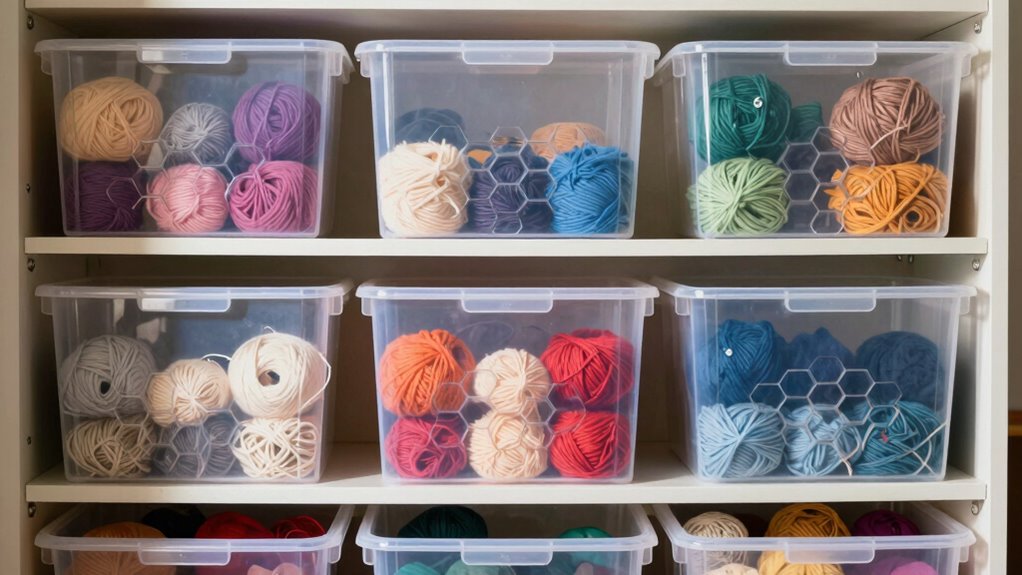

If you want to protect your yarn and fabric, don’t overlook the importance of proper ventilation. Many storage bins are airtight but trap moisture, leading to mold, odors, and fiber damage. Instead, choose bins with small vents or slats that allow airflow, keeping materials dry, fresh, and pest-free. Neglecting ventilation can cause long-term effects on your supplies. Keep these tips in mind, and you’ll guarantee your stash stays in top condition for future projects—there’s more to discover below.

Get business pricing on tools and workshop supplies
- Business-only prices and quantity discounts
- Tax-exempt purchasing
- Multiple users, one account, clear invoices
Key Takeaways
- Proper ventilation prevents moisture buildup, reducing mold and mildew risks in yarn and fabric storage.
- Ventilated bins allow easy inspection for pests like moths, facilitating early detection.
- Airtight containers trap humidity, promoting fiber deterioration and unpleasant odors.
- Small vents or slats in bins ensure continuous airflow, maintaining a dry environment.
- Overlooking ventilation can lead to fiber damage and compromised material longevity.
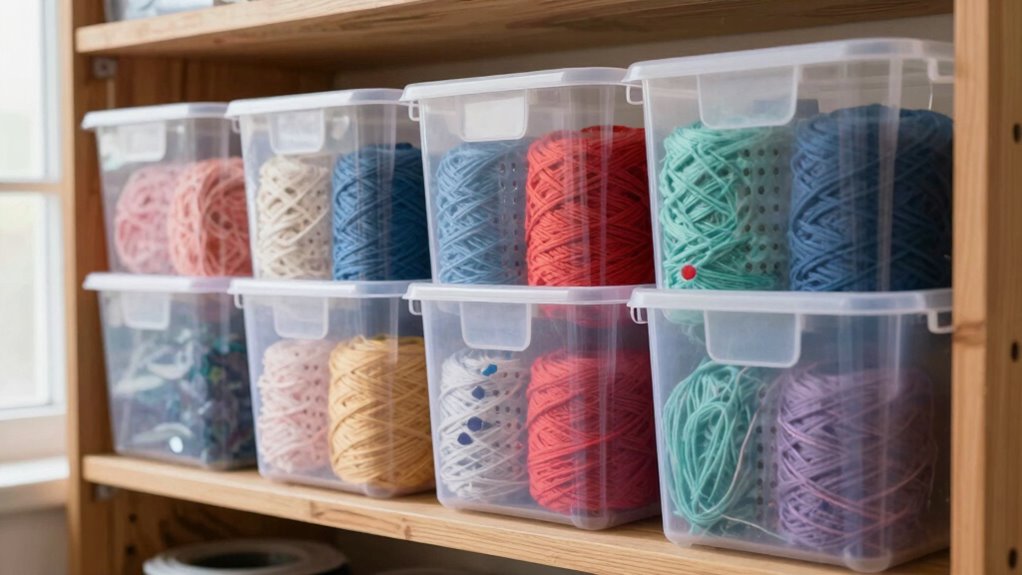
Keeping your yarn and fabric organized can be a challenge, but the right storage bins make it much easier. When choosing storage solutions, many crafters overlook the importance of proper ventilation. It’s tempting to opt for airtight containers, but these can lead to moisture buildup and unpleasant odors. Instead, you want bins that promote airflow, helping you maintain a fresh, clean environment for your materials.
Choose ventilated storage bins to keep your yarn and fabric fresh, dry, and odor-free.
Moisture control is essential when storing yarn and fabric. Excess humidity can lead to mold, mildew, and even fiber deterioration. Airtight containers might seem like a good idea for keeping out dust, but they trap moisture inside, creating the perfect conditions for mold growth. Ventilated bins, on the other hand, allow air to circulate, reducing humidity levels and preventing moisture from settling in. Look for storage bins with small vents or slats that enable airflow without exposing your supplies to dust or pests. This way, your yarn stays dry and in prime condition for your next project. Incorporating proper ventilation into your storage solution is crucial for maintaining the integrity of your materials over time. Additionally, choosing breathable materials can further enhance airflow and reduce the risk of moisture buildup.
Odor prevention is another key benefit of choosing the right storage bins. Over time, fabrics and yarn can develop musty smells if not stored properly. These odors often come from trapped moisture or exposure to environmental pollutants. Proper ventilation helps mitigate this problem by letting out stale air and replacing it with fresh air. It also discourages the buildup of odors caused by dust or residual chemicals from manufacturing. By selecting bins that facilitate airflow, you minimize the chances of your yarn and fabric absorbing unwanted smells, keeping your supplies smelling fresh and ready to use.
Beyond moisture control and odor prevention, the right ventilation also helps you spot pests early. Insects like moths are attracted to natural fibers and can do significant damage if not kept in check. Well-ventilated bins make it easier to check for signs of pests, allowing you to take action before infestations become serious. Additionally, these bins tend to be more durable and easier to clean, ensuring that your storage system remains effective over time. Good airflow management is an important aspect of sustainable preservation, helping to extend the lifespan of your materials. Proper ventilation also plays a role in reducing the risk of fiber deterioration caused by excess moisture, ensuring your supplies stay in top condition longer.
Popular right now

Dyson Cyclone V10 Origin Cordless Vacuum

Bose QuietComfort Ultra Earbuds (2nd Gen), Deep Plum

Shark AI Ultra Robot Vacuum with Self-Empty Base
As an affiliate, we earn on qualifying purchases.
Frequently Asked Questions
How Often Should I Clean My Storage Bins?
You should clean your storage bins at least once a month to maintain good bin maintenance and prevent dust or pests from accumulating. Regular cleaning helps keep your yarn and fabric fresh and free from allergens. If you notice any spills, mold, or pests, clean immediately. Using mild soap and ensuring the bins are dry before refilling will extend their lifespan and keep your materials in ideal condition.
Are Plastic Bins Better Than Fabric Ones?
Plastic bins are better for durability, resisting impacts and moisture, which helps protect your yarn and fabric. While fabric bins may look more appealing and add a cozy touch, they often lack the sturdiness needed for long-term storage. If you prioritize protecting your materials and want a low-maintenance option, plastic is the way to go. Just make certain you follow proper ventilation rules to prevent mold and mustiness.
Can Ventilation Holes Weaken the Storage Bin?
Ventilation holes can weaken the storage bin’s structural integrity if they’re too large or poorly placed. The ventilation impact depends on the size and number of holes, so it’s essential to balance airflow with strength. You should choose bins with appropriately designed ventilation to avoid compromising durability. Properly crafted holes won’t considerably reduce stability, but overdoing it might cause the bin to crack or bend under weight.
What Size Storage Bin Is Ideal for Large Yarn Quantities?
The ideal bin size for large yarn quantities is around 20 to 30 gallons, giving you ample space while keeping things manageable. This size helps you stay organized and prevents overstuffing. Remember to follow storage organization tips, like labeling bins and ensuring proper ventilation, especially if the bin has ventilation holes. Proper size and organization make it easier to access your yarn and keep it in good condition.
How Do I Prevent Pests in My Yarn Storage?
You can prevent pests in your yarn storage by using pest deterrents like cedar blocks or lavender sachets, which are natural and effective. Make certain proper storage maintenance by regularly cleaning your bins and inspecting for signs of pests. Also, avoid overstuffing bins to promote good ventilation, which discourages pests. By combining pest deterrents with good ventilation practices, you create an inhospitable environment for pests and keep your yarn and fabric safe.
Conclusion
Now that you know the ventilation rule many overlook, your storage game is about to change. Imagine those precious yarns and fabrics staying fresh, vibrant, and ready whenever inspiration strikes—without surprise mold or musty odors. But here’s the catch: neglecting this simple rule could mean losing everything you’ve worked so hard to create. Are you willing to risk it? Take action now, and keep your stash safe, breathable, and beautiful—before it’s too late.