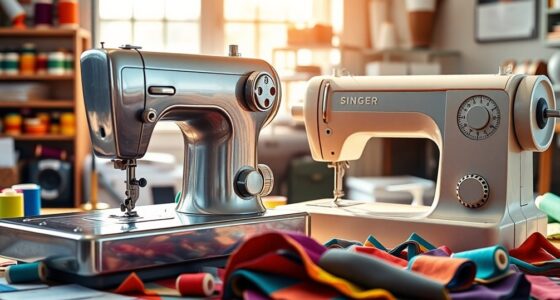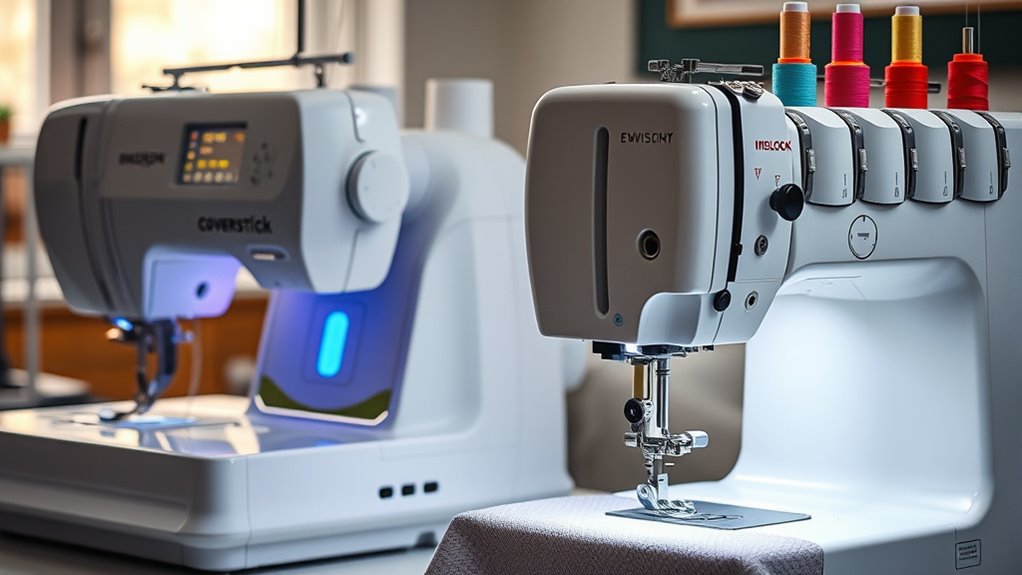

If you’re deciding between a coverstitch and a serger, consider your sewing projects. A serger is best for constructing garments, preventing fraying, and finishing edges quickly, especially on stretchy fabrics. A coverstitch gives you professional hems, decorative topstitching, and neat details needed on finished garments. Think about what techniques you’ll use most often. Want to find out which machine fits your needs better? Continue exploring to learn more about each machine’s features and benefits.
Key Takeaways
- Choose a serger for seam finishing, edge trimming, and working with stretchy fabrics, ideal for garment construction.
- Opt for a coverstitch machine to create professional hems, topstitching, and decorative stitches on finished garments.
- Sergers excel in speed and multi-thread stitching, while coverstitches provide a clean, double-stitched finish.
- Consider your sewing projects’ needs: garment construction favors sergers; detailed hems and decorative work suit coverstitch machines.
- Proper maintenance of both machines extends their lifespan and ensures high-quality, professional-looking results.
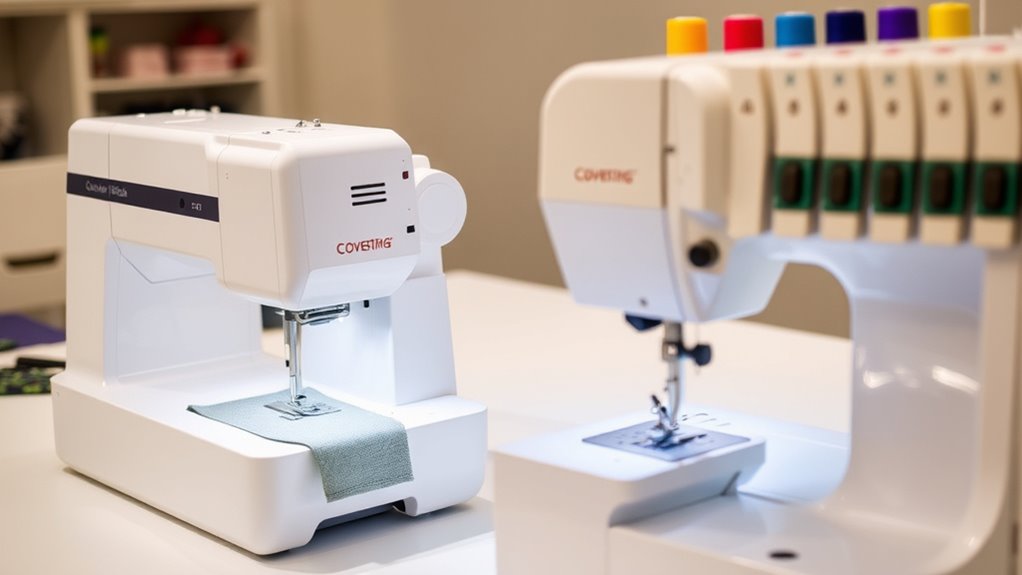
When choosing between a coverstitch and a serger, understanding their differences is essential for achieving professional-quality sewing results. Both machines serve unique purposes and excel in specific sewing techniques, so knowing which one aligns with your projects helps you make an informed decision. A serger, also called an overlock machine, is designed to trim fabric edges while sewing over them with multiple threads, creating a secure, stretchy seam. It’s perfect for constructing garments, especially knit fabrics, because it prevents fraying and provides a clean finish. Meanwhile, a coverstitch machine is specialized for hemming and topstitching, producing a professional-looking, double-stitched finish that mimics store-bought garments. Its ability to sew parallel rows of stitching makes it ideal for hems, cuffs, and decorative seams.
Choosing between a coverstitch and a serger depends on your sewing goals and techniques.
Choosing the right machine depends on the sewing techniques you want to master. If you frequently work with stretch fabrics or want to speed up your garment construction, a serger is invaluable. It allows you to sew, trim, and finish edges in a single step, saving time and effort. However, it requires regular machine maintenance to keep it running smoothly. Cleaning the thread paths, changing blades, and lubricating moving parts prevent issues like thread breakage or uneven stitches. Proper machine maintenance ensures consistent sewing quality and extends the life of your equipment, especially when using multiple threads and working with different fabrics.
On the other hand, a coverstitch machine is best if you focus on finishing hems professionally. It doesn’t trim or sew edges like a serger but provides a stretchable, durable stitch that looks neat and professional. This machine is straightforward to use once you’re familiar with its threading process and stitch settings. While it’s less involved in machine maintenance compared to a serger, keeping it clean and regularly inspecting the needles and threading paths ensures peak performance and stitch quality.
Ultimately, your choice hinges on your sewing goals. If versatility and seam finishing are your priorities, a serger provides the necessary sewing techniques combined with efficient machine maintenance routines. If you want clean, professional hems and decorative topstitching, a coverstitch machine is the way to go. Both machines can elevate your sewing projects, but understanding their functions and upkeep needs helps you get the best results. Investing in the right equipment and maintaining it properly ensures your sewing projects are not only beautiful but also durable and professional-looking.
Frequently Asked Questions
Can I Use a Coverstitch Machine for Quilting Projects?
You can use a coverstitch machine for quilting projects, especially for quilt binding and finishing edges smoothly. It’s great for creating professional-looking hems and secure seams in patchwork sewing. However, it might not handle thick layers or bulky seams as well as a serger. For detailed quilting or piecing, a sewing machine might be more versatile. But for clean, stretchy finishes on quilt edges, a coverstitch machine works well.
Do Sergers Also Function as Overlock Machines?
Yes, your serger also functions as an overlock machine, much like a skilled chef can handle multiple culinary tasks. With overlock functionality, it trims, sews, and finishes edges simultaneously, showcasing its machine versatility. This makes your serger a true multitasker, perfect for creating professional seams and neat finishes. So, you get the benefits of both a serger and an overlock machine in one efficient, all-in-one tool.
Is a Coverstitch Machine Suitable for Hemming Stretch Fabrics?
Yes, a coverstitch machine is ideal for hemming stretch fabrics. It’s specifically designed for sewing stretch fabrics, providing a professional finish that maintains elasticity. When you sew stretch fabrics, a coverstitch machine creates flat, stretchy hems without puckering or restricting movement. This makes it perfect for activewear, swimwear, and knit garments, ensuring your hems stay secure, flexible, and look polished every time.
Can I Perform Decorative Stitches With a Serger?
You can perform decorative stitching with a serger, but its embroidery capabilities are limited. Most sergers excel at seam finishing and adding decorative overlock stitches, giving your projects a professional look. If you want intricate embroidery or detailed decorative stitches, you might need a dedicated embroidery machine. However, for simple decorative stitching and finishing touches, a serger effectively enhances your sewing projects with its versatile decorative stitch options.
Which Machine Is Better for Beginner Sewing Enthusiasts?
A serger is better for beginner sewing enthusiasts because it’s generally more affordable and easier to use. You’ll find it simplifies finishing edges and seams, saving time and effort. While a coverstitch offers professional-looking hems, it can be more complex and costly for beginners. Starting with a serger helps you learn basic sewing techniques without feeling overwhelmed, making your sewing journey more enjoyable and accessible.
Conclusion
Ultimately, choosing between a coverstitch and a serger comes down to understanding your sewing needs. Do you want clean, professional hems? A coverstitch is your go-to. Need versatile, durable seams? A serger’s your best bet. Each machine offers unique benefits, each machine serves different purposes, each machine enhances your sewing experience. By knowing what you want to achieve, you’ll select the right machine, refine your skills, and create beautiful projects with confidence.