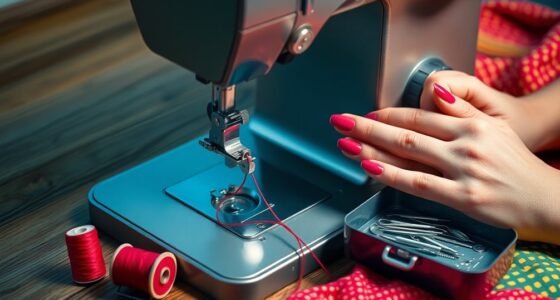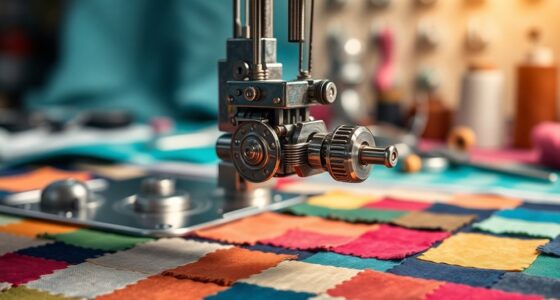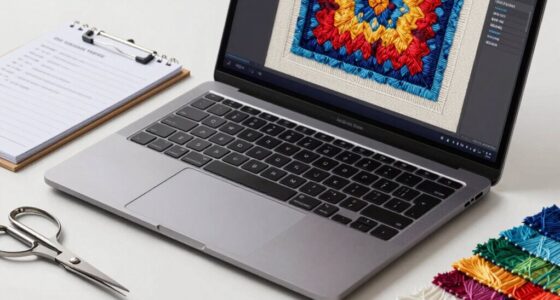
To excel at free-motion work, you want a machine with smooth, multi-directional fabric movement and high stitch quality that handles intricate designs without skipped stitches. Durability is key, so choose one with a sturdy frame and quality components that won’t wear out quickly. An adjustable tension system and reliable thread path help keep stitches even and free from jams. Good responsiveness and overall build ensure precise control, making free-motion sewing easier and more enjoyable—guarantee exploring to find out how to pick the best machine for your needs.

Get business pricing on tools and workshop supplies
- Business-only prices and quantity discounts
- Tax-exempt purchasing
- Multiple users, one account, clear invoices
Key Takeaways
- Smooth, multi-directional fabric movement allows for intricate free-motion stitching.
- High stitch quality with consistent, even stitches enhances detailed work and reduces rework.
- Durable construction with reinforced frames ensures reliability during demanding projects.
- Responsive movement and powerful motors provide precise control over fabric and design execution.
- Quality components like stable tension systems and robust feed dogs support complex, professional results.
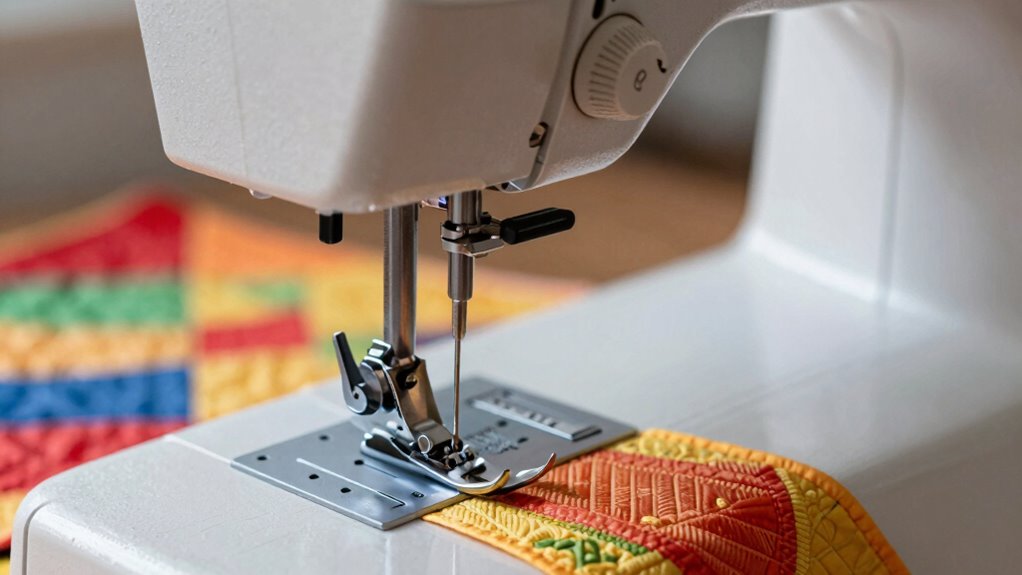
Free-motion work demands machines that give you the flexibility to move fabric smoothly in any direction, allowing for intricate stitching and detailed designs. When choosing a machine for free-motion sewing, you need to deliberate how well it handles the nuances of your craft. The best machines provide consistent stitch quality, which is crucial for creating professional-looking finished pieces. Smooth, even stitches without skipped or uneven threads show that your machine can handle complex designs and delicate fabrics alike. A machine with excellent stitch quality also reduces the need for rework, saving you time and frustration.
Machine durability is equally important because free-motion sewing can be demanding. You want a machine built to withstand frequent use and the stress of moving fabric in various directions. Durable machines tend to have sturdy internal components, reinforced frames, and high-quality parts that resist wear and tear over time. This durability ensures your machine remains reliable, even after hours of continuous work. It also means fewer breakdowns and repairs, giving you peace of mind as you focus on your creative projects. Additionally, a well-made machine can often include features that enhance stability and precision during complex free-motion tasks. Incorporating a machine with a reliable tension system** helps maintain consistent results throughout your projects. Proper tension management is essential for achieving consistent stitch quality**, especially when working on complex or layered projects.
The tension system plays a crucial role in achieving both great stitch quality and durability. A machine with adjustable, well-maintained tension helps you produce clean stitches that won’t pucker or loosen. Consistent tension management prevents skipped stitches and thread breakage, which can compromise your work’s appearance and your machine’s longevity. Look for machines with easily accessible tension controls and reliable thread paths to maintain ideal tension throughout your projects. Furthermore, thread path design is essential for minimizing tension issues and ensuring smooth operation during intricate sewing. An optimal thread path reduces the chance of thread jams and helps maintain tension stability during detailed free-motion work.
Another factor to contemplate is the machine’s movement and ease of control. Free-motion sewing requires a machine that responds smoothly to your hands and foot pressure. A machine with a powerful motor and responsive foot pedal allows you to move fabric effortlessly and with precision. This control helps you execute intricate designs without the machine fighting back, resulting in better stitch quality and less strain on the machine itself. Additionally, machine responsiveness is essential for detailed work, ensuring your creative ideas are translated accurately. Reliable responsiveness also contributes to a more enjoyable sewing experience, especially during long sessions.
Finally, consider the overall build and quality of the machine. Features such as a sturdy metal frame, high-quality bobbins, and robust feed dogs contribute to both stitch quality and durability. These components help your machine handle heavy fabrics and complex designs while maintaining consistent performance. Investing in a well-made, reliable machine means you’ll enjoy better results and a longer lifespan for your sewing endeavors, making your free-motion work both enjoyable and successful.
As an affiliate, we earn on qualifying purchases.
Frequently Asked Questions
Can Any Sewing Machine Be Used for Free-Motion Quilting?
Not all sewing machines are ideal for free-motion quilting. You need a machine that handles fabric manipulation smoothly, with adjustable stitch length and tension to manage intricate designs. Look for features like a drop feed, a smooth, powerful motor, and good thread tension control. These elements help you maneuver fabric easily and keep stitches even, making your free-motion quilting more precise and enjoyable.
How Does Machine Weight Affect Free-Motion Sewing?
Heavier machines generally offer better stability and vibration control, which are essential for precise free-motion sewing. When your machine weighs more, it stays put on your work surface, reducing unwanted movement that can affect your stitches. This stability allows you to focus on your design without fighting machine wobble. So, if you’re serious about free-motion quilting, a heavier machine can make your work smoother, more accurate, and more enjoyable.
Are Computerized Machines Better for Free-Motion Work?
Computerized machines can be better for free-motion work because they offer precise manual control and consistent stitches. You can easily adjust stitch length, speed, and patterns, giving you more creative freedom. Their automatic features help maintain stitch consistency, making detailed free-motion projects smoother and more accurate. If you want ease of use combined with control, a computerized machine supports your artistic process, elevating your quilting and embroidery work.
What Accessories Are Essential for Free-Motion Quilting?
Essential accessories for free-motion quilting include a good set of quilting gloves for grip and control, a variety of presser feet, and quilting rulers. You’ll also want to focus on quilt basting tools to keep your layers smooth and secure. Equally important is thread selection—choose threads that glide easily and match your fabric. With these tools, you’ll achieve more precise, beautiful quilting and enjoy the process even more.
How Important Is Stitch Regulation in Free-Motion Sewing?
Stitch regulation is vital in free-motion sewing because it directly impacts stitch precision and control enhancement. When your machine offers good stitch regulation, you can maintain consistent stitches, making your quilting look more professional. It helps you focus on your design rather than worrying about uneven stitches. Without proper regulation, you might struggle with control, leading to uneven lines. Thus, investing in a machine with reliable stitch regulation greatly improves your free-motion quilting.
Conclusion
Choosing the right machine makes all the difference in free-motion work. Did you know that 85% of successful quilters swear by machines with adjustable speed and seamless fabric control? When you pick a machine with smooth, precise movement, your creative flow stays uninterrupted, boosting your confidence and results. So, invest in a machine that’s built for fluid motion—you’ll open new possibilities and make your quilting projects truly stand out.
Fall yard work Picks
leaf blowers
As an affiliate, we earn on qualifying purchases.