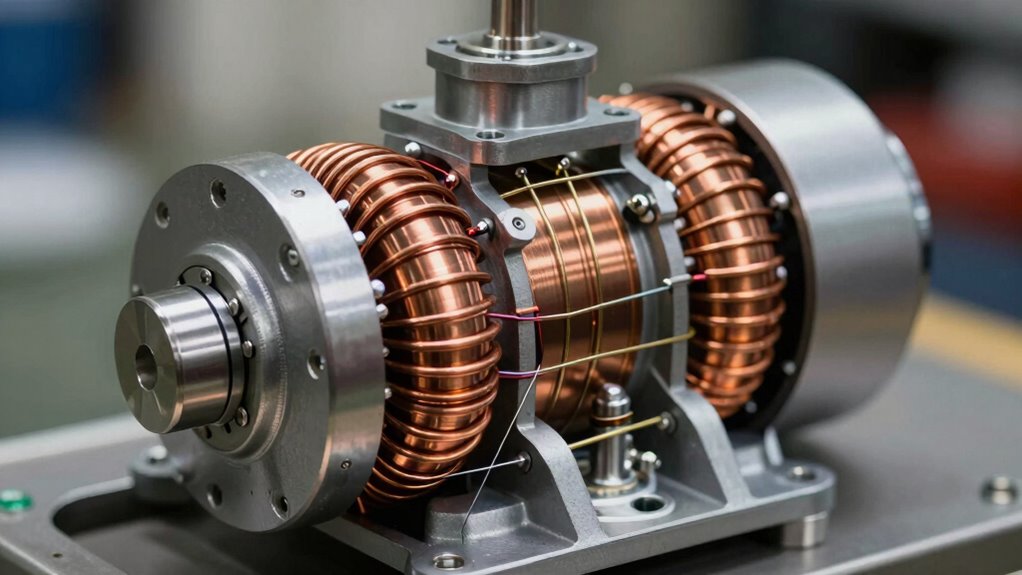

To understand a motor’s true strength, focus on its energy efficiency, maintenance history, and performance indicators like heat, noise, and vibration. A high-efficiency motor uses less energy while providing better performance and durability. Regular upkeep guarantees consistent operation and prevents losses. Avoid marketing hype by evaluating these real-world factors, which reveal the motor’s actual condition. Keep this in mind, and you’ll discover how to judge motor strength more accurately and confidently.
Key Takeaways
- Focus on actual performance indicators like torque, speed, and efficiency rather than marketing claims.
- Check maintenance history and operational condition to assess true motor strength.
- Observe heat, noise, and vibration levels during operation for signs of healthy performance.
- Compare industry-standard efficiency ratings to ensure reliable and durable motors.
- Prioritize practical factors such as energy use and maintenance practices over superficial specifications.

Have you ever wondered what determines a machine’s power and performance? It’s not just about flashy specs or bold claims; it’s about understanding the core factors that influence how well a motor functions. One key aspect is energy efficiency, which measures how effectively a motor converts electrical energy into mechanical power. A highly efficient motor wastes less energy as heat, meaning it can deliver the same performance while consuming less power. When you focus on energy efficiency, you’re not only reducing operational costs but also extending the lifespan of the motor, since less energy waste translates to lower stress on components.
Energy efficiency boosts motor performance, reduces costs, and extends lifespan by minimizing heat and stress on components.
But even the most efficient motor won’t perform at its best without proper maintenance practices. Regular maintenance is essential to keep a motor operating at peak strength. This includes routine inspections, cleaning, lubrication, and timely replacement of worn parts. When you neglect these practices, dirt and debris can accumulate, leading to overheating and increased wear. Over time, this degradation diminishes the motor’s ability to produce maximum torque and speed, giving the impression that the motor is weaker than it actually is. Proper maintenance ensures that all parts work harmoniously, reducing the risk of sudden failures and prolonging the motor’s overall lifespan.
Understanding the relationship between energy efficiency and maintenance practices helps you evaluate a motor’s true strength. Instead of falling for exaggerated hype, you can evaluate a motor’s performance based on how well it’s maintained and how efficiently it operates. For example, a motor that consistently runs smoothly, with minimal heat and noise, indicates good maintenance and high energy efficiency—both signs of a robust machine. Conversely, a motor that struggles or overheats may seem weak, but often it’s just poorly maintained or operating inefficiently. Recognizing performance indicators such as heat, noise, and vibration can help you assess a motor’s condition more accurately. Additionally, understanding energy efficiency ratings can guide you toward more reliable and cost-effective choices. Being aware of these factors also helps in identifying the signs of deterioration, which can prevent costly repairs or replacements.
Familiarity with energy efficiency standards can further aid you in selecting motors that meet industry benchmarks for performance and durability. When choosing or gauging a machine motor, look beyond the marketing and focus on these practical factors. Check the motor’s energy efficiency ratings and inquire about its maintenance history. A well-maintained, energy-efficient motor will give you reliable performance and better value for your investment. Ultimately, understanding what truly determines a motor’s strength involves recognizing the importance of ongoing care and efficiency, rather than relying solely on hype or superficial specifications. Awareness of energy efficiency and proper maintenance practices can significantly impact your motor’s longevity and performance. With this knowledge, you’re better equipped to select and maintain motors that deliver consistent, long-lasting power.

Sewing Machine Servo Motor, 550W Electric Servo Motor, AC110V, 3/4HP, 3450RPM,Industrial Servo Motor with Carbon Brush, Energy Efficient, Quiet Operation, Instructions
- High-Quality Durable Construction: Metal case with protection design
- Universal Industrial Compatibility: Suitable for various sewing machines
- Energy Efficient Operation: Saves up to 50% energy
As an affiliate, we earn on qualifying purchases.
As an affiliate, we earn on qualifying purchases.
Frequently Asked Questions
How Does Motor Size Affect Performance in Different Applications?
Motor size directly impacts performance and application compatibility. A larger motor generally provides more power, ideal for heavy-duty tasks or demanding environments. Smaller motors are suitable for lightweight, precision applications where efficiency and space are priorities. When selecting a motor, consider the application’s specific needs—over or under-sizing can lead to inefficiency or failure. Matching motor size to your application guarantees ideal performance and longevity.
What Are the Common Misconceptions About Motor Horsepower Ratings?
Horsepower myths are like fog obscuring true understanding; many think a higher rating always means better performance, but that’s not accurate. Rating accuracy varies, and a bigger number doesn’t necessarily mean more power for your needs. Don’t rely solely on horsepower ratings; consider actual application, efficiency, and torque. By separating myths from facts, you make smarter choices about motor strength without falling for hype.
How Can I Test a Motor’s True Strength Without Specialized Tools?
You can test a motor’s true strength by observing its torque measurement during operation, which indicates how much rotational force it generates. Compare its power output by noting how well it handles tasks compared to similar models. Keep in mind, without specialized tools, your best approach is to assess performance in real-world conditions and check for consistent, smooth operation, which hints at genuine motor strength beyond hype.
What Role Does Motor Efficiency Play in Perceived Power?
Efficiency plays a crucial role in how powerful a motor seems. When a motor operates with high efficiency metrics, it uses energy wisely, translating to more consistent and reliable power perception. Conversely, if efficiency drops, the motor may seem less robust, even if it’s still capable. Think of efficiency as the clarity of a voice; better clarity makes the strength of the message feel more genuine and impressive.
How Does Load Impact a Motor’s Rated Strength Over Time?
Load impacts a motor’s rated strength over time by contributing to wear and tear, which can weaken components and reduce efficiency. Heavy or sustained loads generate thermal effects, causing overheating that accelerates deterioration. As these factors accumulate, the motor’s ability to perform at its rated capacity diminishes. Regular maintenance, proper sizing, and avoiding overloads help preserve the motor’s strength and extend its lifespan.
Conclusion
Knowing how to gauge machine motor strength helps you make smarter choices, avoiding hype and focusing on real performance. Did you know that a motor’s horsepower directly correlates with its ability to handle heavy loads, making it a vital factor in equipment efficiency? By understanding these numbers, you guarantee your machinery meets your needs without overspending or underperforming. So next time, look beyond the hype—trust the stats to guide your decision.