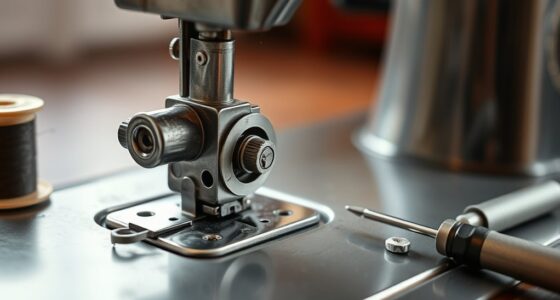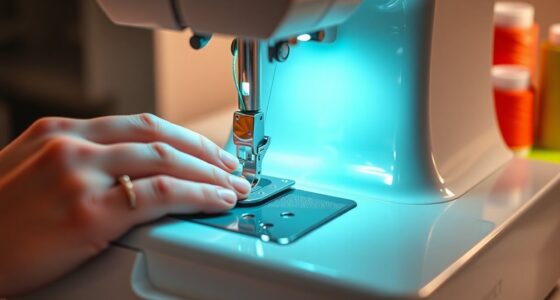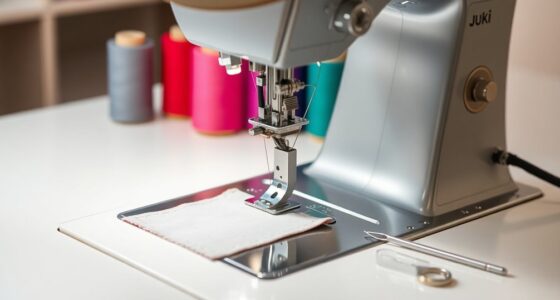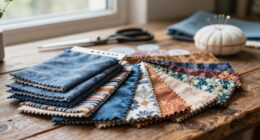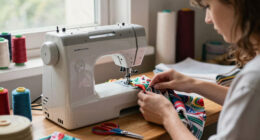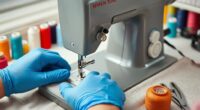
To quilt successfully on your home machine, start by attaching the walking foot to help feed multiple layers evenly and prevent shifting. Test your stitches on scrap fabric first to adjust tension and guarantee smooth stitching. For a free-motion design, lower the feed dogs and use a free-motion foot, moving the quilt slowly and steadily to create intricate patterns. Keep practicing different techniques; the more you learn, the more confident you’ll become with your quilting skills.
Key Takeaways
- Attach and test the walking foot on scrap fabric to ensure smooth feeding and even stitches across layers.
- Lower the feed dogs and switch to a free-motion foot to enable freehand quilting designs.
- Maintain steady, slow movement and consistent pressure to prevent puckers and skipped stitches.
- Adjust thread tension as needed when changing batting or thread types for optimal stitch quality.
- Practice on scrap pieces to refine technique and achieve professional, personalized quilting results.
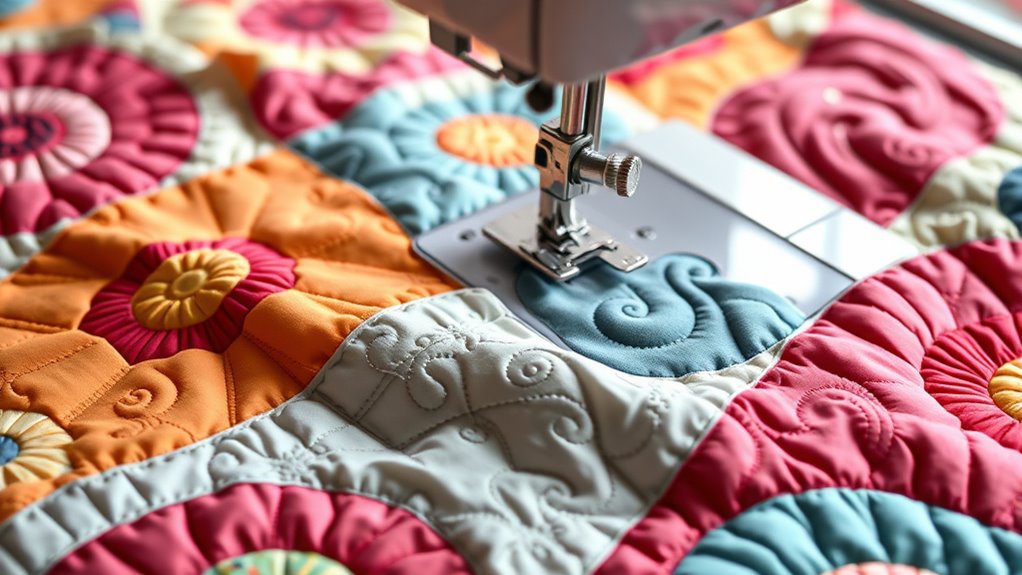
Quilting on a home sewing machine is a rewarding way to bring your creative visions to life without the need for professional equipment. Whether you’re working on a small wall hanging or a large bed quilt, understanding how to properly handle your materials makes all the difference. One key element is selecting the right quilt batting, which provides the thickness and loft to give your quilt dimension and warmth. When choosing quilt batting, consider factors like fiber content, loft, and whether you want a warm or lightweight quilt. Once you’ve picked the batting, you’ll want to make certain your machine is set up correctly for comfortable quilting. Proper thread tension is vital here; it keeps your stitches even on both sides of the quilt and prevents puckering or bunching. Adjust your tension as needed before starting your project, especially if you switch to a different type of thread or batting.
Choosing the right quilt batting and proper thread tension ensures smooth, even stitches and a professional finish.
Using a walking foot can notably improve your quilting experience, especially when working with multiple layers. The walking foot feeds the top and bottom layers evenly through the machine, preventing shifting and puckering. Attach the walking foot securely, and test it on a scrap piece to get a feel for how it moves your layers. This is particularly helpful when quilting through thicker quilt batting, as it helps maintain consistent stitch length and smooth fabric flow. When quilting with a walking foot, take slow, steady stitches, and don’t rush—this ensures your stitches stay even and your layers stay aligned.
If you’re venturing into free-motion quilting, you’ll want to lower your feed dogs and use a darning or free-motion foot. This allows you to move the quilt freely under the needle, creating intricate or organic designs. To get started, practice on a scrap piece to find the right speed and pressure. Remember, maintaining consistent thread tension during free-motion quilting is essential to prevent loose or tight stitches. Keep your quilt flat on the machine bed, and move your quilt smoothly to avoid puckers or skipped stitches.
Whether you’re using a walking foot or free-motion quilting, paying attention to your thread tension and quilt batting will greatly enhance your finished project. Adjust tension settings as needed, and experiment with different batting types to find what works best for your desired look and feel. With patience and practice, quilting on your home machine becomes a fulfilling craft that produces beautiful, personalized quilts.

HONEYSEW Open Toe Walking Foot W/Guide for Brother Sewing Machine Quilting and Sewing Stitch Through Multiple Layers
Open toe for decorative stitching: The open toe design allows space for dense decorative stitches to glide easily…
As an affiliate, we earn on qualifying purchases.
As an affiliate, we earn on qualifying purchases.
Frequently Asked Questions
Can I Quilt With a Basic Home Sewing Machine Without Special Attachments?
Yes, you can quilt with a basic home sewing machine without special attachments, but keep in mind that machine maintenance is key. Regularly oil and clean your machine to guarantee smooth quilting. While you might not need extra quilting accessories, consider using your machine’s darning or embroidery foot for free-motion quilting. These simple steps help you achieve great results and keep your machine in top condition.
How Do I Choose the Right Quilting Pattern for My Project?
To choose the right quilting pattern, consider your fabric selection and pattern complexity. If your fabric has bold prints, opt for simple, large-scale quilting patterns that won’t compete with the design. For delicate fabrics, use smaller, intricate patterns. Think about your skill level—start with straightforward designs if you’re a beginner, then progress to more complex patterns as you gain confidence. Always test your pattern on scrap fabric first.
What Thread Types Are Best for Free Motion Quilting?
Think of thread as the heartbeat of your quilt, setting the rhythm for your stitches. For free motion quilting, choose quilting thread types like polyester or cotton, which glide smoothly and provide durability. Always check thread compatibility with your machine to prevent jams. Using high-quality threads guarantees your designs stay vibrant and your stitches even, making your quilting experience as effortless as drawing with a flowing brush.
How Do I Prevent Puckering During Quilting?
To prevent puckering during quilting, start by stabilizing your fabric with appropriate fabric stabilizers, which help keep layers smooth. Make sure your seam allowances are pressed flat and evenly, reducing tension that causes puckering. Use a walking foot to evenly feed all layers and adjust your machine tension if needed. Also, avoid pulling or pushing the fabric as you quilt, letting the machine do the work smoothly.
Can I Quilt Thick Fabrics Using a Walking Foot?
Yes, you can quilt thick fabrics using a walking foot, but it depends on your machine’s compatibility and the fabric thickness. Make certain your machine can handle the bulk without jamming or overheating. Use a longer stitch length for easier feeding, and consider reducing the presser foot pressure if adjustable. Test on scrap first to confirm smooth quilting, and always check your machine’s specifications for handling heavy or multiple layers.

AMZTKDIY Metal Open Toe Free Motion Quilting Darning Presser Foot for Brother Singer Babylock Janome New Home Other Sewing Machines
O(∩_∩)O High-Quality Metal Construction:The AMZTKDIY Free Motion Quilting Darning Foot is crafted from premium metal, ensuring exceptional durability…
As an affiliate, we earn on qualifying purchases.
As an affiliate, we earn on qualifying purchases.
Conclusion
Now that you’ve revealed the secrets of quilting on your home sewing machine, you’re ready to bring your creative visions to life. Using your walking foot and mastering free motion quilting are like opening a door to endless possibilities, transforming your fabric into art. With patience and practice, you’ll find yourself weaving through stitches like a skilled artist painting with thread—each quilt telling a story only you can tell. Keep stitching, and let your creativity soar.
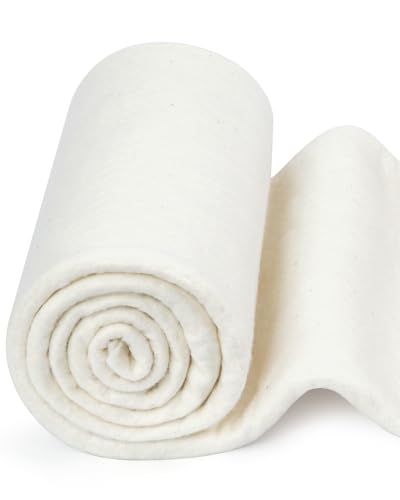
FIVEIZERO 100% Natural Cotton Quilt Batting–47Inchx1Yard Large Lightweight Batting Fabric,Quilting Batting by The Yard for Sewing,Crafts,DIY,Potholders,Backing,Wadding,Twin & King Size Quilt Projects
1. 4 Size Options: 47"x36" (1 Yard), 47"x72" (2 Yards), 47"x108" (3 Yards), 47"x144" (4 Yards) Available in…
As an affiliate, we earn on qualifying purchases.
As an affiliate, we earn on qualifying purchases.

Superior Threads L-Style Towa Bobbin Tension Gauge – Measuring Tool for Quilting and Sewing Machine
TENSION GAUGE: The Towa Bobbin Tension Gauge is a must-have tool that helps measure thread bobbin tension
As an affiliate, we earn on qualifying purchases.
As an affiliate, we earn on qualifying purchases.