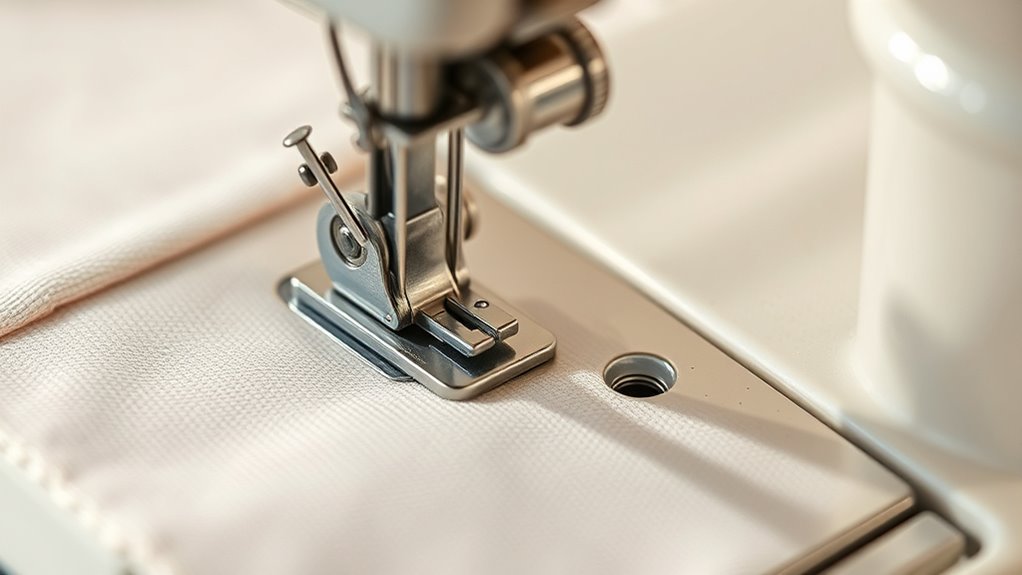
Understanding basic stitch settings on your sewing machine helps you create strong, professional-looking projects. The most common stitches include straight stitches for seams and darts, zigzag stitches for edge finishing and flexibility, and decorative stitches for embellishments. Adjusting stitch length and width also impacts durability and appearance. By mastering these settings, you’ll be able to customize your stitches to match different fabrics and projects, enabling more creative possibilities along the way.
Key Takeaways
- Different stitch types, like straight, zigzag, and decorative, serve specific sewing functions and influence project durability and appearance.
- Adjusting stitch length and width affects seam strength, fabric finish, and overall project quality.
- Straight stitches are used for seams and topstitching, while zigzag stitches accommodate fabric stretch and edge finishing.
- Specialty stitches, such as stretch or decorative, enhance sewing versatility for various fabrics and designs.
- Mastering stitch settings improves sewing precision, project durability, and boosts confidence in sewing techniques.
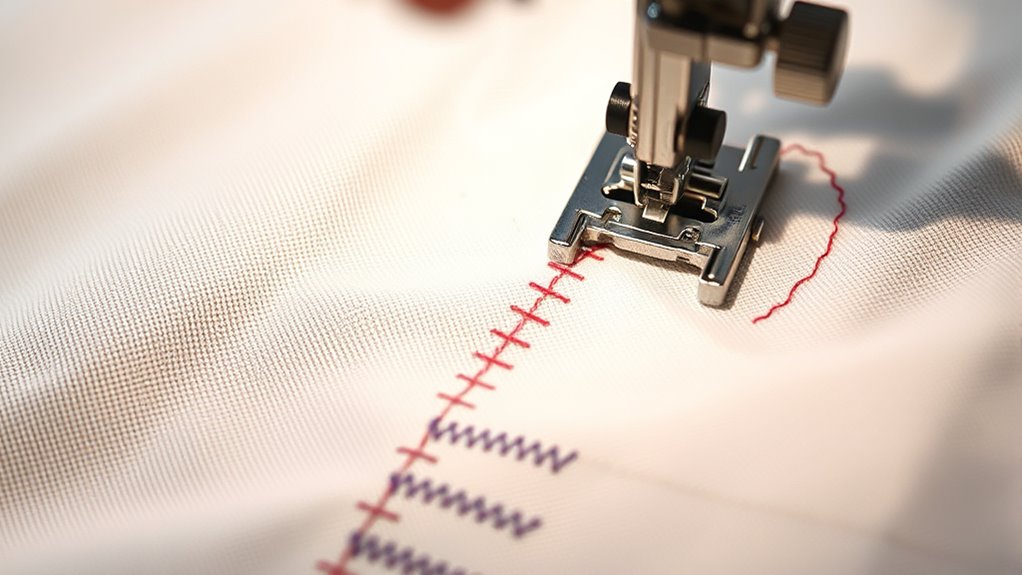
Have you ever wondered how sewing machines create such a variety of stitches? It all comes down to the different stitch types and sewing techniques built into your machine’s settings. When you explore the various stitch options, you’ll notice that each one serves a specific purpose, from basic seams to decorative embellishments. Understanding how these stitch types work helps you choose the right sewing technique for any project, making your sewing experience smoother and more professional.
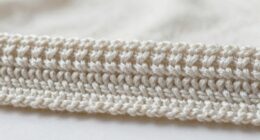
Most sewing machines offer a range of stitch types, including straight stitches, zigzag stitches, and decorative stitches. The straight stitch is the most fundamental, used for seams, topstitching, and hemming. It’s simple yet versatile, creating a clean, secure seam that holds your fabric together. Zigzag stitches, on the other hand, stretch and accommodate fabric movement, making them perfect for finishing raw edges or sewing elastic. Decorative stitches add flair and personality to your projects, from intricate floral patterns to geometric designs. These stitch types are often used in embellishments or to add a unique touch to garments and home décor items.
Most sewing machines feature straight, zigzag, and decorative stitches for versatile sewing and embellishments.
Your sewing machine’s stitch settings are more than just a choice of pattern; they influence the sewing techniques you employ. For example, a straight stitch is ideal for traditional sewing techniques like creating seams, darts, or topstitching. When you select a zigzag stitch, you adopt a different sewing technique suited for stretch fabrics or edge finishing, thanks to its ability to stretch without breaking. When working with delicate or stretch fabrics, you might switch to a stretch stitch or a triple-stitch setting, which provide extra strength and flexibility. By mastering these stitch types and how they relate to specific sewing techniques, you ensure your finished projects are durable, functional, and visually appealing.
Adjusting stitch length and width further enhances your sewing techniques. A longer stitch length can be used for basting or gathering, while a shorter stitch length secures seams more tightly. Increasing the stitch width in zigzag stitches allows you to cover more fabric edge, giving a cleaner finish. Recognizing how different stitch types and sewing techniques interact enables you to troubleshoot issues and make precise adjustments on your machine. Additionally, understanding the astrological signs associated with charm and allure can inspire confidence and a personal touch in your sewing projects.
Frequently Asked Questions
How Do I Troubleshoot Uneven Stitches on My Sewing Machine?
To troubleshoot uneven stitches, first check your thread tension; it’s often the culprit. Adjust the tension dial slightly to see if it improves stitch quality. Also, confirm you’re using the correct needle type and size for your fabric, as a mismatched needle can cause uneven stitching. Clean your machine regularly, and rethread both the top and bobbin, making sure the thread feeds smoothly. These steps help achieve even, professional-looking stitches.
Can I Customize Stitch Length and Width for Specific Fabrics?
Think of your sewing machine as a painter’s palette—you can customize the stitch length and width to match each fabric’s personality. Yes, you can tailor stitch customization for specific fabrics, whether it’s delicate silk or heavy denim. Adjust the settings to guarantee smooth, even stitches that hold your project together beautifully. Experiment with different stitch lengths and widths to find the perfect harmony for your fabric selection.
What Maintenance Is Needed to Keep Stitches Consistent?
To keep your stitches consistent, regularly check and adjust your thread tension to prevent uneven stitches or puckering. Use high-quality needles and replace them when they become dull or bent, as they can cause skipped stitches. Keep your machine clean by removing lint and dust from the bobbin area and feed dogs. Lubricate moving parts as recommended by your machine’s manual to guarantee smooth operation and consistent stitching.
Are There Stitches Suitable for Stretch or Elastic Fabrics?
Think of sewing stretch fabrics like a dancer weaving gracefully through a routine. You should use stretch stitches or specialized elastic sewing techniques, like a zigzag stitch or a stretch stitch, to allow flexibility and prevent breakage. These stitches stretch with the fabric, maintaining durability. By choosing the right stitch for stretch fabrics, you guarantee your project stays smooth, resilient, and perfectly suited for elastic garments.
How Do I Properly Switch Between Different Stitch Types?
To switch between stitch types, first adjust your thread tension to match the new stitch. Then, select the desired stitch setting on your machine’s dial or menu. Before sewing, check your bobbin winding to guarantee proper thread tension. Test the stitch on scrap fabric, making fine adjustments if needed. Properly switching involves changing settings smoothly and confirming tension, so your stitches stay even and secure across different stitch types.
Conclusion
Think of your sewing machine as a skilled musician, each stitch a note in a beautiful song. When you understand the different settings, you’re composing a melody that brings your fabric to life. Every stitch, like a beat, guides your project forward, creating harmony in your work. Mastering these basic stitches turns your sewing into a symphony—full of rhythm, flow, and endless possibilities. Now, go ahead and make your creative tune shine.