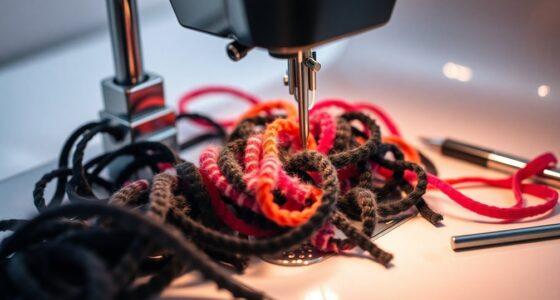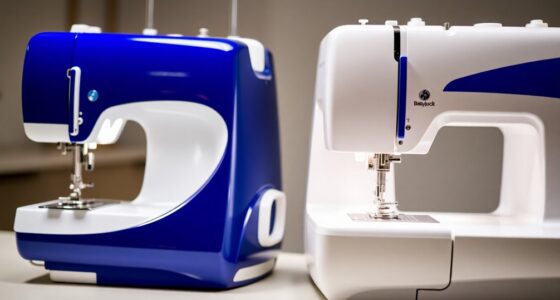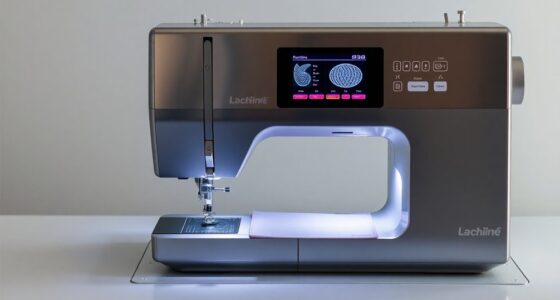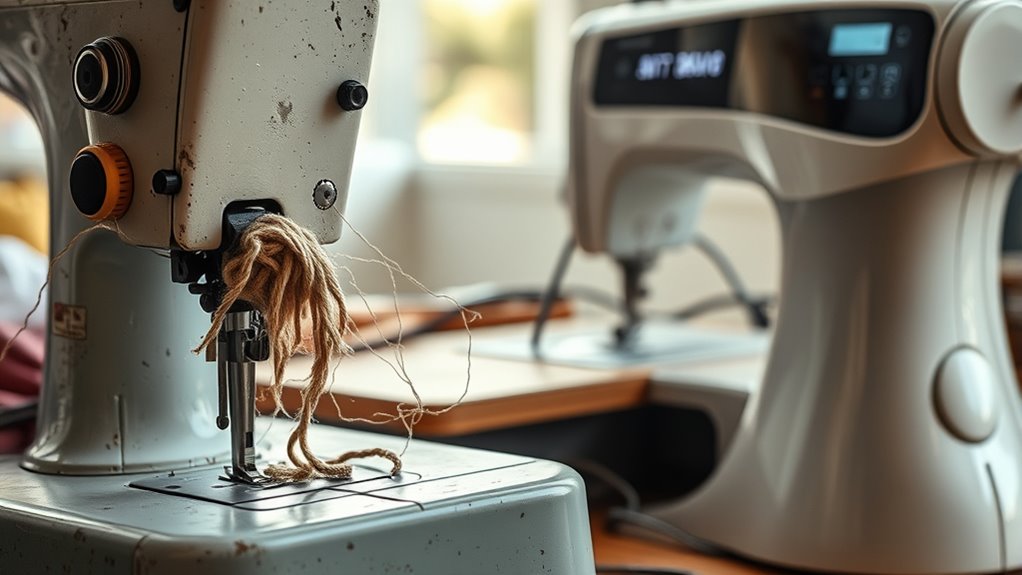

If you find your sewing machine struggles with your projects, jams often, or can’t handle complex techniques like quilting or embroidery, it’s time to upgrade. Outdated models with limited features cause frustration and slow down your work. When your existing machine no longer meets your needs or requires frequent repairs, investing in a new, versatile machine will save you time and energy. Keep going to discover the key signs that show it’s time for an upgrade.
Key Takeaways
- Your machine frequently jams, skips stitches, or requires costly repairs, indicating decreased reliability.
- Limited stitch options and lack of advanced features hinder your ability to complete complex projects.
- The machine’s technology is outdated, reducing efficiency, speed, and compatibility with modern sewing techniques.
- Your sewing goals have evolved, demanding more versatile, powerful, or specialized equipment.
- Continuing repairs and limited capabilities make a new, feature-rich machine a cost-effective long-term investment.
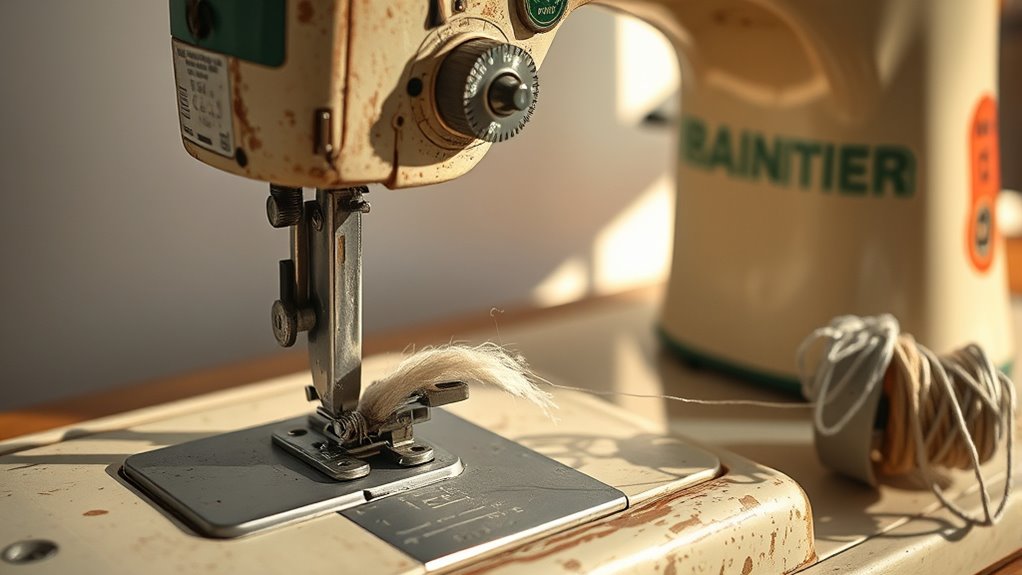
Knowing when to upgrade your sewing machine can save you time, frustration, and money in the long run. If you find yourself constantly battling with your current machine, it might be time to think about a new one. One of the first signs is when your machine’s features no longer meet your needs. For example, if you’ve started exploring more complex projects like quilting or embroidery, but your machine only offers basic stitches and lacks the functionality for those tasks, it’s a clear indicator that an upgrade could make a significant difference. Modern machines often come with a variety of machine features that can streamline your work, such as automatic needle threaders, multiple stitch options, adjustable speed controls, and built-in embroidery designs. If your current machine feels limited or outdated in these areas, investing in a newer model can help you work more efficiently and creatively.
Another key factor to contemplate is your budget considerations. Upgrading doesn’t mean you have to splurge on the most expensive model available, but it’s wise to set a realistic budget based on your sewing habits and goals. When your machine repeatedly jams, skips stitches, or requires frequent repairs, the costs can add up quickly. Sometimes, spending a bit more upfront on a reliable, feature-rich machine can save you money over time by reducing maintenance and repair costs. Additionally, newer machines often incorporate energy-efficient technology and improved durability, which can be a smart long-term investment. If your current machine is aging and no longer performs reliably, it might be more cost-effective to purchase a new one rather than keep patching up an older model.
Furthermore, the availability of organic and natural juices and related health benefits can inspire you to take better care of yourself, just as upgrading your sewing machine is an investment in your craft. It’s also worth paying attention to how much your sewing projects have grown or changed. If you’re now tackling more advanced techniques or working on larger projects, your current setup might not keep up. Upgrading can provide you with the machine features needed to handle these new challenges without frustration or setbacks. Moreover, if you find yourself avoiding certain projects because your machine isn’t capable of handling them, it’s a sign that an upgrade is overdue. Ultimately, the decision to upgrade should be driven by how well your current machine supports your sewing ambitions and whether it’s still serving you efficiently within your budget considerations. Recognizing these signs early will ensure you continue enjoying your craft without unnecessary interruptions or limitations.
Frequently Asked Questions
How Often Should I Consider Upgrading My Sewing Machine?
You should consider upgrading your sewing machine every few years or when it no longer meets your needs. Keep an eye on your maintenance schedule; if repairs become frequent or costly, it’s time for an upgrade. Also, if your current machine struggles with accessory compatibility or lacks features for new projects, upgrading guarantees you get better performance, more versatility, and a smoother sewing experience.
Can I Upgrade Parts of My Current Machine Instead of Replacing It?
Think of your sewing machine as a trusty steed—you can sometimes upgrade its saddle or reins rather than swapping it out entirely. Yes, you can opt for machine parts upgrade and sewing machine repair to breathe new life into your current machine. Focus on replacing worn-out components like the needle, bobbin case, or feed dogs, but know when persistent issues call for a full upgrade instead of patchwork repairs.
Is It Worth Switching to a Computerized Sewing Machine?
Switching to a computerized sewing machine is worth it if you want advanced digital features and an intuitive user interface. You’ll find it easier to select stitches, customize settings, and access tutorials, making sewing more efficient and enjoyable. Plus, the digital display guides you through complex projects. If you’re ready for greater precision and convenience, upgrading to a computerized model can markedly enhance your sewing experience.
What Budget Should I Set for a New Sewing Machine?
Set a budget between $200 and $500 for a reliable sewing machine, considering your needs and skill level. Remember, investing in a machine with good brand reputation guarantees better machine maintenance and durability. While higher-end models cost more, they often offer advanced features and longevity, saving you money in the long run. Don’t skimp on quality; a well-chosen machine can last for years and improve your sewing experience.
How Do I Determine if My Sewing Skills Need an Upgraded Machine?
You can determine if your sewing skills need an upgraded machine through a skill assessment, honestly evaluating your current abilities. If you’re tackling more complex projects like quilting or detailed embroidery, your old machine might struggle, indicating it’s time for an upgrade. Consider whether your machine can handle new techniques comfortably. Upgrading will give you better features and precision, helping you grow and master more advanced sewing projects.
Conclusion
When your sewing machine starts feeling like a stubborn mule instead of a trusty steed, it’s time to upgrade. Think of your machine as a partner in your creative journey—if it’s holding you back or causing frustration, it’s like trying to sail a sinking ship. Embrace the upgrade, and watch your sewing adventures soar like a bird on a breeze. A new machine can turn your craft from a chore into a joyful dance.