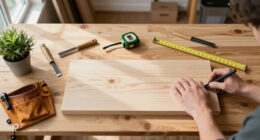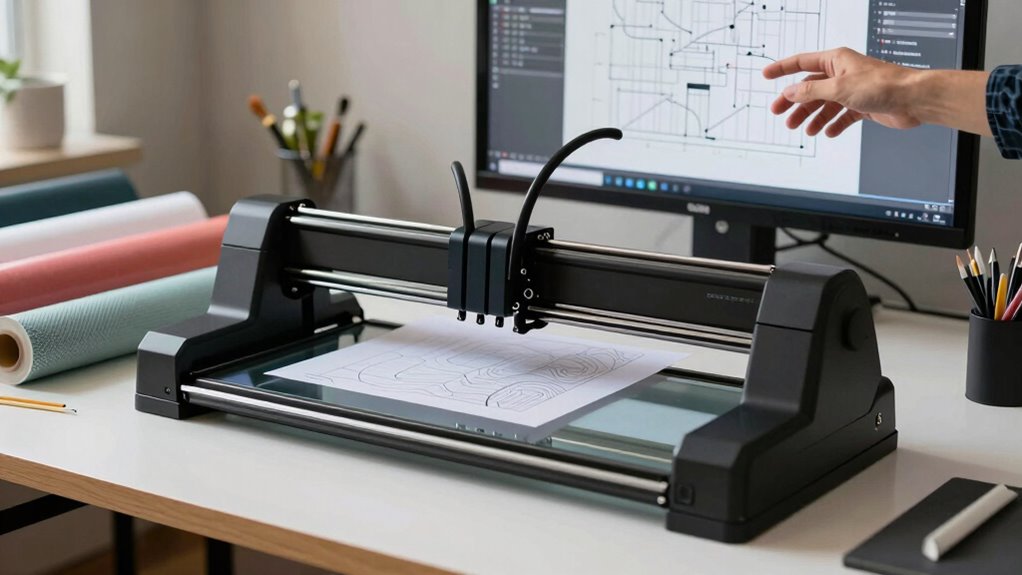

Cutting plotters fit seamlessly into modern pattern-making workflows by directly connecting digital designs to physical fabrics, ensuring precise, error-free cuts. They work with popular CAD software, allowing quick adjustments and reducing turnaround time. With adjustable settings for different materials, you can experiment and optimize your patterns efficiently. Automation and visualization features boost accuracy and productivity, while supporting collaboration across teams. If you want to explore how these tools can transform your pattern process, keep exploring the possibilities.

Get business pricing on tools and workshop supplies
- Business-only prices and quantity discounts
- Tax-exempt purchasing
- Multiple users, one account, clear invoices
Key Takeaways
- Cutting plotters integrate directly with digital pattern design files, enabling precise and seamless pattern cutting.
- They optimize workflow efficiency by reducing manual tracing, errors, and material waste.
- Compatible with various fabrics, allowing flexible material experimentation within a digital-to-physical process.
- Facilitate collaborative design adjustments and rapid pattern modifications, improving project turnaround.
- Enhance accuracy and consistency, ensuring pattern pieces match design specifications with minimal errors.
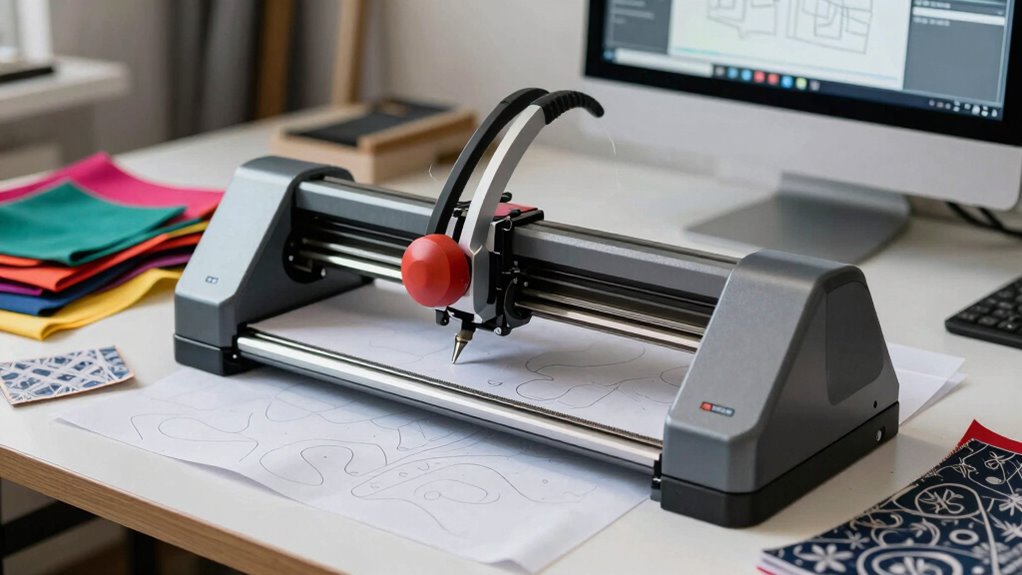
Have you ever wondered how modern pattern-making accelerates and improves accuracy? Cutting plotters have become essential tools in streamlining the entire process. They allow you to quickly and precisely cut fabric and other materials, reducing manual labor and minimizing errors. The key to their effectiveness lies in how seamlessly they integrate with your existing workflow, especially through software integration. When your design files are directly linked to the cutting plotter, you eliminate the need for manual trace-cutting, which not only saves time but also guarantees that your patterns are cut with exact precision. This integration creates a smooth changeover from digital design to physical pattern, making the entire process more efficient. Additionally, software compatibility ensures that updates and adjustments can be easily incorporated into your workflow without disrupting productivity. Material compatibility is another indispensable aspect that makes cutting plotters so valuable in modern pattern-making. These machines are designed to handle a wide range of fabrics and materials, from delicate silks to heavy upholstery textiles. With adjustable settings and specialized blades, you can switch between materials without sacrificing accuracy or quality. This flexibility allows you to experiment with different fabrics in a single workflow, reducing the need for multiple tools or manual adjustments. As a result, you gain greater control over your pattern pieces, guaranteeing they match your design specifications and fabric characteristics precisely. Furthermore, software integration plays a pivotal role in optimizing your pattern-making workflow. Many cutting plotters are compatible with popular CAD and pattern-making software, enabling you to upload your designs directly to the machine. This seamless connection means no more manual tracing or transferring files, which can introduce errors. Instead, you get a clean, digital-to-physical transfer that preserves details, seam allowances, and markings. You can also make quick modifications to your pattern on-screen and see those changes reflected immediately in your cutting process. This capability drastically reduces the turnaround time for prototypes and final pieces, giving you a competitive edge. Incorporating digital design tools further enhances precision, allowing for intricate pattern details to be accurately executed. Adopting these tools also facilitates collaborative workflows, enabling teams to work together seamlessly regardless of location. The integration of automation features in modern cutting plotters streamlines repetitive tasks and minimizes manual intervention, boosting overall efficiency. The ability to preview how patterns will be cut before running the machine further enhances accuracy and efficiency, minimizing material waste and reducing costly mistakes. Overall, cutting plotters, with their compatibility with various materials and seamless software integration, empower you to work faster, more accurately, and more sustainably—an essential upgrade to any modern pattern-making workflow.
As an affiliate, we earn on qualifying purchases.
Frequently Asked Questions
What Is the Initial Cost of a Cutting Plotter?
The initial cost of a cutting plotter typically ranges from $300 to $2,500, depending on features and size. You’ll find models offering digital precision essential for accurate pattern cutting, and software compatibility that seamlessly integrates with your existing design tools. Investing in a quality plotter guarantees you get consistent results, making your workflow more efficient. Remember to take into account your project needs and budget when choosing the right model.
How Much Space Does a Cutting Plotter Require?
A cutting plotter typically needs about 3 to 4 feet of space in width and 2 to 3 feet in depth, depending on the model. You should consider material compatibility and guarantee your workspace is optimized for easy access and safety. Allocate enough room for material feeding and maneuvering, and keep a clear area for maintenance or troubleshooting, making your workflow smooth and efficient.
Are Cutting Plotters Suitable for Small-Scale Productions?
Cutting plotters are like nimble artisans for small-scale productions, perfectly suited for this domain. They offer impressive material versatility and design flexibility, allowing you to create intricate patterns on various fabrics and materials. Their precision and speed make them ideal for limited runs or customized pieces. So, if you’re aiming for tailored, high-quality outputs without the need for large-scale machinery, cutting plotters are a smart choice.
What Maintenance Is Needed for a Cutting Plotter?
You need to regularly maintain your cutting plotter by replacing the blade when it dulls to guarantee precise cuts. Keep an eye on blade replacement needs and swap it out promptly. Additionally, perform software updates to keep your device running smoothly and compatible with the latest features. Regular cleaning of the cutting surface and checking for debris also help maintain peak performance, making your workflow seamless and efficient.
Can Cutting Plotters Cut Multiple Materials Simultaneously?
You might think cutting plotters can slice through everything at once, but they can’t cut multiple materials simultaneously with perfect precision. However, their material versatility shines when switching between different fabrics and papers, making your workflow smoother. Plus, their impressive cutting speed ensures you get your designs done faster than ever. While they excel at handling various materials, you’ll need to change blades or settings for each, but it’s all worth it.
Conclusion
Incorporating cutting plotters into your pattern-making process propels productivity and precision. By blending traditional techniques with modern machinery, you boost your workflow’s efficiency and elevate your designs. Embrace the ease, excellence, and evolution that cutting plotters offer—empowering you to produce perfect patterns with less pressure and more passion. So, step into the seamless, sophisticated world of contemporary pattern-making and see your sewing solutions soar!
Fall yard work Picks
leaf blowers
As an affiliate, we earn on qualifying purchases.