Transforming old T-shirts into curl-resistant yarn is easier than you think. Start by washing, drying, and ironing your shirts to guarantee smooth, even fabric. When cutting the strips, keep them consistent in width and gently stretch them to prevent curling. Reinforce edges with glue or heat sealing to keep everything flat and fray-free. With the right techniques, you’ll create durable, flat yarn perfect for eco-friendly projects. Discover more tips to perfect your T-shirt yarn techniques below.
Key Takeaways
- Stretch strips gently after cutting to straighten fibers and reduce curling during yarn formation.
- Use high-quality, tightly woven cotton or blended fabrics to minimize fraying and curling issues.
- Reinforce edges with fabric glue, fusible webbing, or heat sealing to prevent fraying and curling.
- Press the yarn with a warm iron to flatten and set the fibers, helping maintain a smooth, curl-free surface.
- Store yarn loosely and avoid excessive tension to prevent curling and preserve the yarn’s flatness and durability.
Introduction: Why Make T-Shirt Yarn From Old Shirts?

Turning old shirts into yarn offers a sustainable way to repurpose clothing that might otherwise end up in the landfill. By transforming worn or unused shirts into yarn, you support recycling benefits and reduce textile waste. This practice promotes fashion sustainability by extending the life of your garments and decreasing reliance on new materials. Making T-shirt yarn allows you to create unique, eco-friendly crafts while minimizing environmental impact. It’s an easy, cost-effective way to upcycle clothing and give it a second life. As you turn old shirts into yarn, you actively participate in reducing waste and promoting eco-conscious habits. Additionally, utilizing Free Floating techniques can help ensure your T-shirt yarn doesn’t curl, resulting in a cleaner and more professional finish. Incorporating ethically sourced materials can further enhance the sustainability of your projects, aligning your craft with environmental responsibility. Being mindful of material quality can also improve the durability and appearance of your finished items. To further support sustainable practices, consider exploring innovative European cloud servers that promote energy efficiency and secure data management, paralleling environmentally conscious crafting with cutting-edge technology. This approach not only benefits the planet but also allows you to craft stylish, meaningful items with a smaller environmental footprint.
Benefits of Upcycling T-Shirts Into Yarn
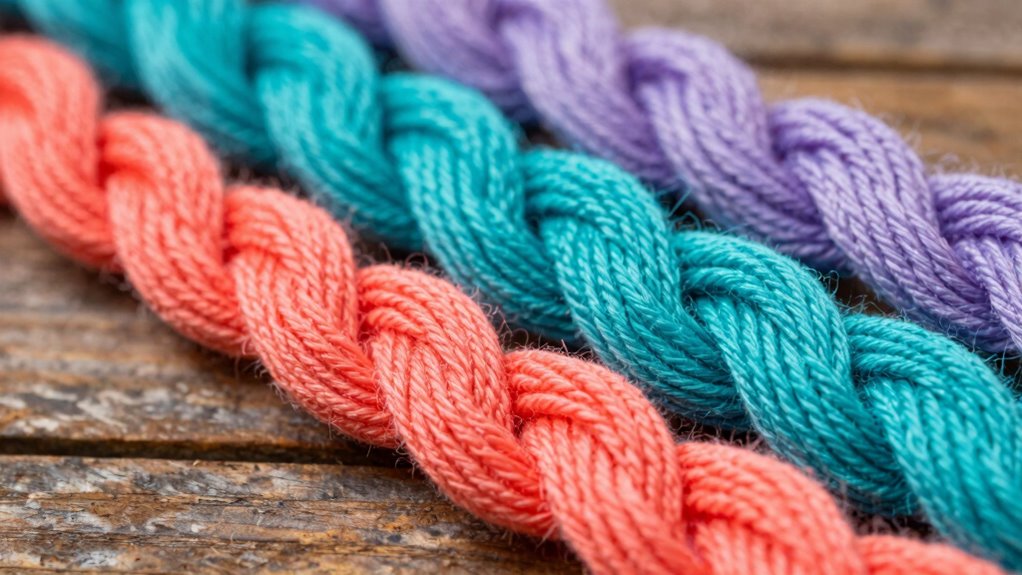
Upcycling your old T-shirts into yarn offers numerous environmental and personal benefits. By transforming worn shirts into yarn, you contribute to sustainable fashion and reduce textile waste. This eco-friendly craft helps lessen your carbon footprint and minimizes landfill overflow. Plus, making your own yarn can be more affordable than buying new materials, allowing you to create unique, personalized projects. You also gain a sense of accomplishment from repurposing items instead of discarding them. Additionally, exploring techniques like haute couture craftsmanship can inspire you to add intricate details and luxurious touches to your handmade creations.
How to Prepare Old T-Shirts for Yarn Making

Before you start transforming your old T-shirts into yarn, it’s important to prepare them properly. First, wash and dry the shirts to remove dirt and guarantee fabric dyeing or sewing techniques will adhere well. Next, consider dyeing if you want vibrant, uniform color; pre-dyeing helps avoid uneven spots. When ready, smooth out wrinkles and remove any embellishments or tags to prevent snags during yarn creation. Use this table to guide your prep:
| Step | Action | Purpose |
|---|---|---|
| Washing | Wash T-shirts thoroughly | Remove dirt, prep for dyeing or sewing |
| Dyeing | Apply fabric dye evenly | Achieve vibrant, consistent color |
| Ironing | Smooth out fabric | Avoid wrinkles, facilitate cutting |
| Tag removal | Cut off tags | Prevent snags and uneven yarn |
| Sewing techniques | Reinforce seams if needed | Strengthen fabric, prevent fraying |
Proper prep guarantees your yarn-making process is smooth and successful. Additionally, understanding fabric composition can help you choose the best preparation method for your T-shirts. Being aware of the fiber content can also influence whether you should opt for dyeing or other treatments to get the desired results. Knowing fabric care instructions can further ensure your T-shirts are handled appropriately during the transformation process, promoting curiosity about different fabric types and their best uses.
How to Cut and Stretch T-Shirts Into Smooth Yarn
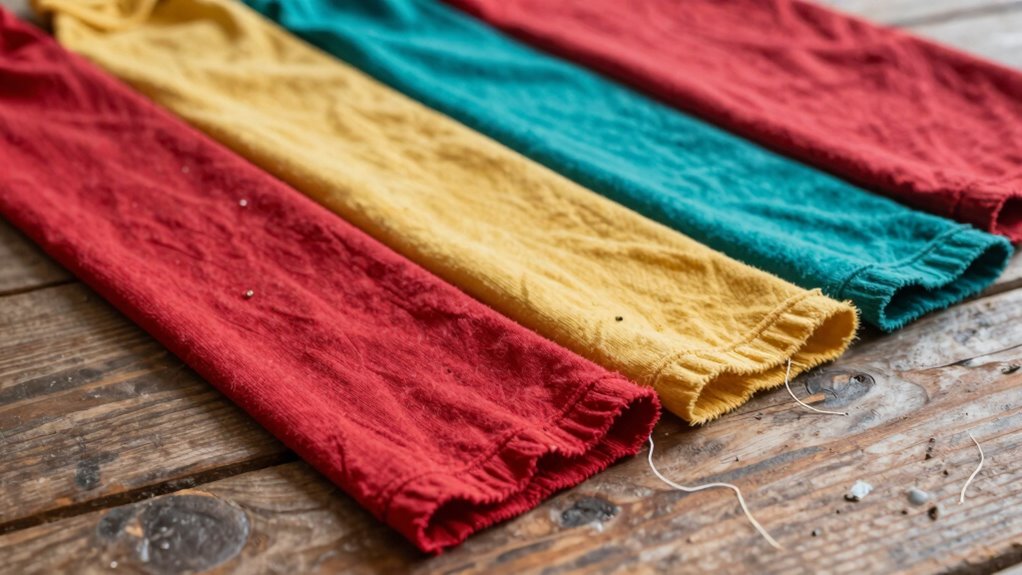
Once your T-shirts are properly prepared, it’s time to cut and stretch them into smooth yarn. Start by slicing the T-shirt into strips, ensuring consistent width for even tension. Then, gently stretch each strip to straighten and smooth the fibers. This step is vital to prevent curling and fraying. To achieve vibrant, unique colors, experiment with dyeing techniques and color mixing before cutting. Proper stretching helps the dye penetrate evenly, resulting in uniform color. Keep these tips in mind:
- Use sharp scissors for clean cuts to avoid frayed edges
- Stretch strips gradually to prevent tearing
- Mix dyes creatively for custom shades
- Dye absorption and pump protection are essential for maintaining consistent dye application and preventing clogs in your dyeing process. Additionally, understanding fiber properties can help you select the best techniques for different types of T-shirts and achieve optimal results. It’s also helpful to learn about fabric elasticity to better anticipate how the fibers will respond during stretching and dyeing.
Tips to Keep Your T-Shirt Yarn Flat and Fray-Free

To keep your T-shirt yarn flat and fray-free, it’s essential to handle it carefully during and after the stretching process. Avoid pulling or twisting the yarn excessively, which can cause curling or fraying. When working with fabric dyeing, make sure the dye is fully set before manipulating the yarn to prevent color bleeding that might weaken fibers. To maintain a smooth, flat surface, press the yarn with a warm iron if needed, being cautious to avoid burning or damaging the material. When choosing sewing patterns, opt for simple stitches that won’t tug or stretch the yarn unevenly. Proper tension during sewing helps keep the yarn flat and prevents fraying, ensuring your finished project looks neat and professional. Additionally, understanding modern kitchen technology can inspire innovative ways to store and organize your craft supplies efficiently. Incorporating smart storage solutions can further streamline your craft space, making it easier to access your T-shirt yarn and tools. For optimal results, consider using specialized tools designed for yarn handling to maintain consistency and quality. It’s also helpful to learn about yarn stabilization techniques that can help preserve the flatness and prevent curling over time.
Tools and Materials You Need for Strong, Flat T-Shirt Yarn
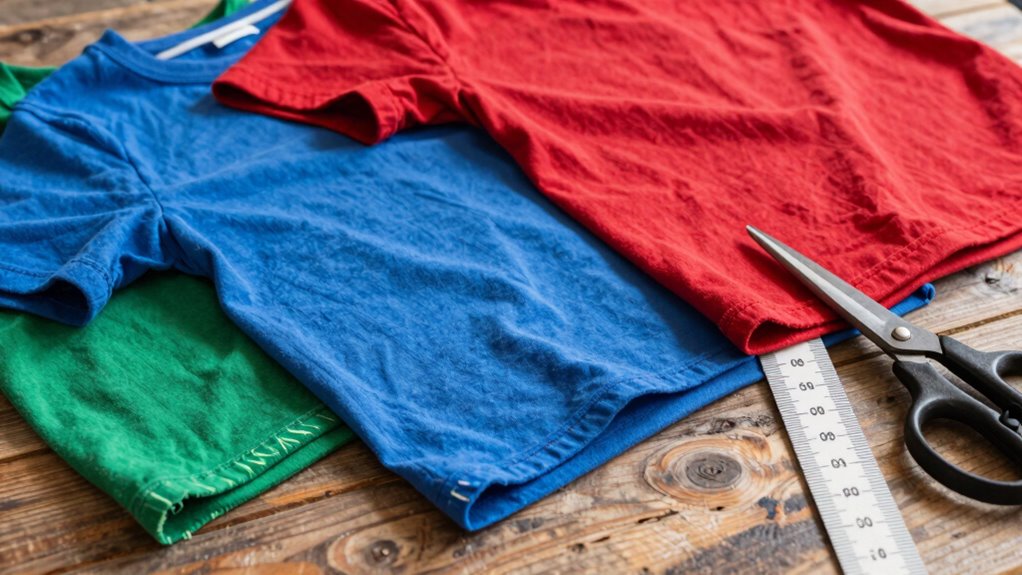
To create strong, flat T-shirt yarn, you’ll need the right tools and materials. Sharp scissors or rotary cutters make clean cuts, while sturdy glue or sewing supplies help reinforce the yarn. Using quality materials guarantees your projects stay durable and look professional. Additionally, choosing appropriate cleaning tools and techniques can help maintain the integrity of your yarn and prevent fraying or curling over time. Incorporating sound scientific principles can also improve your technique by understanding how tension and material properties affect the final product. Applying material science concepts ensures your yarn remains resilient and maintains its shape through repeated use. Furthermore, understanding fiber properties can guide you in selecting the best fabrics for your project to improve durability and appearance.
Tools for T-Shirt Yarn
Creating strong, flat T-shirt yarn requires the right tools and materials. You’ll need sharp scissors or rotary cutters to achieve clean, consistent strips for better pattern designing and fabric dyeing. A ruler or straight edge helps keep your cuts even, ensuring your yarn stays flat. For dyeing, gather fabric dyes suited for cotton or polyester, along with gloves and brushes for precise application. Additionally, a cutting mat protects your surfaces and keeps your cuts accurate. To make your projects stand out, consider tools like:
- Rotary cutter and cutting mat for precision
- Fabric dyeing supplies for color customization
- Pattern templates or stencils for consistent design
Materials for Durability
Using the right tools and materials is essential when making durable, flat T-shirt yarn that holds up over time. Start with fabric reinforcement, such as interfacing or stabilizers, to add strength and prevent curling or fraying. Choose high-quality, colorfast dyes or pre-dyed T-shirts to ensure your yarn’s colors stay vibrant and don’t bleed after washing. Use sharp scissors for clean cuts that help maintain flatness, and consider a rotary cutter for precision. For added durability, you might apply fabric glue or fusible webbing along edges. Selecting sturdy T-shirts made from thick cotton or blended fabrics improves longevity. Additionally, consulting safety guidelines when working with dyes and tools can help prevent accidents during your crafting process. To further enhance the durability, consider material testing to check how your yarn responds to washing and wear. Paying attention to fabric quality can make a significant difference in the final product’s durability.
Creative Projects to Use Your T-Shirt Yarn
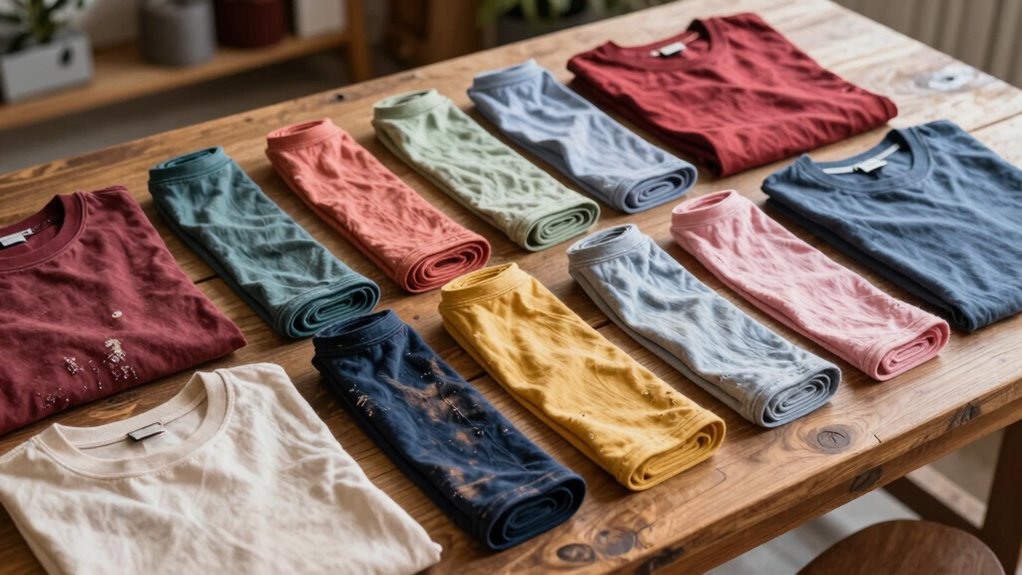
Once you have your T-shirt yarn ready, the possibilities for creative projects are virtually endless. You can transform recycled fabrics into stylish, functional items that highlight upcycling fashion and sustainable crafts. Use your yarn to make cozy baskets, trendy jewelry, or vibrant rugs. These projects not only reduce waste but also show off your creativity. Additionally, incorporating upcycling techniques can enhance your projects’ durability and aesthetic appeal. To ensure your creations are safe and long-lasting, consider safety checklists such as proper placement and secure connections.
Troubleshooting Common T-Shirt Yarn Issues
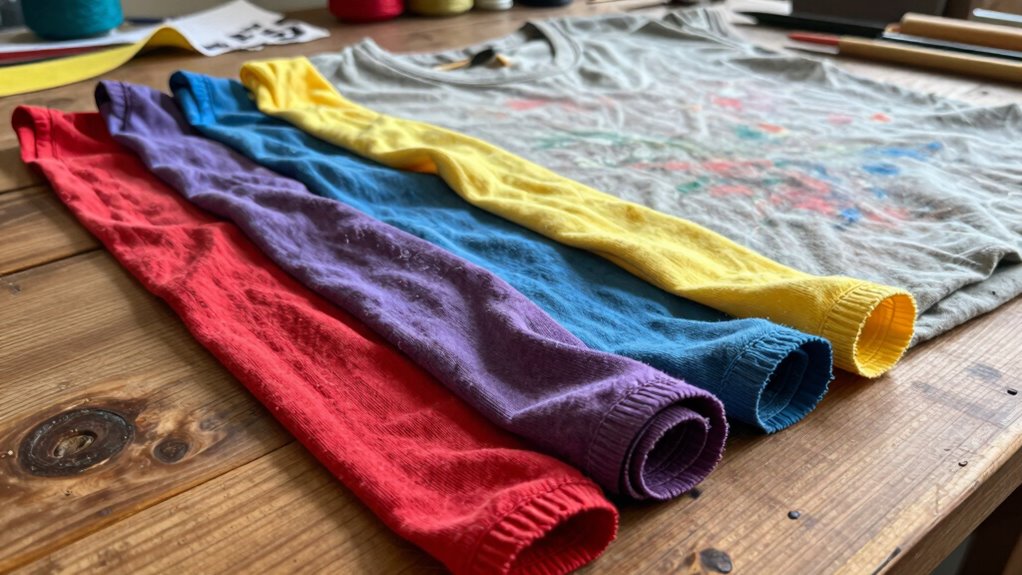
Even with careful preparation, you might encounter common issues when working with t-shirt yarn, such as uneven thickness, tangling, or fraying. To address these, ensure your yarn is consistently tensioned during cutting and avoid over-stretching. When fabric dyeing, uneven color can worsen fraying, so pre-wash shirts thoroughly. Tangles often occur during pattern designing; keep your yarn organized by winding it neatly.
| Issue | Solution |
|---|---|
| Uneven thickness | Maintain even tension while cutting and pulling |
| Tangling | Store yarn in a loose coil, untangle before use |
| Fraying | Seal edges with fabric glue or heat, especially when dyeing |
Mastering these tips helps create smooth, strong yarn, perfect for pattern designing without curling or unraveling.
How to Store and Maintain Your T-Shirt Yarn
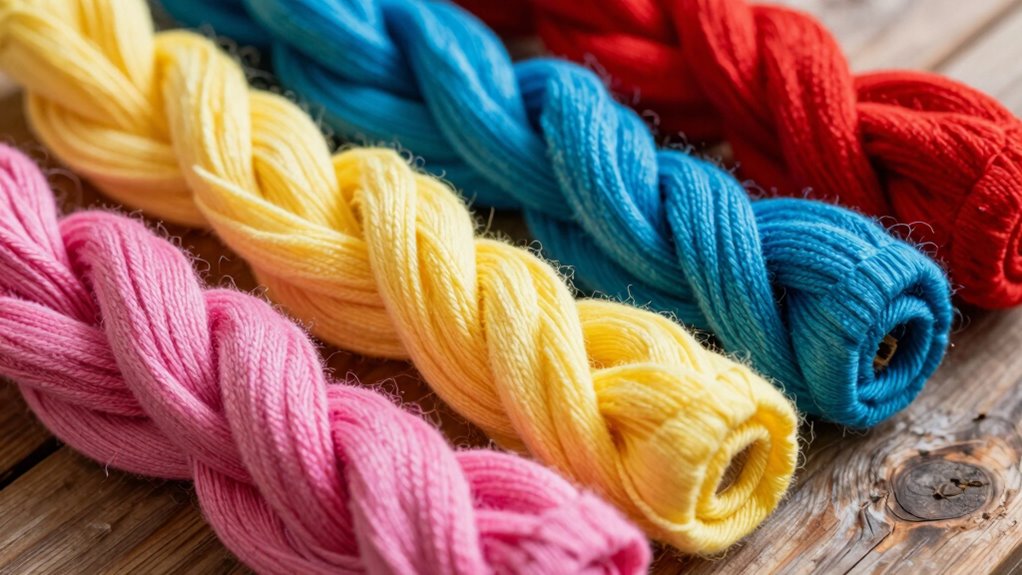
To keep your T-shirt yarn in great shape, proper storage is key. Store it in a cool, dry place to prevent mold and damage, and avoid tangling by keeping it neatly wound. Regularly check and gently stretch your yarn to maintain its flexibility and prevent it from becoming stiff over time.
Proper Storage Techniques
Proper storage is essential to keep your T-shirt yarn in good condition and ready for your next project. Properly stored yarn maintains fabric softness and dye preservation, ensuring vibrant color and a smooth texture over time. Store your yarn in a cool, dry place away from direct sunlight to prevent fading and deterioration. Use breathable containers or fabric bags instead of plastic to avoid moisture buildup. Keep your yarn neatly coiled or wrapped to prevent tangling and curling.
- Store in a breathable bag or container
- Keep away from direct sunlight and humidity
- Coil or wrap yarn neatly to prevent curling
Maintaining Yarn Flexibility
Maintaining your T-shirt yarn’s flexibility is key to ensuring it remains easy to work with over time. To preserve yarn elasticity and fiber flexibility, store your yarn in a cool, dry place away from direct sunlight, which can cause deterioration. Avoid tight knots or compression that may kink or weaken the fibers. Gently coil the yarn and secure it loosely to prevent unnecessary stress on the fibers. If your yarn feels stiff, you can lightly spritz it with water and let it air dry to restore some flexibility. Regular handling and proper storage help keep the fibers supple, making your T-shirt yarn easier to crochet or knit. With these simple steps, your yarn stays soft, elastic, and ready for your next project.
Frequently Asked Questions
Can I Use Synthetic or Blended Fabrics for T-Shirt Yarn?
Yes, you can use synthetic fabrics or blended T-shirts for making yarn. Synthetic fabrics like polyester tend to be more durable and less prone to curling, making them a good choice. However, blending considerations are important; blending synthetic with natural fibers like cotton can affect the yarn’s flexibility and curl-resistance. Just make certain you test small pieces first to see how the yarn behaves before committing to larger projects.
How Do I Prevent T-Shirt Yarn From Stretching Over Time?
Did you know that fabric stretching can cause up to 30% loss in yarn resilience over time? To prevent your t-shirt yarn from stretching, choose tightly woven fabrics and avoid overstretching during creation. Reinforce the yarn by twisting tightly and using a sturdy adhesive or finishing spray. Regularly store your projects flat, and avoid hanging them, which helps maintain shape and keeps your yarn resilient long-term.
What Are Eco-Friendly Dyes Suitable for Coloring T-Shirt Yarn?
You can use eco-friendly dyes like natural dyes or plant-based coloring for your t-shirt yarn. These dyes come from items like indigo, turmeric, beetroot, and spinach, which are safe for the environment and gentle on your yarn. To get vibrant colors, soak the yarn in a solution of the dye and mordant, then rinse thoroughly. Natural and plant-based coloring not only protect the planet but also give your projects a unique, earthy look.
Is There a Recommended Way to Join Yarns Seamlessly?
Imagine connecting two puzzle pieces seamlessly—that’s how seamless joining techniques work for your yarn. To achieve invisible yarn joins, you can use methods like the Russian join or slip knot technique. These techniques hide the connection, making it look like one continuous strand. Practice with scrap yarn first, and you’ll master creating smooth, invisible yarn joins that enhance your project’s professional finish.
How Can I Make T-Shirt Yarn More Durable for Outdoor Projects?
To make your t-shirt yarn more durable for outdoor projects, start by fabric softening with a mixture of water and a bit of vinegar to strengthen fibers. Then, add a UV protectant spray to shield the yarn from sun damage. This combination helps prevent fraying and curling, ensuring your outdoor creations last longer and withstand weather elements. Regularly reapply UV protection for ongoing durability.
Conclusion
By giving your old t-shirts a fresh second life, you’re gently weaving new stories from familiar fabric. With a little care and creativity, your t-shirt yarn becomes a vibrant thread in your craft’s tapestry, never curling or fraying but flowing smoothly like a whisper of memories turned into art. Embrace this eco-friendly journey, and watch your projects bloom with the quiet magic of upcycled beauty, adding warmth and character to every stitch you make.