To get perfect pleats every time, don’t skip the pressing step. Proper pressing sets the shape and sharpness of your pleats, helping them stay crisp and professional-looking. Use the right fabric, an iron at the correct temperature, and press each pleat carefully—avoiding rushing or using too much heat. Cool your pleats before moving on. Mastering this step will transform your sewing results, and exploring these techniques further will guarantee your pleats always turn out flawless.
Key Takeaways
- Always let pleats cool completely before moving to ensure sharp, lasting creases.
- Use a pressing cloth to prevent fabric shine or damage during pressing.
- Apply firm, even pressure without sliding the iron to set crisp pleats.
- Press each pleat individually, holding the iron in place for a few seconds.
- Reinforce pleats by pressing both sides evenly for a polished, professional finish.
Why Proper Pressing Is Essential for Flawless Pleats
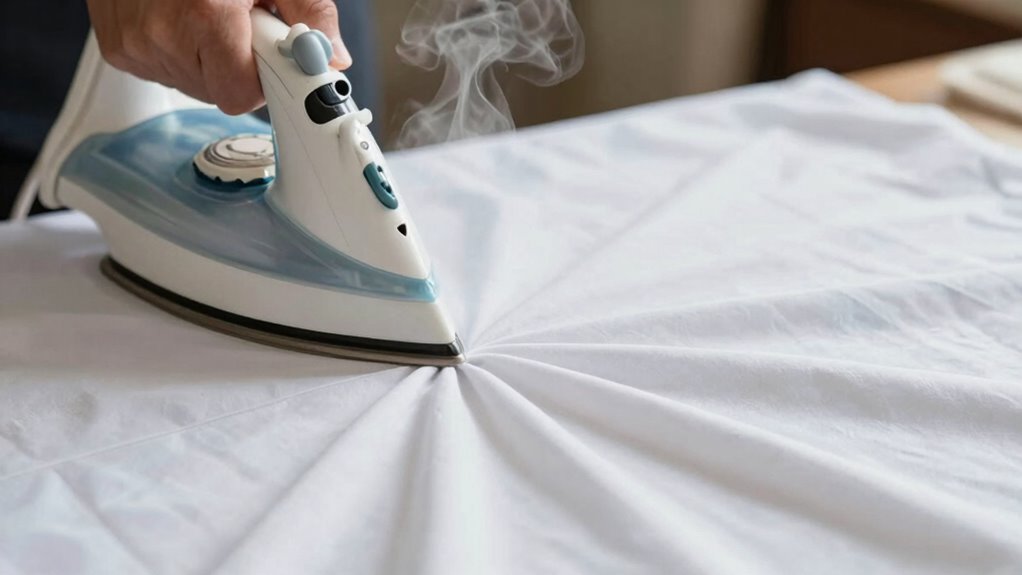
Proper pressing is vital because it sets the foundation for perfect pleats. If you don’t press correctly, your pleats can become uneven or lose their crispness over time. Using the right pressing temperature is essential; too hot, and you risk damaging the fabric or reducing its durability, causing it to weaken and fray. On the other hand, too low a temperature might not set the pleats firmly, leading to a lack of definition. By selecting the appropriate temperature, you guarantee the fabric maintains its integrity while achieving sharp, lasting pleats. This careful attention to pressing temperature helps preserve fabric durability, making your pleats look professional and last longer. Additionally, Proper technique in pressing is crucial to achieving flawless pleats that stand the test of time. Ensuring your pressing method is precise helps prevent unwanted creases and inconsistencies, resulting in a polished finish. Paying attention to pressing tools and their quality also plays a significant role in achieving consistent results. Being mindful of fabric type is equally important because different materials require specific pressing conditions for optimal results.
How to Choose Fabrics and Tools for Perfect Pleats
Choosing the right fabrics and tools is essential for achieving perfect pleats, as not all materials respond well to folding and pressing. Fabric texture influences how well pleats hold, so opt for fabrics with a smooth, stable surface like silk or wool. Avoid slippery or very delicate textiles that can shift or snag. When selecting tools, verify your iron has adjustable temperature controls suitable for your fabric. Keep your tools well-maintained—clean soles prevent shiny spots, and check for any buildup that could affect pressing. Consider these tips:
- Use heat settings matching fabric type
- Choose a pressing cloth for delicate fabrics
- Maintain your iron’s soleplate regularly
- Select high-quality pins and pressing tools
- Fabric stability plays a crucial role in the longevity of pleats and how well they maintain their shape over time. To further enhance your pleating results, understanding how proper fabric preparation impacts pleat formation can make a significant difference. Additionally, paying attention to fabric care instructions ensures your pleats stay crisp and durable through multiple wears and washes.
Proper fabric and tool choices make all the difference in perfecting your pleats.
When and How to Press Pleats During Sewing
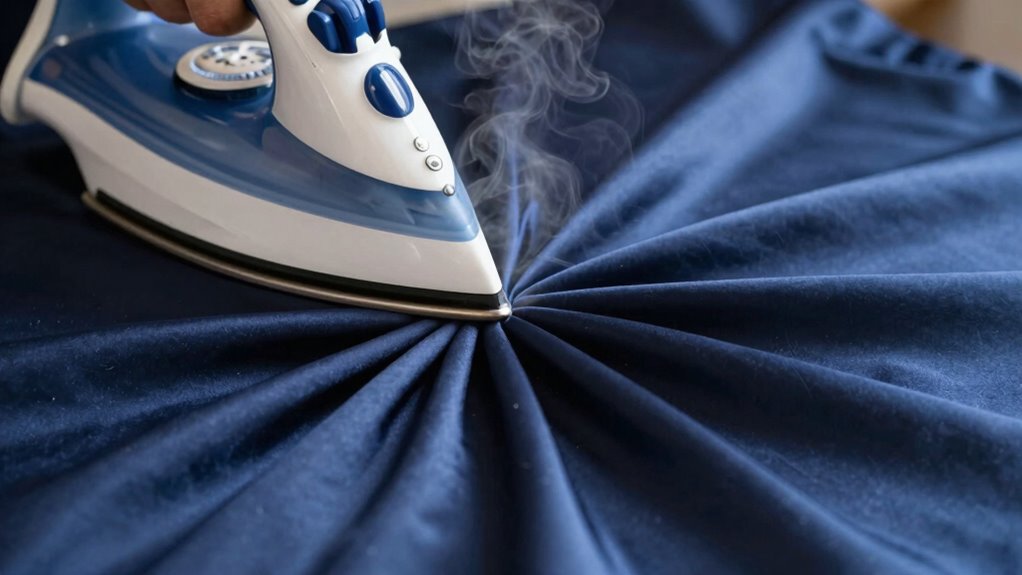
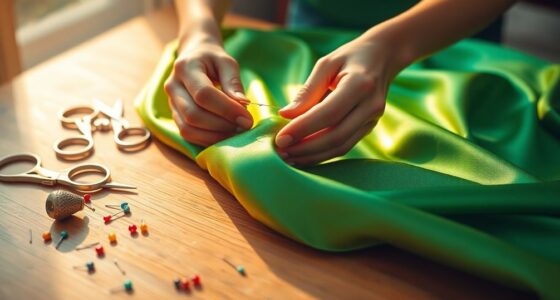
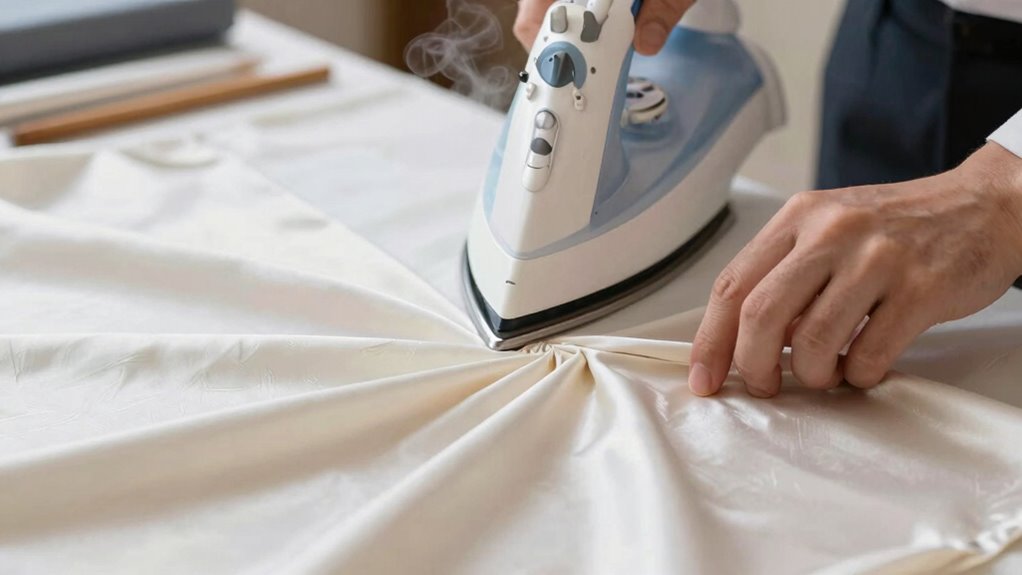
Pressing pleats at the right stages of sewing guarantees they stay crisp and maintain their shape. You should press pleats after aligning the fabric edges and pinning them securely, ensuring proper fabric alignment before pressing. Use the appropriate pressing temperature for your fabric—too hot can cause shine or damage, too cool may not set the pleats properly. When pressing, apply firm, even pressure with an iron, and avoid sliding to prevent distorting the pleats. Press each pleat individually, holding the iron in place for a few seconds to set the fold. Always lift the iron instead of dragging it, and let the pleats cool before moving on. Proper fabric preparation can greatly influence the longevity and appearance of your pleats. Incorporating consistent technique during pressing can further improve the overall quality of your garment. Being mindful of fabric types is essential, as some materials require special care and different heat settings for optimal results. Additionally, practicing proper pressing technique on scrap fabric can help you master the process before working on your project.
Step-by-Step: How to Press Pleats Like a Pro
To achieve perfectly pressed pleats every time, follow a clear, step-by-step process. Start by setting up your pressing equipment, ensuring your iron is clean and at the right temperature. Use a pressing cloth to protect delicate fabrics. Next, carefully align your pleat lines with a ruler or tailor’s ham for sharp, even folds. Apply steady pressure without sliding the iron, following these pleat techniques:
- Press each pleat in sections, working from the top down
- Use the tip of the iron for precise shaping
- Hold the iron in place for a few seconds before lifting
- Reinforce pleats by pressing both sides evenly
This method guarantees crisp pleats that stay sharp, giving your project a professional finish.
Common Mistakes That Ruin Pleats and How to Avoid Them
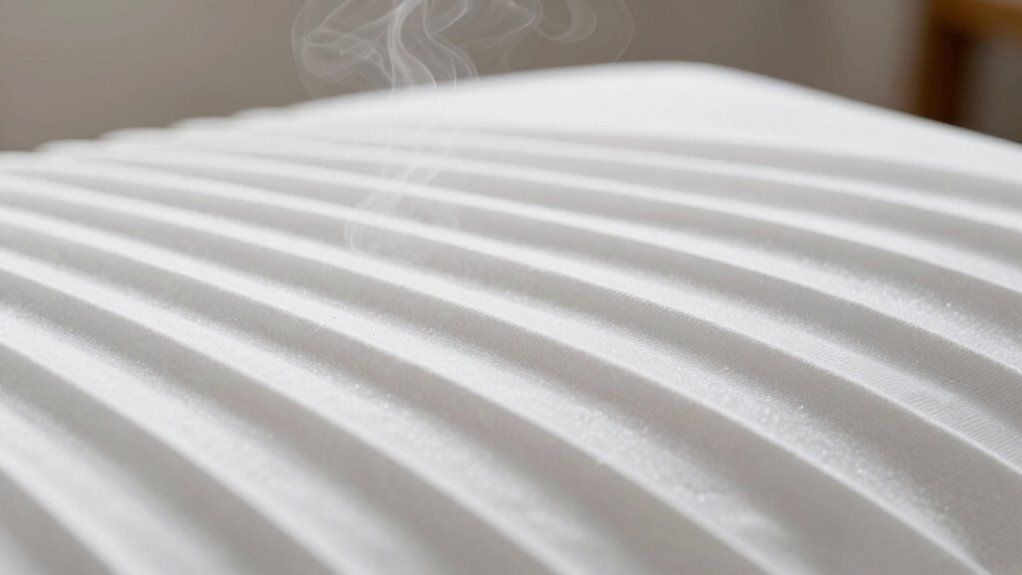
Even experienced crafters can make mistakes that ruin perfectly good pleats, often without realizing it until the damage is done. Common errors include neglecting fabric care, using the wrong sewing techniques, or rushing the pressing process. To avoid these pitfalls, pay attention to fabric type—some fabrics need gentle handling to maintain pleats. Skipping proper pressing or using excessive heat can distort the shape, while improper seam techniques can cause pleats to fall flat. Proper fabric care and handling are essential to keep pleats crisp and well-defined. Additionally, understanding fabric properties can help tailor your pressing method to different textiles. Recognizing the importance of skilled pressing techniques can significantly improve the longevity of your pleats. Here’s a quick guide to common mistakes:
| Mistake | How It Happens | How to Avoid |
|---|---|---|
| Using high heat on delicate fabrics | Ignoring fabric care labels | Use low heat and a pressing cloth |
| Over-pressing without steam | Rushing the pressing step | Use steam to set pleats properly |
| Using incorrect sewing techniques | Skipping proper seam finishes | Follow sewing techniques precisely |
| Not setting pleats fully | Rushing after pressing | Allow pleats to cool and set naturally |
Tips for Keeping Your Pleats Crisp and Beautiful Over Time
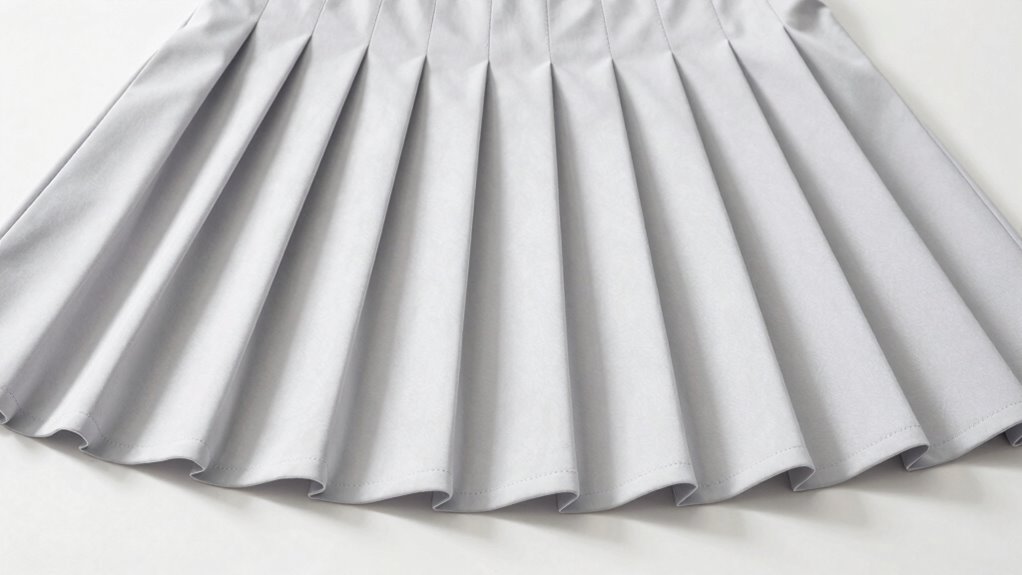
Keeping your pleats looking sharp over time requires more than just careful pressing during the initial creation. Proper fabric care and smart ironing techniques help maintain their crispness. To preserve your pleats, consider these tips:
- Store garments properly, hanging or folding along the pleats to prevent distortion.
- Use a pressing cloth to protect delicate fabrics from direct heat damage.
- Lightly steam or use a low-heat setting on your iron to smooth out wrinkles without flattening the pleats.
- Avoid washing too often; spot clean when possible to minimize wear and tear on the fabric.
- Regularly check fabric finishes for compatibility with ironing methods to prevent damage and prolong pleat life.
- Additionally, understanding fabric care instructions can help you choose the right cleaning methods to keep your pleats pristine.
Frequently Asked Questions
Can Pressing Damage Delicate Fabrics?
Pressing can damage delicate fabrics if you’re not careful. To guarantee fabric care and pressing safety, always use the lowest heat setting and a pressing cloth to protect the fabric from direct heat. Avoid pressing too long or using excessive pressure, which can cause burns, shine, or weaken fibers. Proper technique helps preserve your delicate garments and keeps them looking their best, preventing lasting damage over time.
Is Steam or Dry Pressing Better for Pleats?
Steam pressing is better for pleats because it relaxes fibers and sets the folds smoothly, making your pleats crisp and even. Dry pressing can be effective too, especially for fabrics that might be sensitive to moisture, but it may not achieve the same level of sharpness. Use steam pressing for most fabrics to ensure perfect pleats, and reserve dry pressing for delicate or moisture-sensitive materials.
How Do I Remove Stubborn Creases From Pleats?
To remove stubborn creases from pleats, you should gently re-press them with a hot iron or steamer, focusing on the crease lines. Use a pressing cloth to protect the fabric and help maintain the pleat’s shape. This method preserves the pleat’s structure and keeps crease maintenance intact. Avoid rubbing or tugging, as that can distort the pleats. Instead, carefully re-shape your pleats for a crisp, polished look.
What Temperature Setting Is Best for Synthetic Fabrics?
For synthetic fabrics, set your iron to a low heat or a specific synthetic setting, usually indicated on your iron. Always check fabric care labels before ironing, and use a pressing cloth to prevent damage. Follow these ironing tips to avoid melting or shiny spots. By using the right temperature, you protect your fabrics and achieve smooth, professional-looking results every time.
How Often Should I Re-Press My Pleats?
Think of your pleats as delicate flowers that need gentle care. You should re-press your pleats after every few wears, or when they start losing their crispness, to maintain pleat longevity. Regular pressing frequency keeps the pleats sharp and prevents fabric fatigue, but over-pressing can cause damage. Check your pleats often, and give them a quick touch-up whenever they begin to soften, ensuring they stay perfect longer.
Conclusion
Mastering the art of pressing transforms your pleats from mere fabric to stunning works of art. Skip this step, and your beautiful pleats could fall apart faster than a house of cards in a hurricane. But do it right, and you’ll create crisp, flawless pleats that stand the test of time—turning heads and making everyone wonder if you’re a professional. Remember, a perfect press isn’t just a step; it’s the secret to breathtaking style.