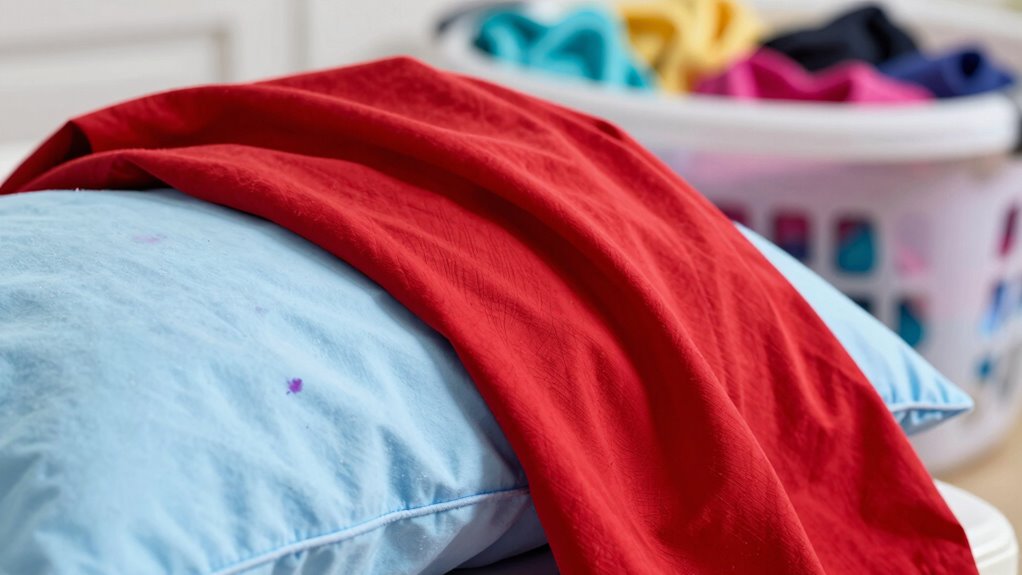

Fabric bleeding happens when dyes don’t fully bond during manufacturing or weaken over time, causing color to transfer during washes. This can be worsened by high water temperatures, rough handling, or using harsh detergents. To stop dye transfer, sort clothes carefully, wash in cold water, and use color-preserving detergents. If you want to prevent or fix bleeding issues effectively, understanding key tips and tricks can make all the difference.
Key Takeaways
- Incomplete dye fixation during manufacturing causes residual dye that washes out and transfers during laundering.
- Low-quality or poorly bonded dyes weaken fabric colorfastness, increasing bleeding risk.
- Washing with high temperatures, harsh detergents, or overloading can loosen dye molecules and promote color transfer.
- Residual dyes from previous loads and detergent buildup can redeposit dye onto other fabrics.
- Proper sorting, turning garments inside out, cold wash, and using color-safe detergents help prevent dye bleeding.

Brother Sewing Machine, XM2701, Lightweight Machine with 27 Stitches, 6 Included Sewing Feet
27 Unique built-in stitches: The XM2701 includes 27 built-in stitches including decorative, blind hem, zigzag, and stretch stitches...
As an affiliate, we earn on qualifying purchases.
Why Do Fabrics Bleed Color During Washing?

Fabrics bleed color during washing because the dyes used to color textiles aren’t always fully fixed to the fibers. When fabric dye isn’t set properly, excess dye can loosen and release into the water. This process affects color stability, making your clothes prone to losing their original hue. Factors like the type of dye, fabric material, and washing conditions influence how well the dye bonds with fibers. Bright or dark colors are especially vulnerable since their dyes tend to be less stable. To prevent bleeding, manufacturers often use dyes designed for better color stability, but some fabrics still release dye if not washed correctly. Understanding why dye transfer happens helps you choose better laundry practices to keep your colors vibrant and intact. Additionally, proper color fixation techniques can significantly reduce dye bleeding by ensuring dyes are more securely bonded to the fabric fibers. Implementing these techniques can be especially important for dye stability to maintain fabric color over time.
Brother CS7000X Computerized Sewing and Quilting Machine, 70 Built-in Stitches, LCD Display, Wide Table, 10 Included Feet, White
70 UNIQUE BUILT-IN STITCHES: The Brother CS7000X sewing and quilting machine includes 70 built-in stitches including utility, decorative,...
As an affiliate, we earn on qualifying purchases.
What Causes Dye Transfer and Color Bleeding?

Dye transfer happens when excess dye from fabrics leaks during washing, especially if the colors aren’t colorfast. Residue left in your washing machine can also cause dyes to spread onto other clothes. Poor fabric colorfastness means the dye isn’t properly bonded, making it more likely to bleed. Implementing professional services can help assess and improve fabric dye stability for long-lasting color. Additionally, using appropriate detergents and wash cycles can minimize dye runoff and prevent bleeding.
Excess Dye in Fabric
When dyes aren’t properly set during the manufacturing process, excess pigment can remain embedded in the fabric fibers. This leftover dye causes color bleeding and transfer, especially during washing. In fabric dyeing, manufacturers aim for thorough dye penetration and fixation, but if the process is rushed or incomplete, extra dye stays behind. This excess dye isn’t tightly bound, so it easily releases when exposed to water and agitation. To protect color preservation, it’s fundamental to understand that poorly fixed dyes are a primary cause of bleeding. Even high-quality fabrics can bleed if the dyeing process isn’t carefully controlled. Proper dye fixation techniques during manufacturing help minimize residual dye and reduce the risk of bleeding over time. Additionally, selecting fabrics with colorfast dyes can significantly decrease the likelihood of bleeding. Recognizing this helps you take steps to prevent further dye transfer, ensuring your clothes maintain their vibrant, true colors over time. Using appropriate washing methods tailored to dyed fabrics can also help preserve the integrity of dyes and prevent bleeding in the long run. Being aware of fiber dye affinity can further aid in understanding how different fabrics respond to dyeing processes and their susceptibility to bleeding.
Washing Machine Residue
Residual dye particles can linger in your washing machine after multiple loads, even if the cycle seems clean. Over time, detergent residue and fabric softener build up in the drum and hoses, creating a source for dye transfer. If you don’t regularly clean your machine, these residues can trap loose dye from previous loads, which then redeposits onto new fabrics. Using too much detergent or fabric softener worsens this problem, as excess product isn’t fully rinsed away. This buildup can cause colors to bleed during subsequent washes, especially with delicate or brightly colored fabrics. To prevent this, run regular cleaning cycles with vinegar or commercial machine cleaners, and use the recommended amounts of detergent and softener to minimize residue. Proper maintenance of your washing machine is essential to ensure it functions correctly and prevents color bleeding. Additionally, maintaining a clean washer drum helps reduce potential dye transfer and prolongs the life of your laundry equipment. Regularly inspecting hoses for buildup can also help prevent residue accumulation that contributes to dye transfer. Incorporating machine cleaning techniques as part of your routine can significantly reduce dye transfer issues. Ensuring proper water temperature and cycle selection can also help reduce dye bleeding during washes.
Poor Fabric Colorfastness
Poor fabric colorfastness occurs when textiles are unable to retain their dye during washing, often leading to dye transfer and color bleeding. This issue stems from inadequate fabric dyeing processes that don’t guarantee proper dye fixation, resulting in weak color durability. When the dye isn’t fully bonded to the fibers, it can easily wash out or transfer onto other fabrics. Factors like low-quality dyes, improper washing temperatures, or harsh detergents can worsen this problem. Understanding the causes of poor fabric colorfastness helps you choose dyes and washing methods that improve color retention. To prevent dye transfer, opt for fabrics with proven color durability, wash new clothes separately, and avoid aggressive detergents. Strengthening fabric dyeing techniques ultimately reduces color bleeding and keeps your clothes looking vibrant longer. dye fixation is a crucial step in ensuring that dyes are permanently bonded to fibers, enhancing the fabric’s resistance to dye transfer.

Brother Sewing and Quilting Machine, XR3774, 37 Built-in Stitches, Wide Table, 8 Included Sewing Feet
37 UNIQUE BUILT-IN STITCHES: The Brother XR3774 includes 37 built-in stitches including blind hem, decorative and quilting stitches...
As an affiliate, we earn on qualifying purchases.
How to Detect When Colors Are Running in Your Laundry?

Ever wonder if your clothes are bleeding dye during laundry? To detect color bleeding, start with simple laundry color tests. Use a small, hidden area of each fabric to check for color transfer before washing. Look for signs like color smudges on white cloths or stained water after rinsing. Be cautious with colorfast fabrics, as some may still bleed unexpectedly. Conducting quick tests can save you from ruined garments and stained whites. Remember, early detection helps prevent widespread dye transfer. Keep an eye out for:
Check for dye transfer with small fabric tests before washing to prevent staining and color bleeding.
- Color transfer on white fabrics
- Changes in water color during rinsing
- Unexpected dye smudges after washing
- Visible color bleed in dark or bright fabrics
Understanding colorfastness is essential because some dyes are more prone to bleeding even after multiple washes. Using these tips, you can identify bleeding issues early and adjust your laundry routine accordingly. Proper fabric care and understanding of dye behavior, including dye transfer, can further reduce bleeding risks. Additionally, knowing how to select colorfast fabrics can help prevent future bleeding problems. Being aware of dye migration during washing can help you take steps to prevent it from affecting your other clothes.

SINGER® Heavy Duty 4452 (Grey) High Speed Sewing Machine + Accessories | 32 Built-In Stitches Deliver 110 Stitch Applications | 50% More Power for Thick Fabrics, 1100 Stitches/Min, 1-Step Buttonhole
ENHANCED PIERCING POWER: Stronger motor provides more power for sewing multiple layers and thicker fabrics.
As an affiliate, we earn on qualifying purchases.
How to Prevent Fabric Color Bleeding Before Washing

To prevent fabric color bleeding before washing, start by sorting your clothes based on color. This simple step reduces the risk of dye transfer during laundry. Before washing, turn vibrant or new garments inside out to minimize dye loss and protect the fabric dyeing process. Use cold water, which helps preserve colors and prevents dye from loosening. Adding a color-preserving or color-safe detergent can further enhance color retention and protect your clothes from bleeding. Avoid overloading the washer, as cramped clothes are more likely to rub and cause dye transfer. Also, fabric dyeing techniques can influence how colors behave during laundering, so understanding these methods can help in maintaining vibrant colors. Selecting a proper cleaning method can further prevent dye transfer and preserve clothing quality. Incorporating dye fixation techniques prior to washing can significantly reduce bleeding issues and maintain color vibrancy. Additionally, using a color-safe detergent can help lock in dyes and prevent bleeding over multiple washes. By taking these precautions, you help maintain fabric dyeing integrity and achieve better color preservation. This proactive approach reduces the chances of colors bleeding and keeps your clothes looking fresh longer.
Best Ways to Stop and Remove Existing Dye Transfers
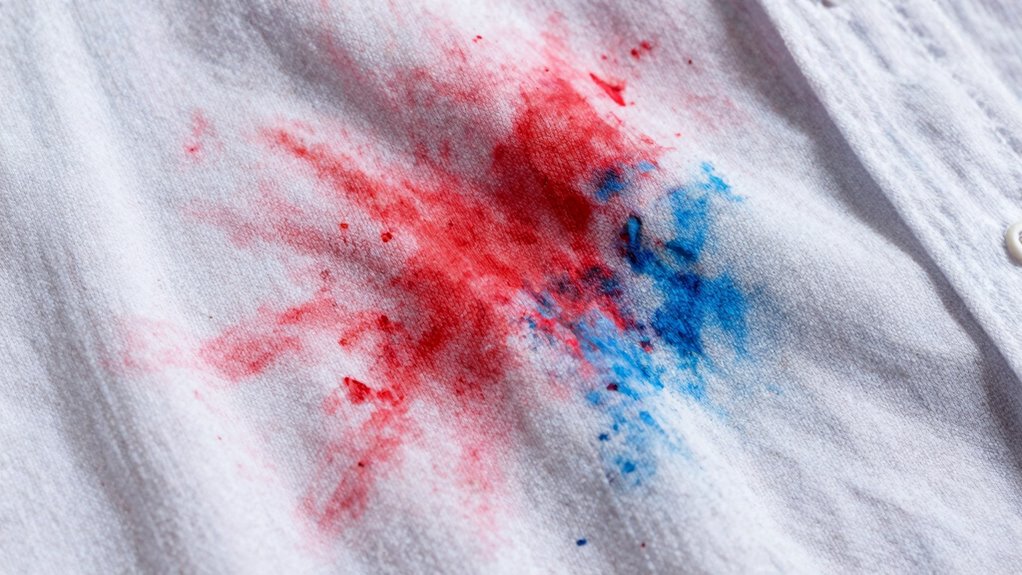
When you notice dye transfer on your clothes, acting quickly can make a significant difference. Immediate action helps prevent the stain from setting further and reduces the risk of permanent damage. To effectively combat existing dye transfers, try these stain removal techniques:
- Use a commercial stain remover designed for color bleeding prevention.
- Soak the affected garment in a mixture of cold water and oxygen-based bleach.
- Gently rub a paste of baking soda and water onto the stain before washing.
- Repeat treatments if necessary, avoiding heat which can set the dye permanently.
- Be sure to identify the type of dye to select the most effective removal method, as different dyes may require specific treatments. Recognizing the properties of dyes can help tailor your approach for better results.
Understanding and applying these stain removal techniques can save your clothes and keep colors vibrant. Quick response and proper treatment are key to stopping dye transfer from worsening and preserving your fabric’s appearance.
Tips for Sorting Clothes and Caring for Colors

Sorting your clothes properly is essential to prevent color bleeding and keep your wardrobe looking vibrant. Separate new or brightly colored fabrics from whites and pastels to reduce the risk of dye transfer. Turn garments inside out before washing to protect surface dyes and enhance color preservation. Use cold water for washing to slow fabric dyeing processes, which helps maintain original hues. Avoid overcrowding the washer, allowing fabrics to move freely and reducing friction that can cause dye to bleed. Always follow care labels for specific instructions, and wash similar colors together. When drying, opt for air drying or use low heat settings to minimize fabric dyeing and fading. Proper sorting and care are simple but effective steps to keep colors vibrant longer.
When to Use Special Products or Seek Professional Help
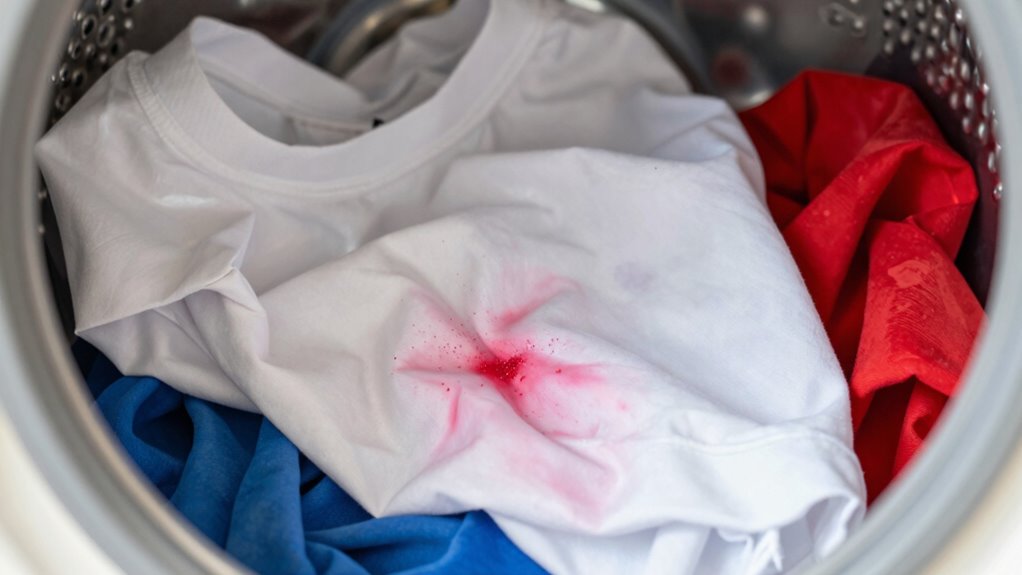
If standard washing tips aren’t stopping the bleeding, it’s time to contemplate special products or professional help. You might want to try stain removers designed for dye transfer or consult a dry cleaner for stubborn cases. Knowing when to seek expert assistance can save your clothes and keep your colors vibrant.
Professional Assistance Recommended
Sometimes, tackling stubborn dye transfer requires professional help or special products designed specifically for fabric bleeding. If your efforts to restore fabric dyeing and improve color retention haven’t worked, it’s time to seek expert assistance. Professionals have access to advanced cleaning techniques and solutions that can prevent further dye transfer or damage. You should consider professional help when:
- The fabric is delicate or valuable, risking damage from DIY methods
- Multiple washes haven’t improved color retention
- The bleeding affects large or intricate garments
- You’re unsure about using harsh chemicals on sensitive fabrics
Professional services can safely treat heavily stained or bleeding fabrics, preserving their quality and appearance. Remember, sometimes expert intervention is the best way to protect your investment and maintain the integrity of your fabric dyeing efforts.
Special Products for Bleeding
When regular washing and home remedies fail to stop dye transfer, using specialized products can make a significant difference. Dye fixatives are designed to bond dye molecules, preventing them from bleeding into other fabrics. Color catchers are practical tools that absorb loose dyes during the wash, reducing further transfer. You should consider using these products when dyes continue to bleed despite your efforts. Apply dye fixatives directly to problematic garments or add color catchers to your laundry load. These products are particularly useful for delicate or heavily bleeding fabrics. However, if bleeding persists after trying dye fixatives and color catchers, or if you’re unsure about the fabric’s dye stability, it’s best to seek professional help to avoid damage.
Frequently Asked Questions
Can Fabric Type Affect Dye Bleeding Tendencies?
Yes, fabric type definitely affects dye bleeding tendencies. Different fabric compositions, like cotton or polyester, have varying dye affinity levels. Natural fibers like cotton often absorb dye more deeply, increasing the risk of bleeding, especially if not pre-treated. Synthetic fabrics tend to hold dye better. Knowing your fabric’s composition helps you choose dyes wisely and take proper precautions to prevent color transfer during washing.
Are There Natural Remedies to Prevent Color Transfer?
Did you know that natural remedies can reduce dye transfer by up to 30%? To prevent color bleeding, try using natural remedies like vinegar or salt during washing. These substances act as dye fixation techniques, helping the dye bond more securely to the fabric. So, before your next wash, soak your clothes in a vinegar solution or add salt to the water. It’s an easy, eco-friendly way to keep colors vibrant and prevent transfer.
How Long Does Dye Residue Typically Last on Clothing?
Dye residue on your clothing can last several washes, often up to 8-10, depending on the fabric and dye quality. To improve fabric longevity, wash new clothes separately and in cold water initially. This helps remove excess dye residue, preventing color bleeding over time. Keep in mind, persistent dye residue can weaken fabric fibers, so taking these precautions can extend your garment’s lifespan and keep colors vibrant longer.
Does Fabric Softener Influence Dye Retention?
Think of fabric softener as a gentle shield that can influence dye retention. It coats fibers, making them smoother, but this layer can also trap loose dye, increasing color bleeding. Using fabric softener may weaken dye bonds, leading to more transfer over time. To protect your clothes’ vibrant hues, skip softeners on new or bleeding fabrics, and opt for gentle detergents that preserve dye integrity and keep your colors bright.
Can Washing Machine Settings Reduce Dye Bleeding Risks?
Yes, adjusting your washing machine settings can help reduce dye bleeding risks. Use a gentle cycle with cold water, as lower temperatures help preserve fabric dyes. Be sure to select the right detergent for color-safe washing, which minimizes dye transfer. This combination lessens the chances of color bleeding, keeping your clothes vibrant and preventing unwanted dye transfer between fabrics. Always check labels for recommended settings to protect your garments.
Conclusion
Now that you know why fabrics bleed and how to prevent it, your laundry routine becomes simpler and stress-free. Think of choosing the right wash as a shield protecting vibrant colors, just as careful sorting acts as a barrier against unwanted dye transfer. While some issues need professional help, many can be resolved with the right techniques. With these tips, your clothes stay bright and fresh—letting you enjoy colorful outfits without the worry of unexpected bleeding.