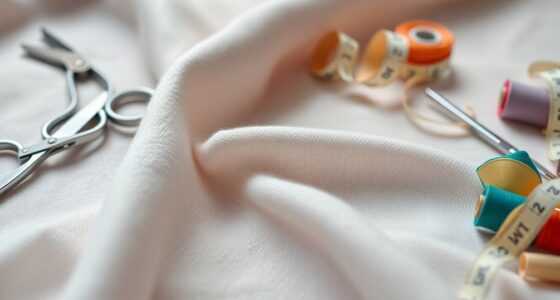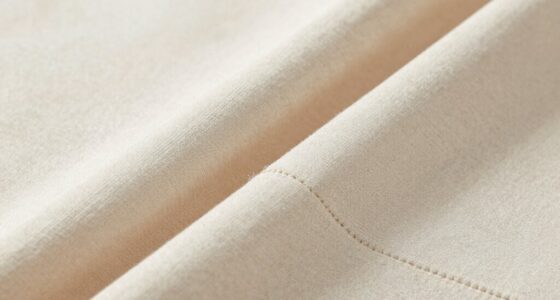
To press curves, darts, and seams without leaving marks, use a rounded pressing tool like a ham or seam board for shaping. Always set your iron to the appropriate temperature for your fabric, and use a damp pressing cloth to prevent shine. Lift the iron instead of sliding it, and press gently in small motions. Be patient and avoid repeated pressing on the same spot. Keep going to discover more tips for flawless finishing.
Listen free for 30 days with Audible
Thousands of audiobooks and originals — cancel anytime.
As an affiliate, we earn on qualifying purchases.
Key Takeaways
- Use a rounded pressing tool like a ham for shaping curves and darts smoothly.
- Always lift the iron instead of sliding to prevent stretching or marking fabric.
- Apply a damp pressing cloth for stubborn wrinkles to avoid heat marks.
- Press darts from the center outward to set them properly without creases.
- Keep the iron at appropriate temperature and use minimal steam for delicate fabrics.
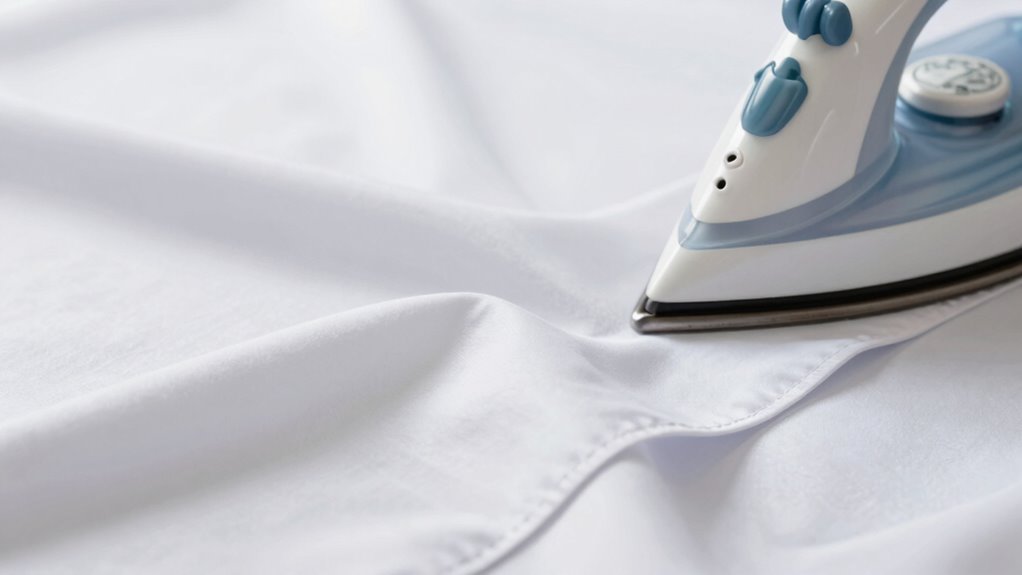
Pressing curves, darts, and seams correctly is vital for achieving a polished, professional finish on your sewing projects. The right techniques make your finished piece look cleaner, with smooth lines and crisp details. To do this effectively, you need to use appropriate pressing tools and understand how different fabric types respond to heat and pressure. Each fabric reacts uniquely, so adjusting your approach guarantees you don’t leave marks or distort your work.
Start by selecting the correct pressing tools. A good-quality pressing cloth is invaluable for protecting delicate fabrics from direct heat and preventing shine or scorch marks. Use a seam board or tailor’s ham when pressing curved seams or darts; these tools help shape curves smoothly without stretching the fabric out of shape. For seams, a seam roller can press open or flat without flattening the fabric’s texture. A pressing ham is excellent for curved areas like princess seams or darts, as it provides a rounded surface that conforms to the fabric’s shape. Keep your iron at the appropriate temperature for your fabric type—using a steam iron on delicate silk, for example, can cause water spots, while too high a heat on synthetic fabrics can melt the fibers.
Understanding your fabric types is vital. Natural fibers like cotton, linen, and wool tolerate higher heat and steam, making it easier to press out wrinkles and set darts firmly. For delicate or synthetic fabrics, lower heat and less steam are generally safer options. Use a pressing cloth when working with delicate fabrics to avoid shine and heat damage. When pressing curved seams, gently hold the fabric in place with your fingers or a clapper to maintain the shape, and avoid sliding the iron back and forth, which can stretch or distort the fabric. Instead, press in small, gentle motions, lifting the iron instead of dragging it across the fabric. Additionally, knowing how fabric reacts to heat can help you prevent damage and achieve the best results.
To ensure you’re using the right technique, consider the fabric’s fiber content and adjust your approach accordingly. Always test your pressing approach on a scrap piece of fabric first. This way, you can confirm the right temperature, steam level, and pressing tools without risking your project. For stubborn wrinkles or marks, a damp pressing cloth can help release the creases without applying excessive heat. When pressing darts, press from the center outward, and avoid pressing over the dart multiple times, which can leave marks or create unwanted bulk. With patience and the right tools, you’ll develop a seamless, professional look that elevates your sewing projects and makes your finished pieces look flawless.
As an affiliate, we earn on qualifying purchases.
Frequently Asked Questions
What Tools Are Best for Pressing Delicate Fabric Curves?
To press delicate fabric curves, you should use the right pressing tools like a tailor’s ham or a pressing ham for shaping curves smoothly. A pressing cloth is essential to protect delicate fabrics from direct heat and prevent marks. Additionally, a small, pointed iron or a steamer can help gently press intricate areas without causing damage. Always use a light touch and minimal heat to keep your fabrics looking perfect.
How Do I Prevent Shiny Marks on My Fabric?
Your fabric deserves the gentle touch of a whisper, not the harsh glare of shiny marks. To prevent iron marks, use a pressing cloth, especially on delicate textures, and keep your iron at the right temperature. Avoid lingering too long in one spot and always test on scrap fabric first. This careful approach helps maintain your fabric’s natural texture and prevents those unwanted shiny marks from ruining your masterpiece.
Can I Use a Steamer Instead of an Iron?
Yes, you can use a steamer instead of an iron, especially for delicate fabrics or when you want a gentle press. Steam vs. iron differs in technique; steaming relaxes fibers without direct contact, reducing shine and marks. For best results, press with a cloth between the steamer and your fabric, especially on curves, darts, and seams. This method helps prevent shiny marks while maintaining a smooth, professional finish.
What’s the Ideal Temperature Setting for Different Fabrics?
You should always set your iron to the appropriate temperature based on fabric types to guarantee damage. For delicate fabrics like silk or chiffon, use a low setting, while cotton or linen need a medium to high setting. Many irons have fabric type indicators or adjustable settings, so check your garment’s care label. Using the right iron settings ensures smooth pressing without leaving marks or causing burns.
How Do I Press Seams Without Distorting the Fabric?
To press seams without distorting fabric, use gentle pressing techniques and avoid shifting the fabric. Keep your iron at the right temperature for your fabric type, and press rather than iron over seams. Align seams carefully before pressing, ensuring they stay flat and smooth. Use a pressing cloth for delicate fabrics, and press in small, controlled motions to maintain seam integrity and prevent distortion.
Conclusion
Remember, pressing your curves, darts, and seams with finesse isn’t just about avoiding marks—it’s a subtle art form. After all, what’s the point of all that meticulous sewing if your fabric looks like it’s been through a battle? So, channel your inner fashion ninja, press with care, and leave those stubborn marks behind. Because nothing says “professional” like a perfectly pressed masterpiece… or a fabric that looks like it’s been through a war zone.
Fall Picks
fall essentials
As an affiliate, we earn on qualifying purchases.