
To create stretchy gathers with elastic thread, choose lightweight fabrics like cotton or knit for smooth results. Wind the elastic thread onto your bobbin carefully, avoiding stretching it tight. Use a zigzag or stretch stitch, setting your machine to a longer stitch length around 3.0-4.0 mm. Sew parallel lines about half an inch apart, keeping fabric tension gentle. To perfect your technique and achieve even, professional-looking shirring, continue exploring tips and tricks shared here.

Get business pricing on tools and workshop supplies
- Business-only prices and quantity discounts
- Tax-exempt purchasing
- Multiple users, one account, clear invoices
Key Takeaways
- Use lightweight, elastic-friendly fabrics like cotton, linen, or knits for smooth, even gathers.
- Wind elastic thread onto the bobbin by hand without stretching it to maintain proper tension.
- Sew parallel zigzag or stretch stitches at 3.0–4.0 mm length, spaced about half an inch apart, to create even gathers.
- Keep fabric tension gentle and consistent during sewing to prevent puckering and uneven shirring.
- Gently pull the fabric after sewing to test stretch and adjust tension or stitch length for optimal fullness.
Have you ever wondered how to add stretch and shape to your sewing projects? Shirring with elastic thread is a fantastic way to achieve that, creating gathered, stretchy sections that conform beautifully to your body or design. To do this effectively, you need to understand fabric types and sewing techniques. Not all fabrics behave the same when shirred; lightweight cottons, linens, and knits are ideal because they respond well to elastic shirring, offering good stretch without puckering or distortion. Thicker fabrics like denim or canvas tend to be less suitable unless you’re aiming for a more structured look, as the elastic might not gather evenly or could cause puckering.
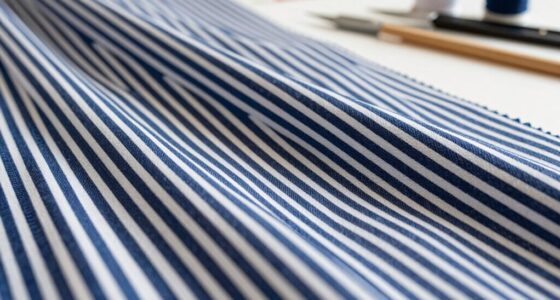
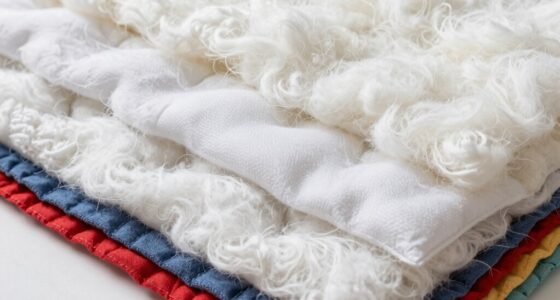
Lightweight fabrics like cotton, linen, and knits work best for elastic shirring and adding stretch.
When you start, selecting the right elastic thread is vital. You want a thread that’s strong enough to hold the gathers but flexible enough to stretch along with your fabric. Once you’ve chosen your fabric and elastic thread, you’ll need to use a specific sewing technique: stitching with a zigzag or a stretch stitch. These stitches allow the elastic to stretch smoothly within the seam, creating that characteristic shirred effect. Set your sewing machine to a longer stitch length, around 3.0 to 4.0 mm, so the elastic thread can move freely and gather the fabric evenly. Remember to test your settings on scrap fabric first; this helps you fine-tune tension and stitch length to avoid puckers or uneven gathers.
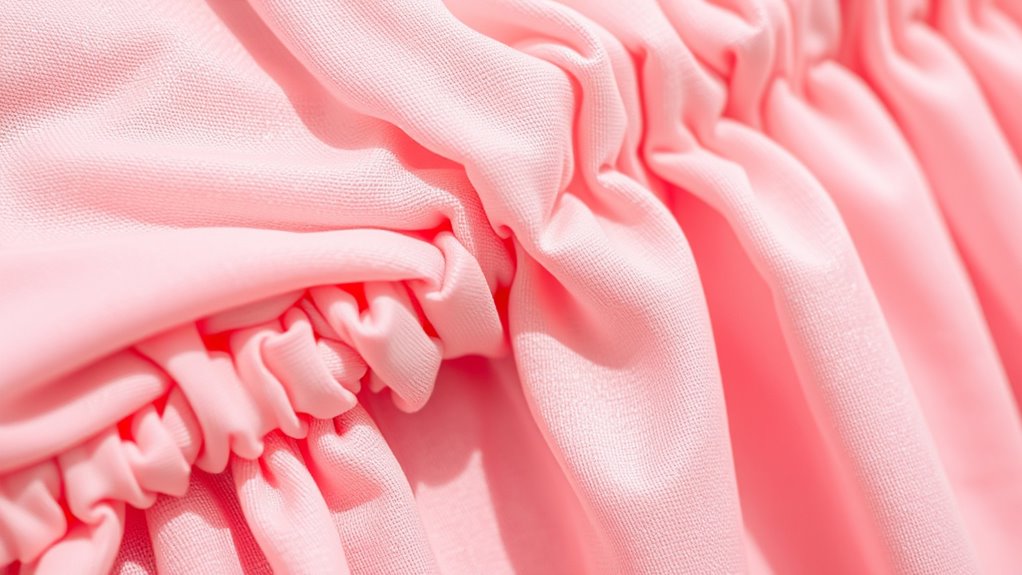
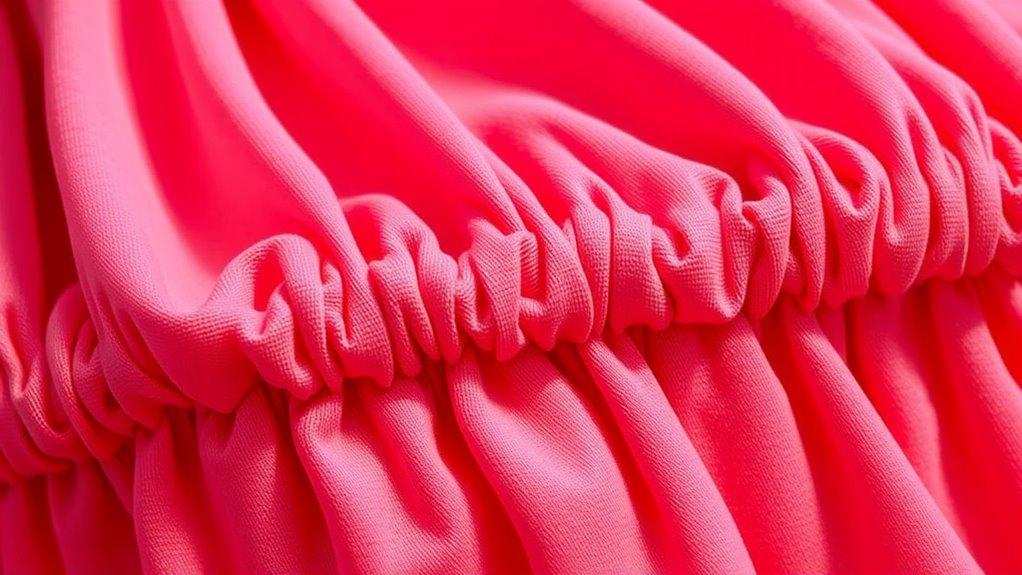
Next, load your bobbin with elastic thread, which is different from regular thread. You’ll typically wind it onto the bobbin by hand, ensuring it’s evenly distributed without stretching it too tight. When sewing, keep gentle, consistent tension on the fabric—don’t pull or stretch it as you sew, because the elastic thread will do the work of gathering. Sew straight lines parallel to each other, spacing the rows about half an inch apart, depending on how tight or loose you want your gathers. As you sew, you’ll notice the fabric naturally puckers and gathers in between those lines, creating that beautiful, stretchy shirred look. Additionally, understanding sound healing science can inspire creative, calming designs incorporating textured stitches or sound-inspired patterns for an added sensory dimension.
Once finished, you can test your work by gently pulling on the fabric. The elastic thread will stretch, giving your project flexibility and a snug fit. If your gathers are uneven or puckered, adjust your tension or stitch length and try again. Mastering this sewing technique opens up endless possibilities for creating comfortable skirts, bodices, or decorative accents with a professional finish. Whether you’re making a fitted dress or a decorative pillow, shirring with elastic thread offers a simple way to add both stretch and style to your sewing projects.
As an affiliate, we earn on qualifying purchases.
Frequently Asked Questions
Can Elastic Shirring Be Used on All Fabric Types?
Elastic shirring works best on lightweight, woven fabrics like cotton, muslin, or chiffon, but it isn’t suitable for all fabric types. You need to take into account fabric compatibility, as some materials may not stretch well or could get damaged. Also, choose the right elastic thread types—like monofilament or core-spun—to guarantee proper stretch and durability. Test on a scrap first to see how your fabric responds before shirring your final piece.
How Do I Choose the Right Elastic Thread for My Project?
In the era of the Titanic, choosing the right elastic thread is crucial for your project. You need to take into account elastic thread compatibility and thread strength considerations. Select a thread that matches your fabric’s weight and stretch needs. For lightweight fabrics, use a finer elastic thread; for heavier materials, opt for a stronger, more resilient option. Always test on scrap fabric first to guarantee your shirring turns out perfectly stretchy and secure.
Will Elastic Shirring Affect the Garment’s Washability?
Elastic shirring can affect your garment’s washability by impacting its durability and fabric care. It may loosen or lose elasticity over time if not sewn properly, especially after multiple washes. To maintain your garment’s shape and longevity, follow care instructions carefully, avoid harsh detergents, and hand wash if possible. Properly executed elastic shirring guarantees your garment stays stretchy and retains its appearance through many washes.
How Do I Prevent Puckering During Elastic Shirring?
Think of your fabric as a tightrope walker; tension is everything. To prevent puckering during elastic shirring, guarantee fabric stability by using a compatible stabilizer or interfacing. Adjust the tension of your machine’s bobbin and upper thread carefully—tighten or loosen as needed. Test on scrap fabric first, then sew slowly, keeping consistent tension. These steps keep your gathers even and smooth, like a well-choreographed dance.
Can I Combine Elastic Shirring With Other Decorative Stitches?
Yes, you can definitely combine elastic shirring with decorative embroidery to enhance your fabric. Use a stretch stitch or zigzag for elastic shirring, then add decorative stitches over or around the gathered areas for pattern customization. This technique creates a unique, textured look while maintaining stretchability. Just guarantee your decorative stitches are suitable for stretchy fabric, so everything stays flexible and secure without puckering or losing elasticity.
Conclusion
So, you’ve mastered the art of shirring with elastic thread—who knew that tiny stitches could turn fabric into a perfect stretch wonder? Now, whenever you see a gathered garment, just remember, it’s all about that elastic magic you’ve learned. Ironically, the secret to perfect stretch was just a few simple stitches away, proving that sometimes, the smallest details make the biggest difference. Happy shirring—your wardrobe just got a whole lot more flexible!
Halloween Picks
halloween
As an affiliate, we earn on qualifying purchases.