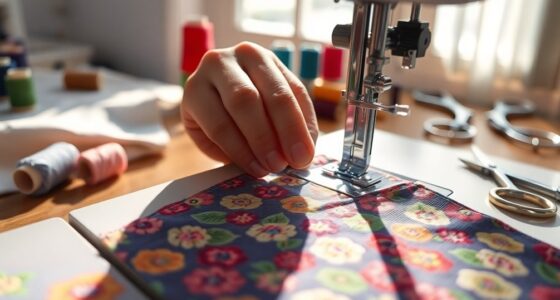
To spot fabric damage early, regularly check for small stains, tiny tears, or thinning areas indicating weakened fibers. Look for discoloration, fraying edges, and loose threads, especially in high-friction zones like underarms and seams. Keep an eye on areas prone to wear and guarantee proper storage away from sunlight and humidity. Catching these signs early can save your clothes from bigger issues—keep going to discover more tips for keeping your fabrics in great shape.

Get business pricing on tools and workshop supplies
- Business-only prices and quantity discounts
- Tax-exempt purchasing
- Multiple users, one account, clear invoices
Key Takeaways
- Regularly inspect high-friction areas like underarms and seams for loose threads or thinning fabric.
- Look for small stains or tears that may indicate early damage and need prompt attention.
- Check for discoloration or fading, which signal fiber weakening or fabric deterioration.
- Feel for areas that are thinner or frayed, especially after washing or wearing.
- Monitor for loose threads or fraying edges, and repair minor issues before worsening.

Have you ever wondered how to keep your fabrics looking their best for longer? Recognizing early signs of fabric damage is key to preventing bigger issues down the line. The moment you notice a small stain or a tiny tear, it’s a sign that you need to act quickly. Stain removal is essential because stains can weaken fibers over time, especially if left untreated. Use gentle cleaning methods and avoid harsh chemicals that could further degrade the fabric. When dealing with stains, it’s best to treat them as soon as possible—dabbing with a mild solution rather than rubbing vigorously will help preserve the fabric’s integrity. Proper storage also plays a crucial role in damage prevention. When you fold or hang your clothes, make sure they’re stored in a clean, dry space away from direct sunlight and humidity, which can cause fading and mold. Using breathable fabric bags or storage containers protects your garments from dust, pests, and environmental damage. Additionally, incorporating ventilation solutions can help reduce indoor humidity levels, further safeguarding your fabrics from mold and mildew. Regularly inspecting your fabrics is another way to spot damage early. Check for loose threads, fraying edges, or discoloration that might indicate weakening fibers. Catching these signs early allows you to repair or reinforce the fabric before the damage worsens. Pay attention to areas that experience frequent friction, like underarms or seat seams, as these spots are more prone to wear. Fabric care routines should include gentle handling and avoiding overexposure to harmful elements. If you notice any small tears or holes, don’t ignore them; patching them up right away can prevent larger rips from forming. Also, be mindful of how you handle your fabrics—rough washing, excessive drying, or folding can accelerate deterioration. Using gentle washing cycles and air-drying your clothes whenever possible helps keep fibers intact longer. Additionally, understanding the fabric type can help you identify what signs of damage to look for and how to prevent them. Natural fibers like cotton and wool are more susceptible to stretching and shrinking, while synthetics might be prone to pilling. Knowing this allows you to tailor your stain removal and storage methods accordingly. Proper fabric maintenance routines, including occasional professional cleaning for delicate fabrics, can extend their lifespan even further. Recognizing the signs of damage early, such as thinning areas or discoloration, can help you take targeted actions before more serious issues develop. Ultimately, caring for your fabrics involves a combination of prompt stain removal, proper storage, and regular inspections. When you stay vigilant and act quickly at the first signs of damage, you prolong the lifespan of your garments and keep them looking fresh longer. Remember, catching damage early isn’t just about aesthetics—it’s about maintaining the fabric’s strength and durability for many wears to come.
fabric stain remover for delicate clothes
As an affiliate, we earn on qualifying purchases.
As an affiliate, we earn on qualifying purchases.
Frequently Asked Questions
How Often Should I Inspect My Fabrics for Early Damage Signs?
You should inspect your fabrics weekly to catch early signs of damage. Regular inspections help you identify issues like fraying, staining, or fading before they worsen. Incorporate fabric cleaning into your routine, as it prevents dirt buildup that can weaken fibers. Damage prevention starts with consistent checks; by doing so, you extend your fabrics’ lifespan and keep them looking their best. Stay vigilant, and act promptly at the first signs of trouble.
Can Certain Detergents Cause Fabric Deterioration Over Time?
Just as a knight must choose their armor wisely, you should consider how detergent reactions can cause fabric deterioration over time. Certain detergents contain harsh chemicals that accelerate fabric fiber degradation, weakening fibers and leading to tears or fading. To protect your fabrics, opt for gentle, pH-balanced detergents. Regular inspections can help you catch early signs of damage, ensuring your fabrics stay strong and vibrant for longer.
Are There Specific Fabrics More Prone to Unseen Damage?
Certain fabric types, like silk, wool, and delicate synthetics, are more prone to unseen damage. You should look for damage indicators such as fraying, discoloration, or a loss of softness, which often occur before obvious tears or holes. Regularly inspecting these fabrics helps you catch early signs of deterioration. By understanding the specific vulnerabilities of each fabric type, you can take better care and prevent more severe damage.
How Does Storage Environment Affect Fabric Longevity?
Storing your fabrics in a stable, dry space considerably slows fabric aging. High humidity hastens deterioration, encouraging mold, mildew, and weakening fibers. Conversely, low humidity preserves fabric integrity, preventing premature wear and tear. Proper storage conditions—cool, dark, and dry—protect against environmental elements that accelerate damage. By controlling humidity levels and avoiding extreme temperatures, you extend your fabric’s lifespan, maintaining its softness, strength, and vibrant appearance for years to come.
What Are Quick Fixes for Minor Fabric Damages?
For quick fixes on minor fabric damages, start with fabric patching to cover small tears or holes, ensuring you use a matching fabric for seamless blending. Additionally, reinforce weak seams with seam reinforcement techniques like sewing over the area or using fabric glue for extra strength. These simple steps can prevent further damage, extend your fabric’s lifespan, and keep your item looking fresh without needing professional repairs immediately.
Conclusion
By inspecting your fabrics regularly, you catch small issues before they become big problems. Think of it like catching a tiny tear early—it’s easier to mend and saves you money in the long run. When you stay attentive and act quickly, you prevent damage from spreading, keeping your fabrics looking fresh longer. So, trust your instincts, examine your textiles often, and you’ll keep them in great shape—proving that prevention truly is better than cure.
Halloween Picks
halloween
As an affiliate, we earn on qualifying purchases.