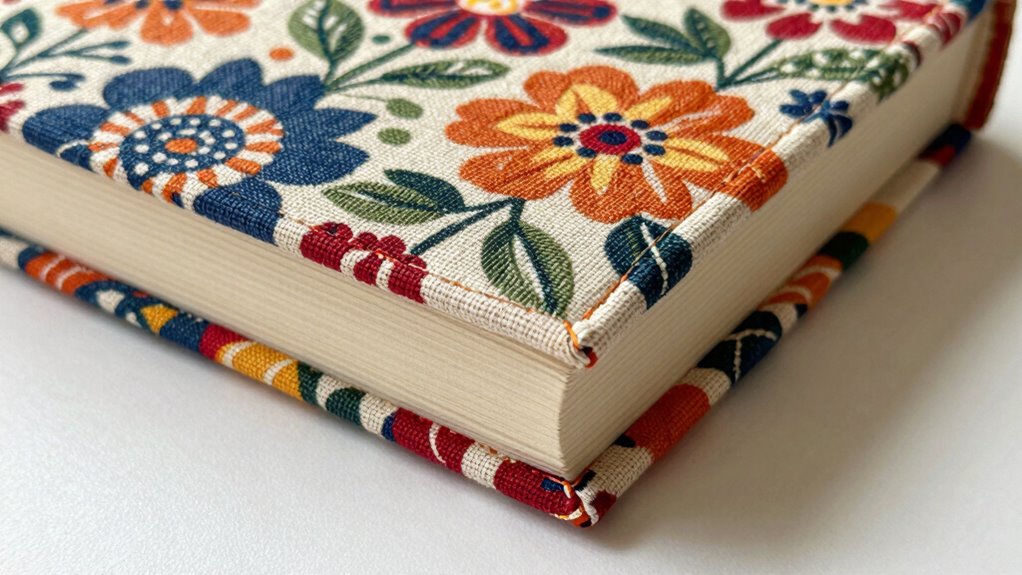

To prevent your fabric book cover from slipping off the corners, choose textured fabrics like quilting cotton or canvas for better grip. Measure precisely, adding seam allowances, and cut carefully with sharp tools. Reinforce corners with neat folds, secure closures, or decorative stitching. Using stabilizers and pins helps keep everything aligned during sewing. Keep practicing these techniques, and you’ll discover more tips to craft a perfect, non-slip cover that stays put.
Key Takeaways
- Use textured fabrics like quilting cotton or canvas for better grip on corners.
- Incorporate small, repetitive patterns to enhance grip and prevent slipping.
- Add stabilizer or interfacing at corners to increase stiffness and hold shape.
- Reinforce corners with backstitches or decorative stitching for durability.
- Secure closures with magnetic snaps or buttons to keep the cover firmly in place.
Choosing a Fabric for a Non-Slip Book Cover
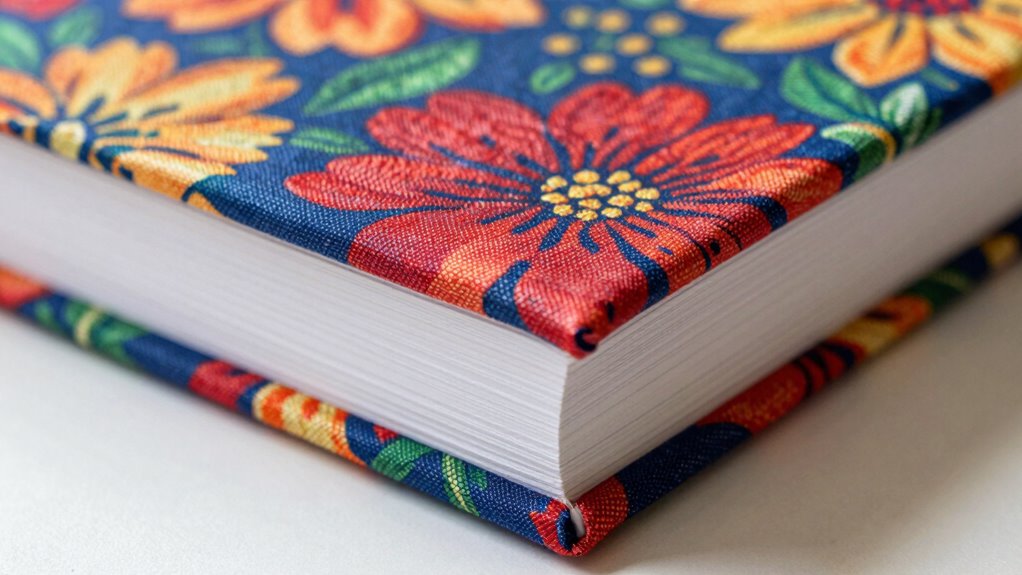
When selecting fabric for a non-slip book cover, it’s important to choose materials that grip the book securely without adding bulk. Consider fabric patterns that provide some texture, like quilting cotton or canvas, which help prevent slipping. Avoid slick or shiny fabrics that can slide easily. Color matching is also key; pick a fabric that complements your book’s cover or your personal style. Solid colors work well for a clean look, while patterned fabrics add visual interest. Keep in mind that smaller, repetitive patterns tend to be less busy, making your cover look polished. Additionally, fabric properties such as grip and texture play a crucial role in ensuring the cover stays in place. Understanding how different fabric types behave can help you select the best material for durability and grip. When choosing fabric, consider fabric durability to ensure your cover lasts through regular use. Choosing a fabric with good fabric grip helps prevent slipping and keeps your cover securely in place. It’s also helpful to look for fabrics with non-slip qualities, which can further enhance the stability of your book cover. Ultimately, choose a fabric that offers grip, complements your book’s design, and fits your aesthetic preferences. This will ensure your cover stays in place and looks great.
Measuring and Cutting Your Fabric Precisely
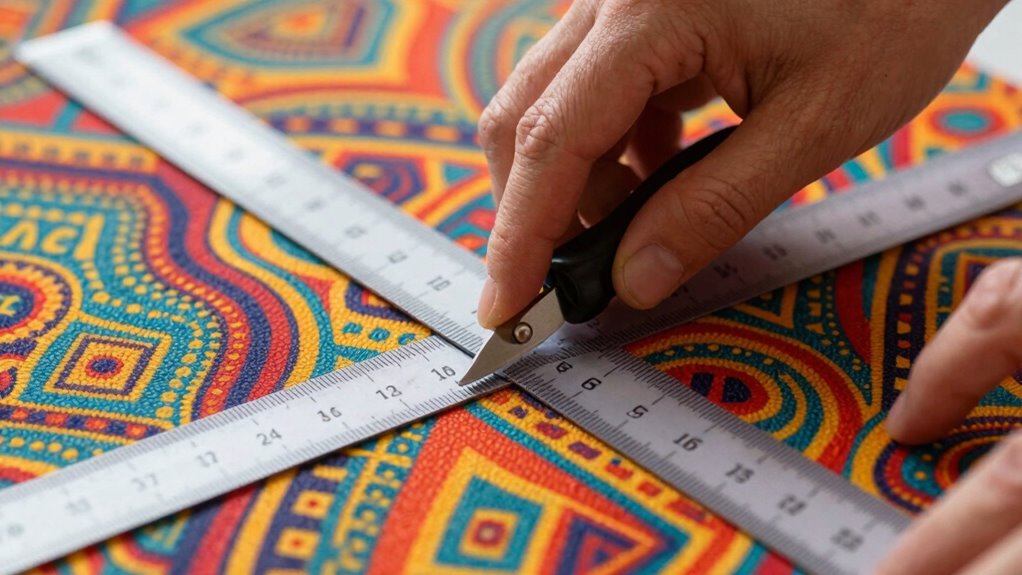
Accurate measuring and cutting are essential to guarantee your fabric fits your book perfectly. First, select a fabric pattern that complements your style and check its grainline to make certain proper alignment. Use precise measuring tools like a ruler or measuring tape to determine the exact dimensions needed for your cover, adding extra for seams. When cutting, choose sharp cutting tools, such as fabric scissors or a rotary cutter, to achieve clean, straight edges. Carefully mark your measurements with fabric chalk or a fabric pen before cutting. Take your time to ascertain accuracy, as even small mistakes can affect the fit and slip resistance of your cover. Proper measurement and careful cutting set the foundation for a professional-looking, non-slip fabric book cover. Additionally, understanding the fabric’s properties can help you select the best material for durability and slip resistance, especially considering how different fabrics respond to wear and tear over time. Considering the fabric’s texture can further enhance grip and longevity, ensuring your book cover stays in place during outdoor use. A backyard transformation with durable, slip-resistant fabric can ensure your book cover stays in place during outdoor use.
Adding a Secure Closure to Keep Your Cover in Place

Adding a secure closure guarantees your fabric book cover stays neatly in place and protects the pages inside. You can choose between magnetic closures or decorative buttons for a polished look. Magnetic closures are easy to use and create a sleek appearance, while decorative buttons add charm and personality. To visualize, consider this table:
| Closure Type | Appearance | Ease of Use |
|---|---|---|
| Magnetic closures | Invisible when closed | Very simple |
| Decorative buttons | Stylish, adds detail | Slightly more effort |
Both options keep your cover secure without slipping, ensuring your book stays neatly wrapped. Incorporating secure closures like these can help prevent accidental opening and safeguard your belongings. Using a strong fastening method can further enhance the durability of your project. Choosing a reliable fastening method can further enhance the durability of your project. These closures add both functionality and a finishing touch.
Sewing Corners That Stay Put and Look Professional
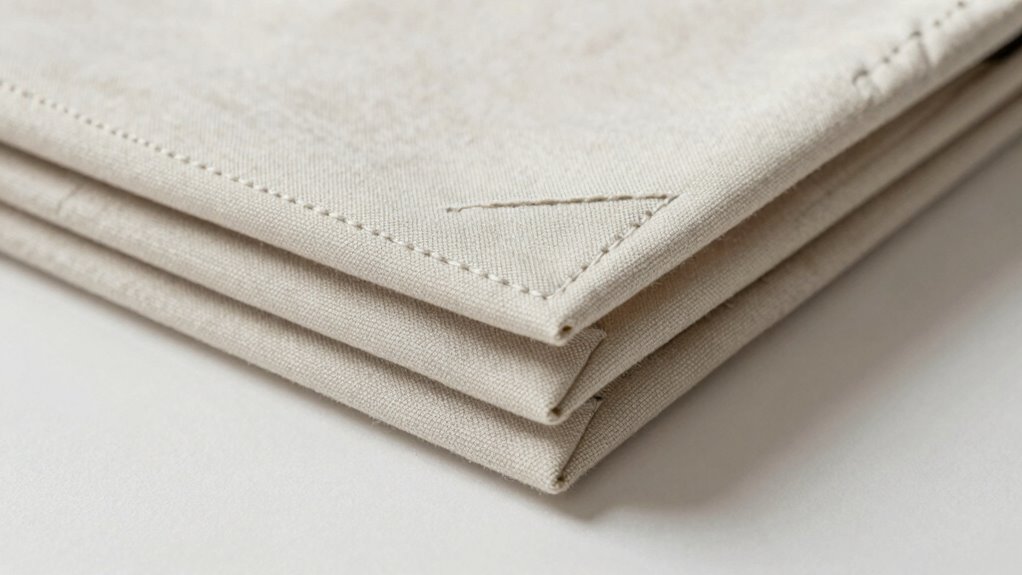
To guarantee your corners stay sharp and give your fabric book cover a polished look, it’s vital to sew them carefully. Start by folding each corner neatly, aligning edges precisely. For a professional finish, consider adding fabric embellishments like small bows or decorative stitching at the corners to hide any raw edges. When sewing, use a sharp needle and a consistent stitch length to ensure uniformity. You can also reinforce corners with a few backstitches for durability. To elevate the look, incorporate decorative stitching along the edges or corners, adding visual interest. Remember, well-sewn corners lock everything in place and give your project a refined appearance. Taking these steps ensures your cover stays snug and looks impeccably finished. Additionally, understanding sewing techniques can help you achieve more precise and durable results in your projects.
Troubleshooting Common Slipping Issues
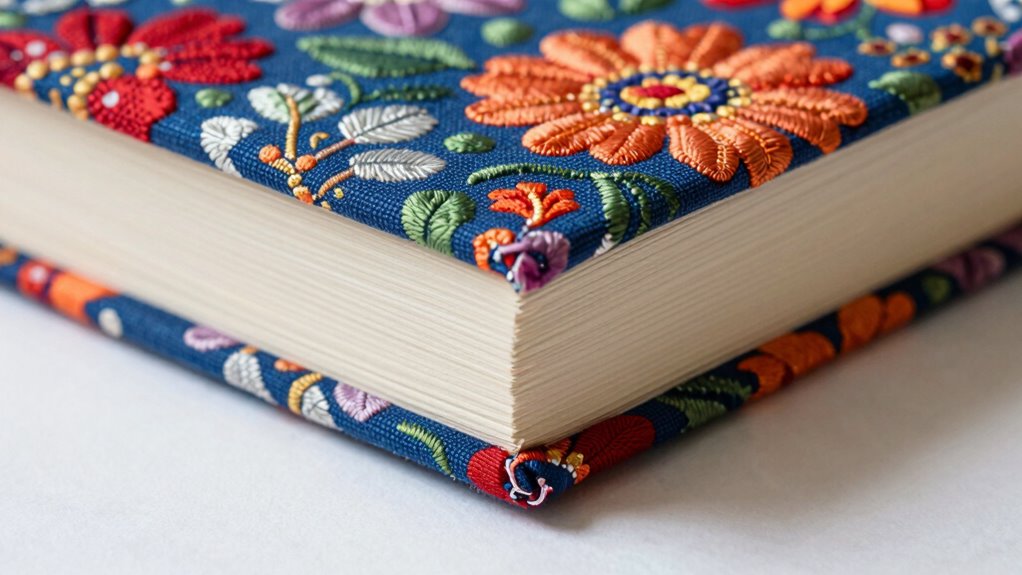
Slipping fabric can be frustrating, especially when you’re trying to achieve clean, sharp edges on your book cover. To prevent this, focus on enhancing fabric grip by using a good-quality, non-slip surface or applying a light spray of fabric adhesive underneath the edges before folding. Make sure you’re pinning or clipping securely to keep the fabric in place during sewing. When slipping occurs, stop and realign the fabric, pressing down firmly to reinforce slipping prevention. Using clips instead of pins can also help hold the fabric tighter. If the fabric continues to slip, consider applying a stabilizer or interfacing to add stiffness, making it easier to control. Proper tension on your sewing machine and slow stitching can further reduce slipping issues throughout the process.
Frequently Asked Questions
Can I Use Waterproof Fabric for the Book Cover?
Yes, you can use waterproof fabric for your book cover. Waterproof fabric offers excellent protection, especially when combined with a water-resistant coating to enhance durability. Just make certain the fabric isn’t too stiff, so it still fits snugly over your book. Applying a water-resistant coating can help prevent spills and moisture damage, making your cover more practical and long-lasting. This combo keeps your book safe and stylish.
What Tools Are Recommended for Precise Sewing?
To guarantee precise sewing, you should use a good sewing machine and sharp fabric scissors. Your sewing machine helps create clean, even stitches, especially around corners, while fabric scissors make cutting fabric accurately. A steady hand and these tools allow you to follow your pattern closely, resulting in a professional-looking book cover that stays in place. Invest in quality tools to make your sewing easier and more precise.
How Do I Customize the Cover Size for Different Books?
To customize your cover size, start with simple measuring techniques—measure your book’s height, width, and thickness accurately. Select fabric that suits your style and offers enough flexibility for a perfect fit. Add a little extra to your measurements for seam allowances, ensuring snug security. By blending precise measurements with thoughtful fabric choices, you create a custom cover that comfortably and confidently wraps your book, preventing slipping and slipping away.
Is It Possible to Add Decorative Elements to the Cover?
Yes, you can definitely add decorative elements to your fabric book cover. Use embellishment options like embroidery, appliqué, or fabric paint to personalize it. Incorporate fabric layering by adding contrasting or textured fabrics underneath the decorative elements for extra dimension. Just ascertain your embellishments are securely attached so they won’t peel or come loose over time. Have fun experimenting with different textures and embellishments to make your cover uniquely yours!
How Do I Clean and Maintain the Fabric Cover?
Did you know that regular fabric care can extend your cover’s life by up to 50%? To clean your fabric book cover, spot clean stains immediately with a gentle stain removal solution, and hand wash or machine wash on a delicate cycle with mild detergent. Avoid bleach, and air dry to prevent damage. Regular maintenance keeps your cover looking fresh and guarantees it stays slip-proof and charming for years.
Conclusion
With a little patience and attention to detail, you’ll find your fabric book cover becomes a steadfast companion, gently holding your pages without fuss. Remember, sometimes the tiniest adjustments make the biggest difference—like a whisper of confidence in every stitch. Keep experimenting and trusting your craftsmanship. Before long, you’ll discover that a well-made cover isn’t just about staying put; it’s about creating a quiet assurance that your favorite book is always protected, no matter how lively the journey.