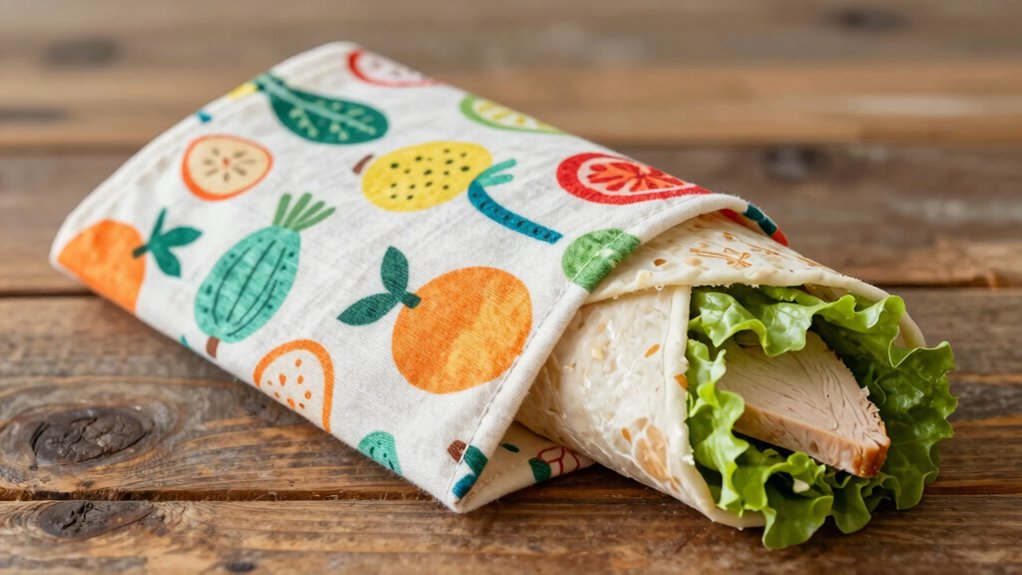
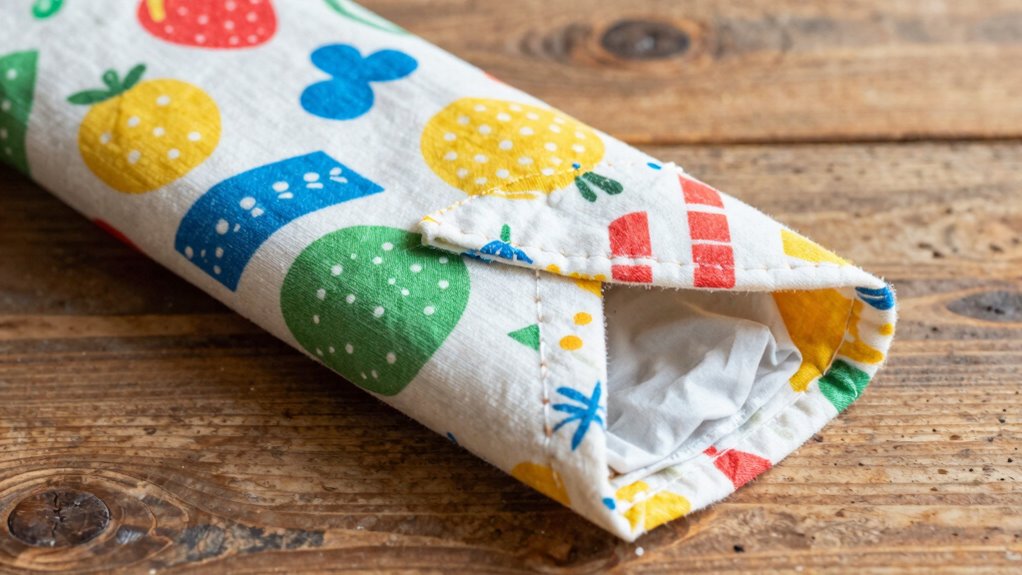
To sew a reusable sandwich wrap, start with sustainable fabrics like organic cotton or linen that are food-safe. Cut a 15-inch square, fold edges inward, and sew around, leaving a small opening to turn it right side out. Add a flap or tie closure for security, then press the finished wrap. Regularly maintain your sewing machine for best results. For a detailed step-by-step guide, keep going—you’ll find all the tips you need for a durable, eco-friendly wrap.
Key Takeaways
- Select sustainable, food-safe fabrics like organic cotton or linen for durability and eco-friendliness.
- Cut fabric to approximately 15×15 inches, then hem edges with a quarter-inch fold for a clean finish.
- Sew around the edges, leaving a small opening to turn the wrap right side out, then close the opening securely.
- Add a tie or flap closure to keep the sandwich secure during transport.
- Press the finished wrap and add decorative touches or labels for personalization and a polished look.
Sewing a reusable sandwich wrap is a simple and eco-friendly project you can complete in just a few steps. It’s a practical way to cut down on waste and create a versatile lunch accessory. To start, gather your sustainable materials—think organic cotton, linen, or other natural fabrics that are safe for food contact. Choosing eco-friendly fabrics not only reduces your environmental impact but also guarantees your sandwich wrap is safe and durable. Before you begin sewing, it’s essential to maintain your sewing machine properly. Regular cleaning and oiling keep it running smoothly, preventing snags or uneven stitches that could compromise your wrap’s durability. Check your machine’s manual if needed, and make sure your needle is sharp and appropriate for your fabric type. This attention to sewing machine maintenance will help you work efficiently and produce a professional finish.
Once your machine is ready, cut your fabric to your desired dimensions—usually about 15 inches by 15 inches works well. Fold the edges inward by about a quarter inch to create a clean hem. Stitch around the edges, leaving a small opening to turn the fabric right side out. Turn your fabric right side out, smoothing the edges, and then sew around the perimeter again, this time closing the opening. To add extra functionality, consider sewing a flap or tie closure using leftover fabric or a strip of sustainable material. This keeps your sandwich secure and prevents spills during transport. Additionally, choosing food-safe fabrics ensures your wrap remains safe for contact with your food.
Cut fabric to 15×15 inches, hem edges, sew perimeter, and add a tie closure for secure, eco-friendly lunch wraps.
Using eco-friendly fabrics means you don’t need to worry about harmful chemicals or synthetic finishes, making your wrap safer for food contact. Remember, the key to a successful project is working with clean, well-maintained equipment. Regularly check your machine’s tension and stitch quality, and always use the correct needle for your fabric. This not only prolongs the life of your machine but also ensures your stitches are even and secure. If you notice any issues during sewing, addressing them early can save you time and frustration later. Proper sewing techniques will also help you achieve a more polished and durable finish. Incorporating biodiversity considerations into your fabric choices, such as selecting materials from sustainable sources, can further enhance the eco-friendliness of your project. Additionally, understanding the impact of textile sourcing can guide you in choosing materials that support conservation efforts.
Finally, give your sandwich wrap a thorough press to set the stitches and remove wrinkles. Over time, you might want to customize your wrap further with decorative stitches or labels, but the basic construction remains the same. With a little effort and attention to sewing machine maintenance, you’ll create a reusable sandwich wrap that’s both stylish and sustainable—perfect for packed lunches and reducing single-use waste.
As an affiliate, we earn on qualifying purchases.
Frequently Asked Questions
What Fabric Is Best for a Reusable Sandwich Wrap?
You should choose a fabric with good durability and eco-friendly qualities for your reusable sandwich wrap. Cotton or linen made from organic materials work great because they’re sturdy and safe for the environment. Look for tightly woven fabrics to prevent leaks and tears. These options are washable, long-lasting, and sustainable, making them ideal for daily use. Opt for natural fibers to guarantee your wrap is both durable and eco-conscious.
How Do I Clean and Maintain the Wrap?
To keep your reusable sandwich wrap clean, follow simple cleaning tips like hand-washing with mild soap and cold water after each use. You can also machine wash it on a gentle cycle if the fabric allows. For maintenance routines, regularly check for wear and tear, and occasionally air dry to prevent mold. Avoid bleach or harsh chemicals to preserve the fabric’s integrity and guarantee your wrap stays fresh and functional.
Can I Customize the Size for Different Sandwiches?
Of course, you can totally customize the size for different sandwiches—because one-size-fits-all is obviously a myth. Just check out the various sandwich size options and get creative with your customization tips. Measure your favorite sandwiches, add a little extra room, and sew accordingly. Who knew that tailoring your wrap could turn into a fun DIY project? Now, your lunch game is about to reach a whole new level of perfection!
What Sewing Supplies Are Essential for This Project?
You’ll need basic sewing supplies like fabric patterns, which you can choose to match your style, and sewing techniques to guarantee clean seams. Grab a pair of sharp scissors, a sewing machine, pins, and a ruler for precise measurements. Don’t forget matching or contrasting thread to add a decorative touch. These essentials help you create a durable, personalized wrap, making the sewing process smoother and more enjoyable.
How Long Does It Take to Sew a Wrap?
It takes just about 30 minutes to sew a wrap, but don’t rush—your sewing machine maintenance and fabric pattern choices matter. Ironically, choosing the perfect fabric pattern can extend your project, while neglecting machine upkeep might cause delays. So, if you want a quick finish, keep your machine well-maintained, pick your fabric wisely, and stay patient. A well-made wrap is worth every minute!
Conclusion
Now, as you fold and stitch your reusable sandwich wrap, you’re sewing more than fabric—you’re weaving a promise of sustainability. Each stitch symbolizes a commitment to reducing waste, a gentle reminder that small actions ripple outward. Your creation becomes a vessel of care, wrapping not just lunch but hope for a cleaner planet. With every use, let it remind you: tiny threads of change can weave a brighter, greener future, one lunch at a time.